
THE APEX TIMES
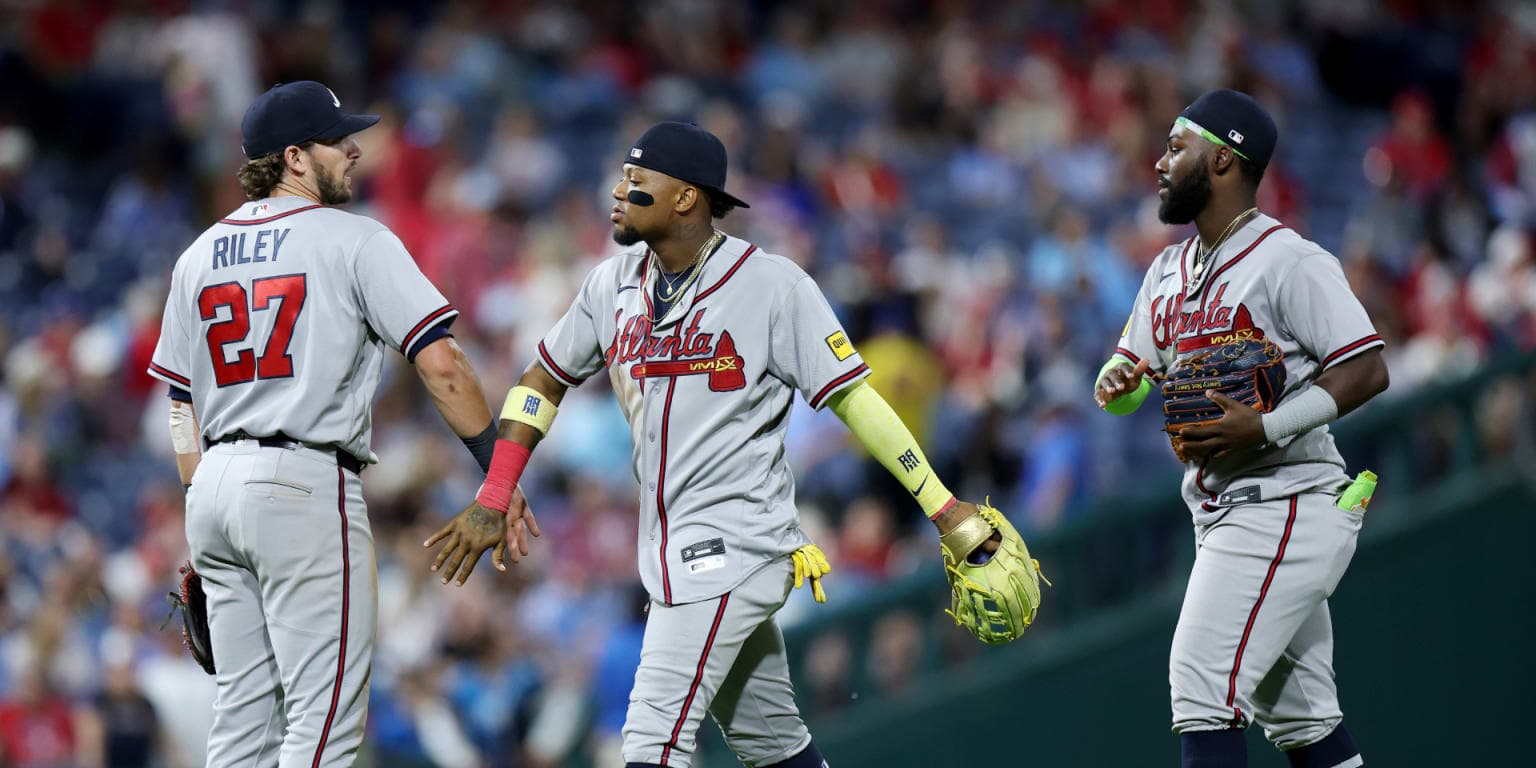
Atlanta locked up Ronald Acuña Jr., Ozzie Albies, Matt Olson, Austin Riley, Michael Harris II, Spencer Strider and Sean Murphy on long-term deals during a defining stretch. Five years later, the results are mixed, with injuries and production swings shaping the story.
From 2019-22, the Atlanta Braves built an extended core around young stars, then carried those long-term commitments through a World Series title run in 2021 and beyond. An MLB review of those seven major extensions frames the key question directly: after the ink dried, how has each player’s Braves tenure actually played out?
Ronald Acuña Jr. was the centerpiece of the group, signing an eight-year, $100 million extension in 2019. The projection was five-tool impact for a decade, but the review points to repeated health interruptions, including major knee injury with ACL tears in both legs, plus other ailments. Acuña’s peak seasons still appear in the record, including his 2023 MVP-level production, yet the longer-term picture is durability volatility.
Ozzie Albies’ 2019 extension (seven years, $35 million) began in momentum, with 2019 as a career-year baseline in the franchise’s telling. Since then, the review describes more down years than standout ones, highlighting that his most recent stretch has lagged his earlier offensive outputs as he moves into his 30s.
The Braves’ spending also included a major hitter at first base and a long-term commitment to their everyday position player leaders. Matt Olson’s 2022 extension (eight years, $168 million) arrived after a trade to Atlanta and a breakout 2023 that included league-leading home runs and RBI in the review’s summary. Since then, Atlanta’s story about Olson becomes a mix of still-strong run production with fewer top-end seasons, alongside defensive recognition.
Austin Riley’s 2022 extension (10 years, $212 million) was signed during what the review calls the best stretch of his career, with strong run creation and frequent MVP consideration from 2021-23. The review then notes a drop-off, describing a combination of missed time due to injury in 2024-25 and, even in 2026, an extended slump at the plate compared to the earlier peak.
Michael Harris II’s 2022 extension (eight years, $72 million) was also framed as a bet on an elite two-way ceiling. The review credits early success, including a 2022 Rookie of the Year season featuring both power and speed plus standout defense, then describes a two-season dip in offensive output from 2024-25. It also highlights a rebound in 2026 that included career-best home run production and major defensive impact.
Spencer Strider’s 2022 extension (six years, $75 million) looks the most like a cautionary tale in the group because the review centers on the injuries that derailed his powerful start-to-starter transition. It recounts his early dominance, then details the sequence of elbow surgeries and subsequent limitations across 2024-26, positioning his future as unresolved even as his age is still relatively young.
The final extension, Sean Murphy’s 2022 deal (six years, $73 million), was intended to lock in catching stability after the Braves acquired him. The review says that certainty did not last, pointing to oblique issues after his 2023 production and a difficult return in 2024 that included a low batting line over a large sample.
Taken together, the review depicts a Braves extension era that produced real highs for several position players, while pitching and injury-impacted profiles have created the “what ifs.” The franchise still has meaningful evidence of star-level impact from multiple names, but the full version of each extension’s value has not arrived consistently across the full 2019-22 cohort.
Comments
Community guidelines. Comments may be removed for violations.
Loading comments...