
THE APEX TIMES
In the playoffs, batters are winning more Automated Ball-Strike challenges as teams use ABS more often
Across the Wild Card Series and Division Series, 71 of 121 Automated Ball-Strike (ABS) challenges were successful, a postseason pattern that has teams leaning into the technology’s review process.
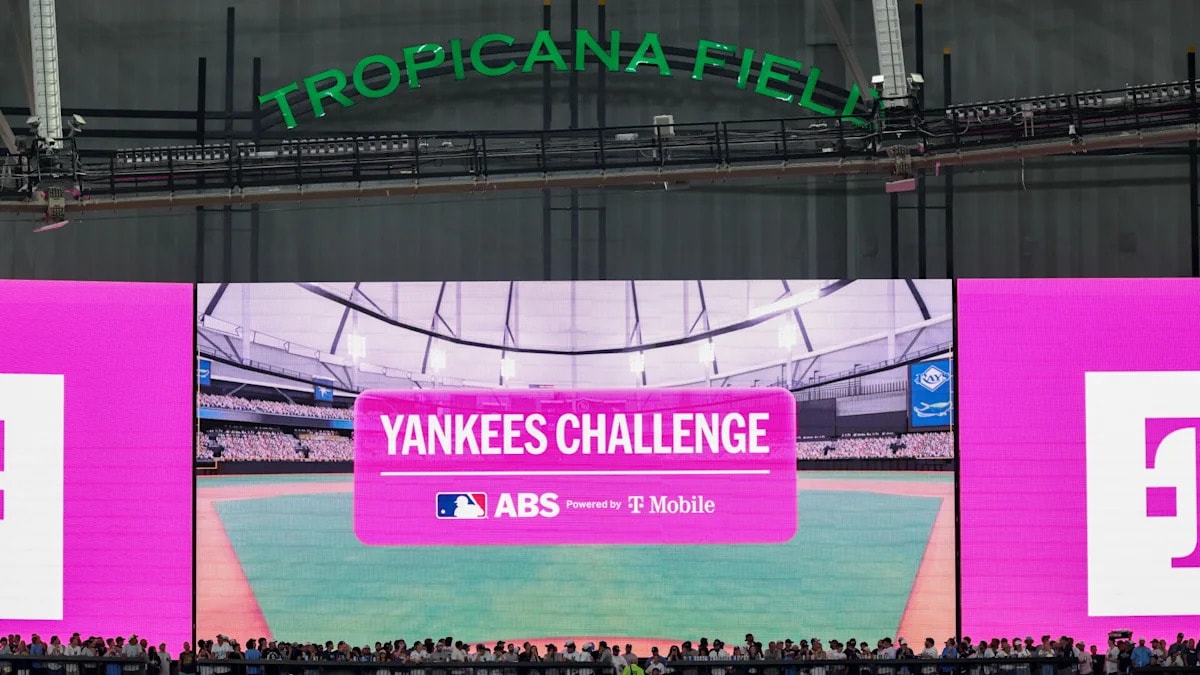
Major League Baseball’s Automated Ball-Strike System (ABS) is arriving in the postseason with a different risk profile than it carried in the regular season. In the Wild Card Series and Division Series, teams used ABS challenges at a higher overall rate, and batters were more likely to win those challenges than they were earlier in the year, according to a report published by Yahoo Sports.
The postseason numbers cited by Yahoo Sports put the challenges into clear perspective. Across 25 games spanning both rounds, 121 overall ABS challenges were submitted, and 71 of them prevailed. That means more than half of the attempts to overturn a called ball or strike through the robot umpire review ended with the batter’s side getting the benefit of the ruling.
ABS challenges function as a limited, team-controlled mechanism to review certain ball-strike calls using the system’s tracked data. In practice, each challenge is an acknowledgement that a plate appearance can hinge on a single pitch, and the postseason can amplify that effect because the margin for error shrinks as each game becomes more consequential.
The report also frames the postseason trend as a utilization shift. While ABS debuted earlier as a regular-season feature, teams in October have increasingly treated the challenge as part of late-game strategy and broader plate-discipline management. The same theme appears in the data: a combination of more challenges being used and a higher likelihood that those challenges change the call.
There is also a competitive nuance behind the headline numbers. A batter’s success rate on ABS challenges is not only about how the system reads the pitch, but also about how often teams choose to challenge and which moments they decide are worth spending a review. In other words, the success rate can reflect both true precision and the context of when challenges occur, such as when counts become tight or when late at-bats carry high leverage.
For fans and teams, the immediate takeaway is straightforward. As the postseason progresses, managers will continue to weigh ABS challenges as a tool that can swing outcomes one pitch at a time, and the early October sample suggests batters have benefited from those reviews more frequently than they did in the regular season. The next question is whether this holds through additional rounds, or whether teams adjust their challenge behavior once they learn what is working and what is not.
Why It Matters
- In tight October games, a single ball or strike can affect pitch sequencing, swing decisions, and late-inning matchups.
- A higher success rate can change how teams manage resources, including when they choose to spend limited challenges.
- If the trend continues, ABS could become a more central tactical lever for managers rather than a niche tool.
- It adds another layer to playoff game planning, where plate appearances and called pitches become easier to contest.
Key Facts
- In the 2026 Wild Card Series and Division Series, teams made 121 total ABS challenges across 25 games.
- 71 of the 121 ABS challenges were successful in those rounds, meaning the original call was overturned in more than half of attempts.
- The report characterizes postseason batter performance on ABS challenges as better than in the regular season.
- The report also says teams used ABS challenges more overall in the postseason than earlier, reflecting increased reliance on the system’s review process.