
THE APEX TIMES
Inbox trade talk in Philadelphia: Could the Phillies pry an elite bat without touching their rotation core?
A proposed “what if” scenario from Yahoo Sports frames a high-leverage question for the Phillies’ front office: if a ready-made offensive upgrade were available, would it cost one of the club’s best three starting pitchers? The answer, at least in this hypothetical, hinges on what the Phillies would demand in return and how much value they can keep off the table.
The Phillies’ biggest roster-building tension this offseason is straightforward to describe, even if it is hard to fix: they have needed more consistent offense, and they have had to decide what kind of trade price they are willing to pay. In a Yahoo Sports thought experiment published Oct. 10, the premise is that Philadelphia could receive a proven, impact-level player at a position of need, one described as a “guaranteed 3-4 WAR” type. The catch in that scenario is that the incoming bat would have to come with “something of value” back to the trading team.
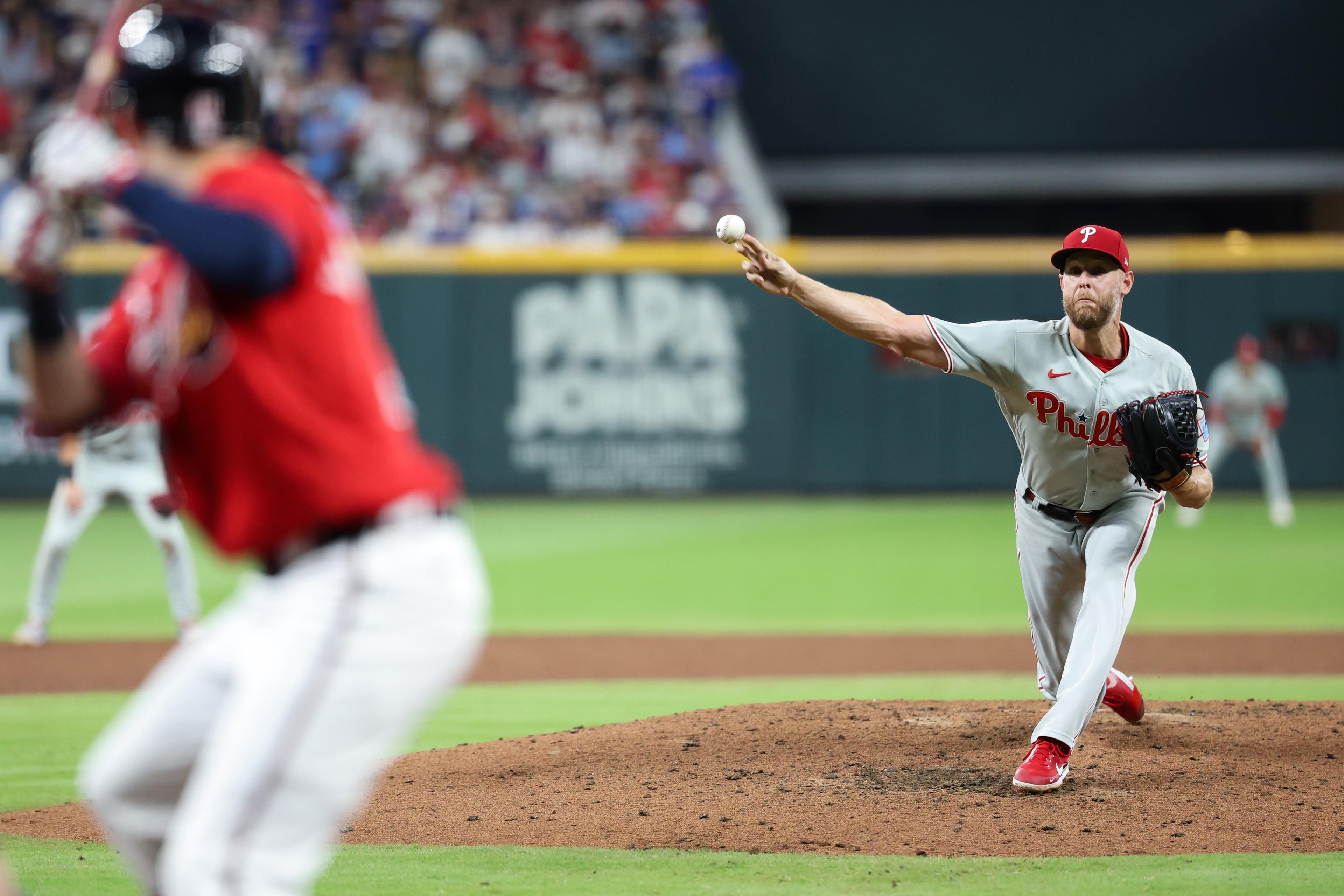
In the proposed framework, the Phillies would not simply be buyers, they would have to make a real offer anchored by an asset at the highest tier of their system. Yahoo’s question is direct: would Philadelphia move one of its top three starting pitchers to make the offense better? The rotation, after all, is the part of the roster that typically offers the clearest, tradable value in dollars and durability, even when a team would rather keep its internal foundation intact.
The hypothetical also matters because it spotlights how positional preferences shape deals. The article describes the trade-return constraint as a kind of “position they did not want to move from.” In other words, the Phillies would have to give up value that aligns with what the other club can accept, while protecting what Philadelphia considers untouchable. That can lead to a smaller menu of plausible swaps, particularly if the Phillies believe their offensive ceiling depends on getting a bat that can change at-bats immediately rather than a longer-term projection.
That framing becomes even more important when you consider how offense is usually built in MLB. Elite run production often requires multiple converging factors: contact quality, discipline, extra-base power, and lineup balance that reduces the number of “dead” plate appearances. A single player can help, but the argument behind the scenario is that Philadelphia would need a player who is already validated at a high level, not just a player who might look better in a new environment.
If this were a real trade market, the Phillies’ negotiation stance would likely circle around one idea: keep your rotation’s best arms in place unless the incoming bat is both premium and immediate. Trading one of the club’s leading starters is not a minor decision, because it would reshape how the staff works from top to bottom. It could also shift the team’s internal confidence about who absorbs innings and who handles leverage starts down the stretch and into the postseason.
At the same time, if the Phillies genuinely believe their offense is “moribund,” as described in the Yahoo piece, waiting for gradual improvements may not be sufficient. This is why the “top-three starter” question has real baseball logic behind it, even though the article is presented as a scenario. When a club is searching for a specific kind of run creation, front offices sometimes prioritize acquiring a finished product, and that can force them to consider trades that feel expensive on paper.
The practical takeaway for fans is to watch what Philadelphia is actually willing to move, and what it insists on receiving. Does the team chase a player whose value is confirmed at the plate and at a position of need? Or does it pursue a package that spreads risk across multiple bats while protecting the rotation? Either path says something about how the Phillies intend to convert future plans into immediate run production, which is the only currency that matters in October.
For now, the Yahoo Sports piece functions less as a rumor and more as a boundary test. It lays out a structure for how a meaningful offensive improvement could happen without surrendering everything, and it underlines the central trade-off: impact at the plate versus the stability of a pitching staff that can carry a lineup through cold stretches. The next question is whether the Phillies’ actual trade talks, if any, reflect the same kind of hard-line valuation in reverse.
Why It Matters
- A decision on whether to trade from the rotation affects how the Phillies plan for innings, leverage matchups, and postseason readiness.
- MLB offense is often the difference between making the playoffs and exiting early, so the price of acquiring an impact bat can define a team’s next window.
- Deal constraints, including what positions a club is willing to move, can shrink the set of realistic trade partners.
- If Philadelphia treats pitching as untouchable, it will have to find value elsewhere, such as in a smaller upgrade or a multi-player package.
Sources
Key Facts
- Yahoo Sports posed a hypothetical trade framework involving the Phillies improving a struggling offense.
- The imagined incoming player is described as a “guaranteed 3-4 WAR” type at a position of need (third base or outfield are mentioned).
- The hypothetical requires the Phillies to send back “something of value” to the other team.
- The trade-return value would come from a position the other team “did not want to move from.”
- The central question is whether the Phillies would trade one of their top three starting pitchers to make the deal work.