
THE APEX TIMES
Iowa’s NCAA Tournament projection puts pressure on Ben McCollum’s second act in the Big Ten
After a breakthrough run to the Elite Eight, the Hawkeyes open the next season with tournament projections lagging behind several Big Ten peers, leaving Iowa to prove it can recreate the magic of last year.
Iowa’s offseason storyline is simple, and it is uncomfortable. Tournament projections for the Hawkeyes are not tipping heavily toward March, even after a run to the Elite Eight that turned the program into a national conversation. In the framing of a recent national report, the concern is not that Iowa lacks talent, but that the team may be starting from a lower baseline than many Big Ten contenders, with “anything in play” instead of anything guaranteed.
The contrast begins with last March. Iowa’s season breakthrough was attributed to a roster built with a transfer-heavy look and with contributions from overlooked pieces, a combination that helped the Hawkeyes overperform expectations. That kind of run tends to raise the floor for how opponents and analysts view a team. Yet the same report suggests the wider projection picture has not fully followed, meaning Iowa may be treated more like a team that needs to earn its way than a team presumed to be locked in.
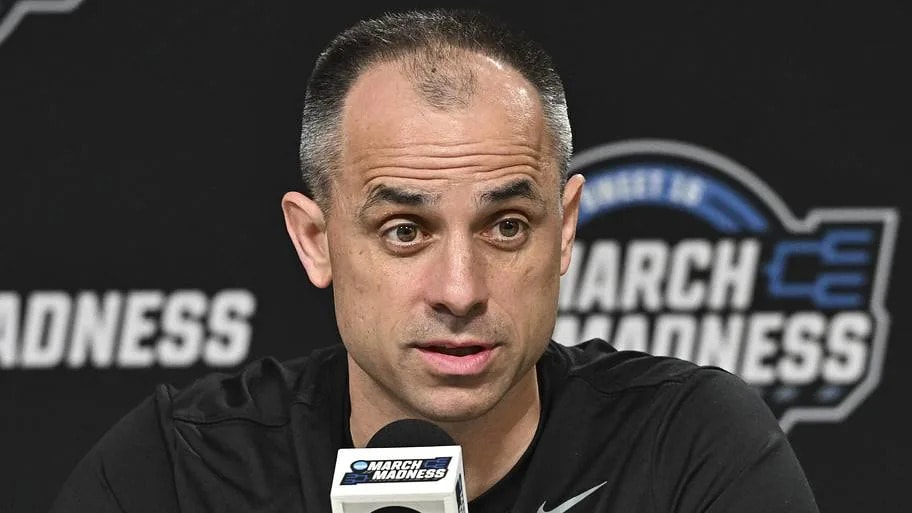
Ben McCollum’s second year as head coach sits at the center of the expectation gap. First-year coaches often get measured by development and identity. Second-year evaluation usually shifts toward consistency and roster fit, because the staff has had time to shape the roster around a clearer plan and because the market has a year of film and learning it takes to beat you. For Iowa, the question becomes whether a roster that produced a memorable tournament run can translate that success into a stronger regular-season profile.
Part of that debate is roster change, including a major loss referenced in the national report. The Hawkeyes lost Bennett Stirtz, and the implication in the projection discussion is that the current outlook may have been marked down in the wake of that departure. In college basketball terms, losing a single impact player can ripple across spacing, matchups, and defensive responsibilities, and it can be hard for incoming pieces to replicate production immediately.
The report also points to how Big Ten peers are being viewed relative to Iowa. The Hawkeyes trail several conference neighbors in tournament projections, which matters because the Big Ten is a league where strength can turn a “good resume” into a “borderline” one depending on outcomes. When multiple teams are treated as postseason locks or high seeds, the margin for error shrinks for teams projected outside the most secure tier.
For Iowa, the path to changing that projection will likely be defined by what the Hawkeyes show early and how they separate themselves from the middle pack. If Iowa can build a resume with convincing wins in the nonconference phase and then avoid a pattern of inconsistent conference results, the tournament picture can correct quickly. If the Hawkeyes instead look like a team with peaks but not enough stability, the low projection baseline becomes self-reinforcing as selection-week sorting accelerates.
There is one more layer to watch: whether Iowa’s roster construction continues to match the style that worked in March. Last season’s roster blend helped Iowa thrive in an environment where matchup issues and momentum matter. The test now is whether the team can do it over longer stretches in the regular season, when opponent scouting is deeper and the standings pressure grows.
As the season approaches, the key question is whether Iowa’s Elite Eight run was a repeatable template or a high-water mark from a uniquely timed collection of roles. McCollum’s second year will be evaluated in that shadow, and the Hawkeyes’ ability to move up the projected ladder will likely be judged through the same lens that gets teams invited and seeded: quality wins, consistency, and the capacity to keep performing when tournament-level stakes arrive early in February and March.
Why It Matters
- Tournament projections shape public pressure, but more importantly they influence how selection-week resumes are evaluated against a stacked Big Ten field.
- If Iowa is viewed as outside the secure group, each early loss can carry extra weight when bubble teams are sorted.
- McCollum’s second year becomes a measuring stick for whether last year’s tournament success was process-driven or circumstantial.
- Iowa’s ability to replace production and maintain matchup advantages will likely determine whether the Hawkeyes can climb into a stronger postseason tier.
Key Facts
- A national report on Iowa’s outlook says NCAA Tournament projections place the Hawkeyes behind several Big Ten peers.
- The same report points to Iowa’s Elite Eight run as the reason fans expect more, but notes the current projection picture is still low.
- Ben McCollum is entering his second year as Iowa’s head coach.
- The report frames last season’s run as a product of transfer portal additions and overlooked contributors finding roles.
- The report references a significant roster loss involving Bennett Stirtz, which is part of why Iowa’s outlook is viewed as lower.