
THE APEX TIMES
Jackson Kent’s control arrives at the right time, giving the Nationals a boost
After early starts that left plenty of questions, Washington’s young left-hander showed the command and curveball shape that can turn a promising call-up into a rotation anchor.
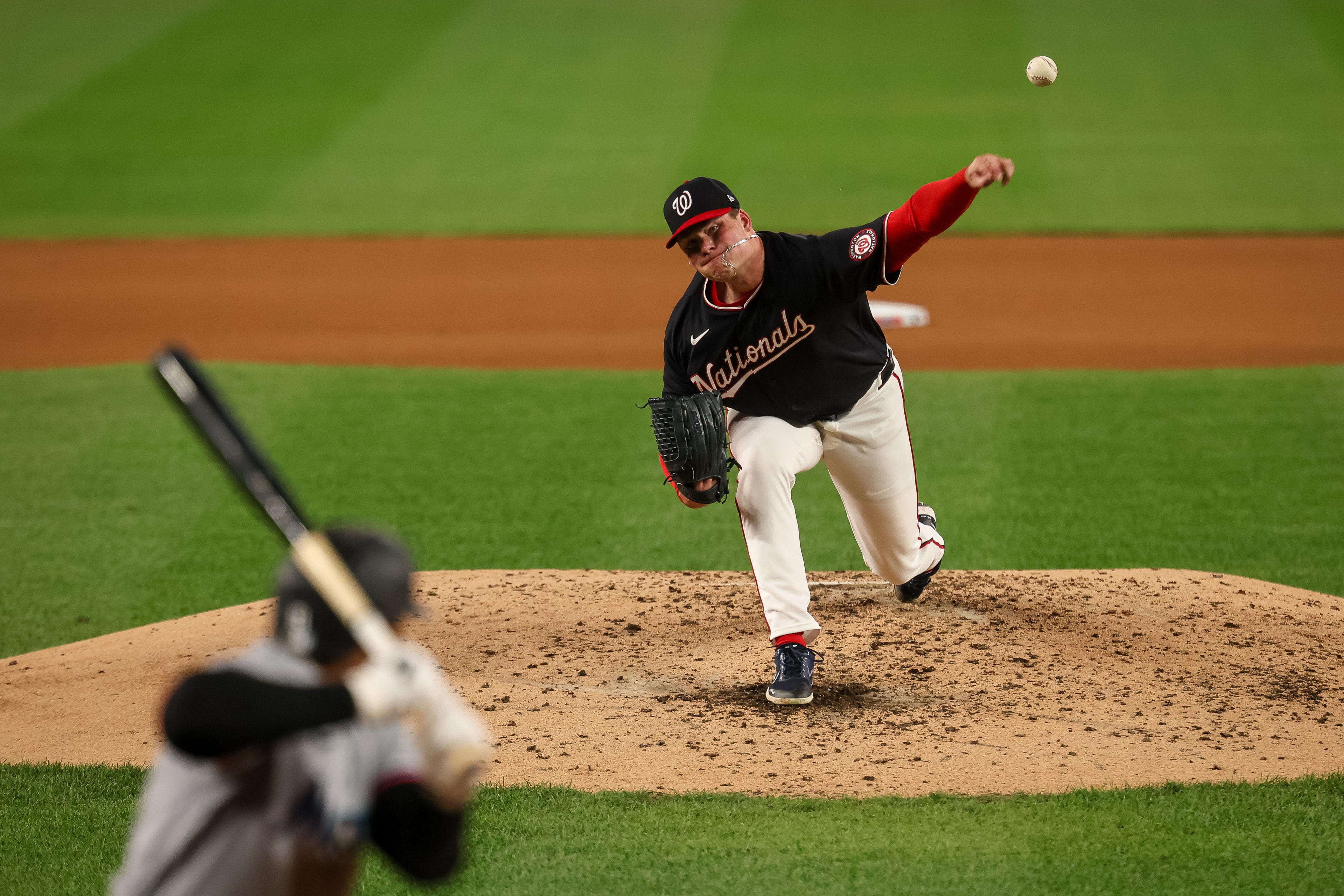
Washington’s young left-hander Jackson Kent delivered what one account called the best start of his early MLB career, a performance built around command, a sharper curveball, and a steadier approach when the game demanded it.
The timing mattered. The Nationals have had trouble stringing together “great pitching performances,” with the season’s brighter pitching moments coming disproportionately from a small group. As the report notes, outside of Cade Cavalli and Foster Griffin, those quality starts have been harder to come by, leaving Washington looking for answers behind its top options.
Kent’s path to this breakthrough has been uneven. Through his first three starts, he was described as “shaky” and “antsy,” a setup that suggested he had not yet fully settled into the rhythm of facing Major League hitters. The latest outing was framed as the point where those growing pains turned into real, usable execution.
What changed was not only results, but the way the performance was portrayed. The same report emphasized Kent’s command, curveball effectiveness, and “moxie,” implying the right-hander-hitter battle tilted back toward the pitcher. Command matters in a starter’s development, because it determines how often a pitcher can attack hitters instead of nibbling for strikes or falling behind.
For Washington, a pitcher who can start throwing with conviction early in the count can do more than simply suppress runs. It can stabilize innings for the rest of the staff, create more predictable pitch counts, and reduce the bullpen’s leverage exposure over the course of a long season.
The Nationals’ broader pitching landscape remains shaped by that duo of Cavalli and Griffin, which the account quantifies by pointing to a combined 28 quality starts from the two. Kent’s emergence, even if still young and still forming, matters because it widens the set of outings Washington can reasonably expect to be competitive, especially in games when the bullpen would otherwise be asked to cover for the starter.
What to watch next is whether this outing becomes the new baseline or a brief peak. A young pitcher’s “best start” story can be a turning point, but the longer test is consistency across starts: maintaining strike-throwing conviction, reproducing curveball execution, and handling the moment-to-moment adjustments that come from facing professional hitters multiple times.
If Kent’s command holds, Washington gets a clearer picture of its rotation depth and can make its late-season plans with less uncertainty. If it fades, the early jitters will remain part of the developmental narrative, and the club’s search for reliable pitching will likely return to the front of the conversation.
Why It Matters
- A reliable second or third option in the rotation can ease pressure on a team’s bullpen over a long schedule.
- Kent’s improvement affects how Washington can plan around rotation availability in games where the top starters are not at full strength or are limited.
- If Kent sustains command and curveball results, it gives the Nationals more internal confidence in their young-pitcher development pipeline.
- Kent’s emergence also changes the rotation math for the rest of the season, potentially creating more lineup flexibility when matchups shift.
Key Facts
- Jackson Kent, a left-handed starter for the Washington Nationals, is reported to have delivered the best start of his young MLB career.
- The report describes Kent’s early big-league starts as “shaky” and “antsy,” before the latest outing showed more control and composure.
- The performance was attributed to improved command, curveball effectiveness, and the ability to handle key moments.
- Washington’s pitching had been led by a small group, with Cade Cavalli and Foster Griffin accounting for a combined 28 quality starts.
- Outside of Cavalli and Griffin, the report says great pitching has been harder to come by for the Nationals.