
THE APEX TIMES
Jacob Misiorowski fires 105.5 mph heat for another Brewers milestone vs. Cubs
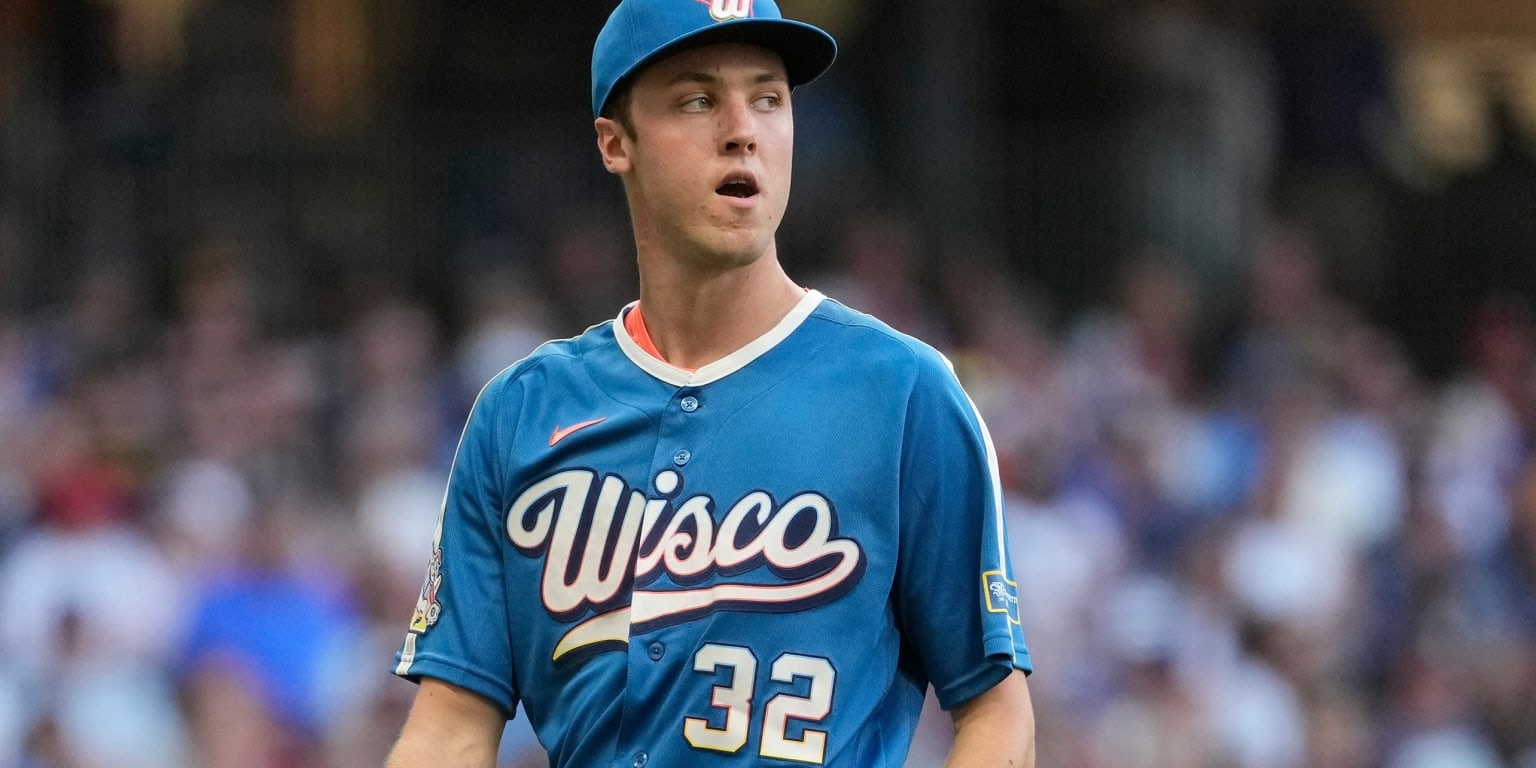
In a series opener at American Family Field, Milwaukee right-hander Jacob Misiorowski reached back for 105.5 mph, setting off a new round of conversation about pace and power in the Brewers-Cubs matchup.
Milwaukee’s Jacob Misiorowski turned an early at-bat into a headline when he registered a 105.5 mph fastball against Chicago’s Pete Crow-Armstrong at the top of the series opener at American Family Field. The pitch came in an 0-2 count to the Cubs center fielder, a moment that underscored how Misiorowski’s velocity can compress time at the plate even when hitters are in a two-strike hole.
According to the MLB game report, Misiorowski needed only three pitches to complete the sequence in that opening confrontation, and the 105.5 mph figure was the latest marker in what has already become a standout run for the right-hander. The “Miz” moniker in the release reflects how often his radar readings have drawn attention, and the newest number suggests the Brewers are again getting that same maximum-end stuff at a time when every other pitch can feel more consequential.
Crow-Armstrong’s response was notable in its own right. After Misiorowski’s 105.5 mph fastball, the Cubs center fielder managed to foul off the heat, extending the at-bat even as the count remained in a precarious position. That foul is often where the story shifts from raw velocity to the finer question of bat speed and timing, especially when a hitter sees elite speed coming from a pitcher who is working uphill counts.
For Milwaukee, the backdrop matters: this was the opening act of a mid-summer set against a familiar opponent, and it arrived with Misiorowski in position to define early momentum. When a starter or high-leverage arm reaches a new velocity ceiling in the first inning, it can change how both lineups behave for the rest of the night, because hitters must decide whether to chase, shorten, or attempt to survive while trusting the next pitch will arrive with similar speed.
More broadly, 105.5 mph is the kind of figure that does not happen in most seasons, let alone repeatedly. The release frames it as “another historic feat,” which places the episode within an ongoing personal benchmark, not just a one-off blowup. In practical terms, it is also a reminder of how difficult it is to generate fair contact against a pitch that arrives at the upper end of modern velocity, particularly when it shows up in a count designed to be tough on hitters.
What to watch next is how the Cubs respond after that first at-bat lesson. Even with fouls and adjustments, hitters often face a second-order problem when they see a pitcher at a particular velocity: they must decide whether to respect the top-end pitch more than their instincts prefer, or whether to commit to a timing approach and trust they can handle it enough to protect the zone.
For Milwaukee’s part, the immediate takeaway is the same: Misiorowski’s ability to deliver that kind of speed early gives the Brewers an additional weapon to press the advantage before a game settles into its longer rhythm. The velocity itself will get the attention, but the real test is whether Milwaukee can translate that early force into sustained success as the series continues.
Still, one pitch does not write the entire narrative. While the 105.5 mph fastball and the quick sequence in the opening at-bat are meaningful, the season-level story ultimately belongs to what happens pitch-to-pitch after hitters see the radar readings once, then twice, then repeatedly. This matchup will offer another chance to see whether Misiorowski can maintain that edge as Chicago adjusts.
Why It Matters
- A 105.5 mph fastball is a rare event in itself, and doing it again can reshape how a hitter (and an entire lineup) prepares for the rest of a game.
- Velocity in two-strike counts increases the odds of quick decisions, forcing more swing-or-survive tradeoffs for hitters.
- Early milestones can set the tone for a series by pushing the opponent to adjust immediately rather than waiting for later looks.
- How the Cubs respond after seeing top-end speed in the first inning will be a key subplot as Milwaukee’s rotation plan unfolds across the series.
Key Facts
- Milwaukee’s Jacob Misiorowski recorded a 105.5 mph fastball against Chicago’s Pete Crow-Armstrong.
- The pitch was thrown in an 0-2 count during the opening at-bat of the series opener at American Family Field.
- The MLB report says Misiorowski needed only three pitches to complete that at-bat sequence.
- Crow-Armstrong fouled off the pitch after Misiorowski’s 105.5 mph offering.
- The matchup took place in the Brewers-Cubs series opener on June 26, 2026 (reported June 27 by MLB).