
THE APEX TIMES
Jaguars shift the tempo for Travis Hunter’s two-way role, and it looks smarter in year two
Jacksonville’s approach to using Travis Hunter on both sides has been cautious, but his production as a primary defender is starting to outweigh the growing pains.
In his second NFL season, Travis Hunter is spending more of his time at cornerback for the Jacksonville Jaguars, and the adjustment appears to be paying off. The core idea, according to the way Jacksonville has managed his deployment, was not to force a full-time two-way workload immediately. Instead, the Jaguars have slowed that plan down, emphasizing the part of Hunter’s game that translates most reliably to Sunday football right now.
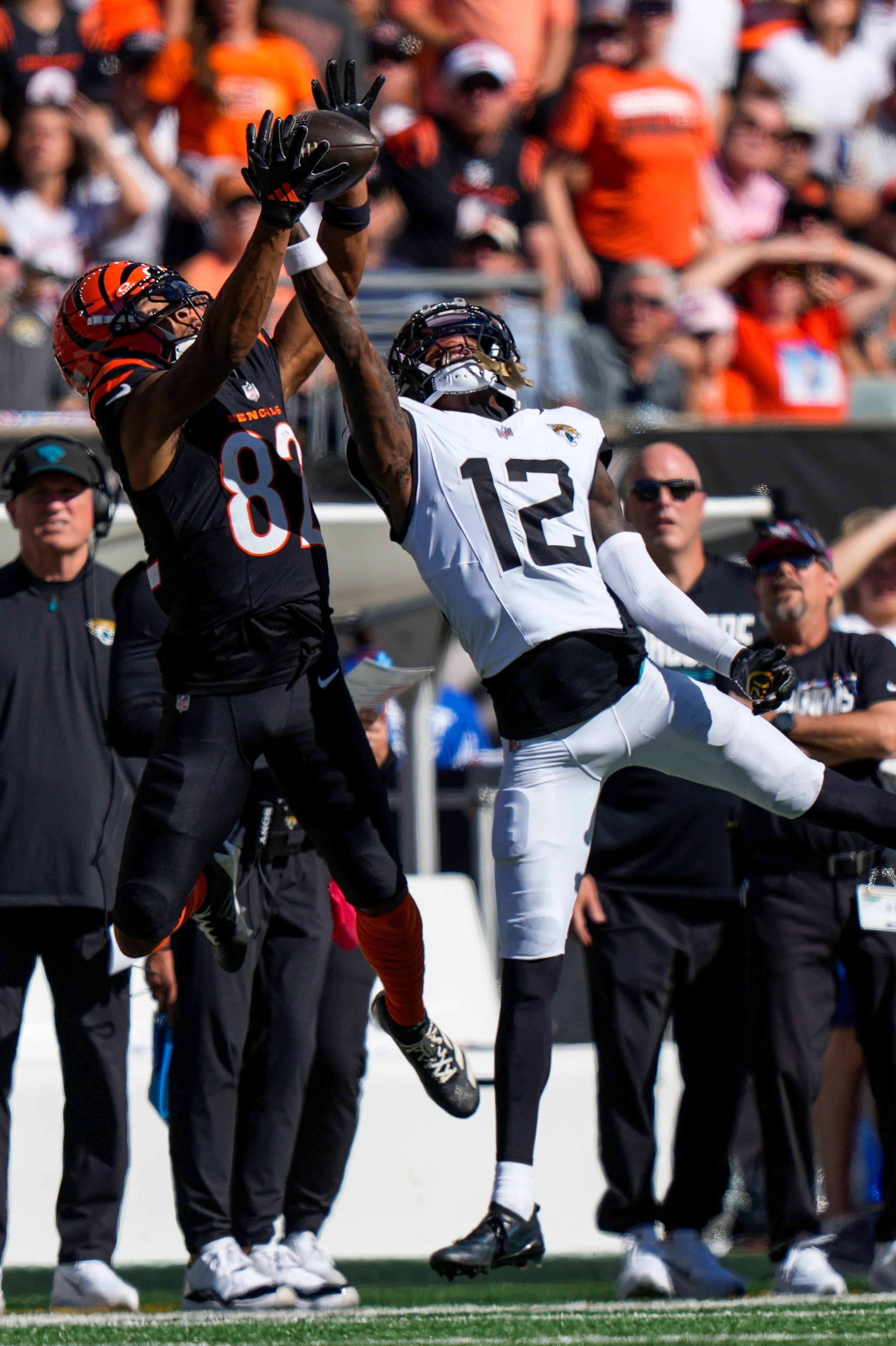
Hunter’s impact was on display in Jacksonville’s Week 4 meeting with the Cincinnati Bengals at Paycor Stadium on Oct. 4, 2026. A play that briefly looked like a momentum-changing turnover for the Jaguars ended up being erased when a pass-interference penalty on a teammate prevented the interception from standing. Even so, the moment reinforced what Hunter brings when he gets his hands on the ball: anticipation, quick reactions, and the ability to flip a defensive sequence from routine coverage into a highlight.
The Jaguars’ larger point is that Hunter does not need to be everywhere at once to change games. The NFL is built to exploit mismatches, and while Hunter’s ceiling has always included making plays as a receiver, his development as a defensive player is what allows Jacksonville to build confidence around his roster role. When he is asked to defend more snaps, he can settle into routes and timing on that side of the ball, which is where young two-way talents often either grow or get overwhelmed.
That matters for Jacksonville’s weekly decision-making. A two-way plan, even one rooted in a player’s unique athletic profile, has to coexist with defensive communication, coverage calls, and the demands of learning opponents’ passing patterns. By keeping Hunter’s primary assignments more defensive than experimental, Jacksonville is reducing the number of variables it has to correct during games. The result is a clearer identity for the position group, with Hunter functioning as a cornerback first.
At the same time, the Jaguars still have to manage how Hunter’s offensive involvement fits into a defense-first development plan. A “slowed down” approach suggests that Jacksonville is treating his full two-way integration as a long-term roster-building project, not a short-term marketing pitch. That philosophy also tends to protect the team from overcommitting reps in situations where the coaching staff would rather see cleaner execution and fewer communication breakdowns.
For Hunter, the immediate objective in year two is straightforward: make plays consistently from the defensive side and keep the upside of his ball skills available in every defensive series. The interception that did not stand is still instructive. It shows he is in the right spaces quickly enough to create turnover opportunities, even when the play gets undone by an error elsewhere.
The picture to watch next is how Jacksonville continues to balance Hunter’s defensive stability with opportunities that come from his athletic versatility. If his cornerback snap share keeps rising without compromising coverage discipline, the Jaguars may feel comfortable expanding the ways they use his receiving talents. If the team tightens up execution around him, the kind of “magic” that flashes on highlight-reel moments is more likely to show up as an actual turnover and a win-making swing.
In the NFL, development plans are often judged by what happens in late-game situations, not in practice hype. Hunter’s role in Jacksonville is moving toward a more controlled version of the two-way idea, and the early sign is that the defenders-first adjustment is helping him demonstrate impact even when the biggest moment is taken away by a penalty.
Why It Matters
- A more defensive-first two-way approach can reduce risk for a team that needs clean coverage communication each week.
- Hunter’s development as a cornerback affects how confidently Jacksonville can design game plans around his athletic mismatch potential.
- Because a stalled interception still showed quick turnover instincts, the next step is whether penalties and execution around him improve so plays count.
- If Hunter’s role continues to expand on defense, it can change how opponents structure routes and throw targets, potentially influencing the Jaguars’ defensive identity long-term.
Sources
Key Facts
- Travis Hunter is in his second NFL season with the Jacksonville Jaguars and has been used more primarily on defense.
- A play Hunter made in Jacksonville’s Week 4 game versus the Cincinnati Bengals on Oct. 4, 2026 involved an interception that did not stand because of a teammate’s pass-interference penalty.
- The Yahoo Sports report characterizes Jacksonville as having slowed its plan to make Hunter a two-way star.
- The Bengals game referenced in the report was played at Paycor Stadium and ended with Cincinnati losing 22-17.
- The image caption associated with the report identifies Hunter as the Jaguars player making the matchup play during the fourth quarter.
- Hunter’s defensive production is being presented as the proof point for Jacksonville’s deployment strategy in year two.