
THE APEX TIMES
James Wood’s rare size trick turns a base hit into a run at Oracle Park
The Nationals’ 6-foot-6 slugger reached down to touch home plate after taking a long way around the bases, showing how unusual physical tools can rewrite the most basic sprint-and-slide moments.
James Wood does not have to win every race with pure speed. On Monday night at Oracle Park, he showed another advantage, one that starts with how he moves through space. The Nationals were scoreless in the sixth inning when Wood turned a 114.3 mph single up the middle into the type of baserunning sequence that forces fielders to make split-second decisions.
At 6-foot-6, Wood’s frame and reach are not just headline-friendly. According to MLB, after the hit he promptly stole second base to put Washington’s first runner in scoring position of the night. Then, with Luis García Jr. driving in another at-bat, the Giants had to plan for Wood moving again with a chance to come home rather than settle for an eventual throwout at the plate.
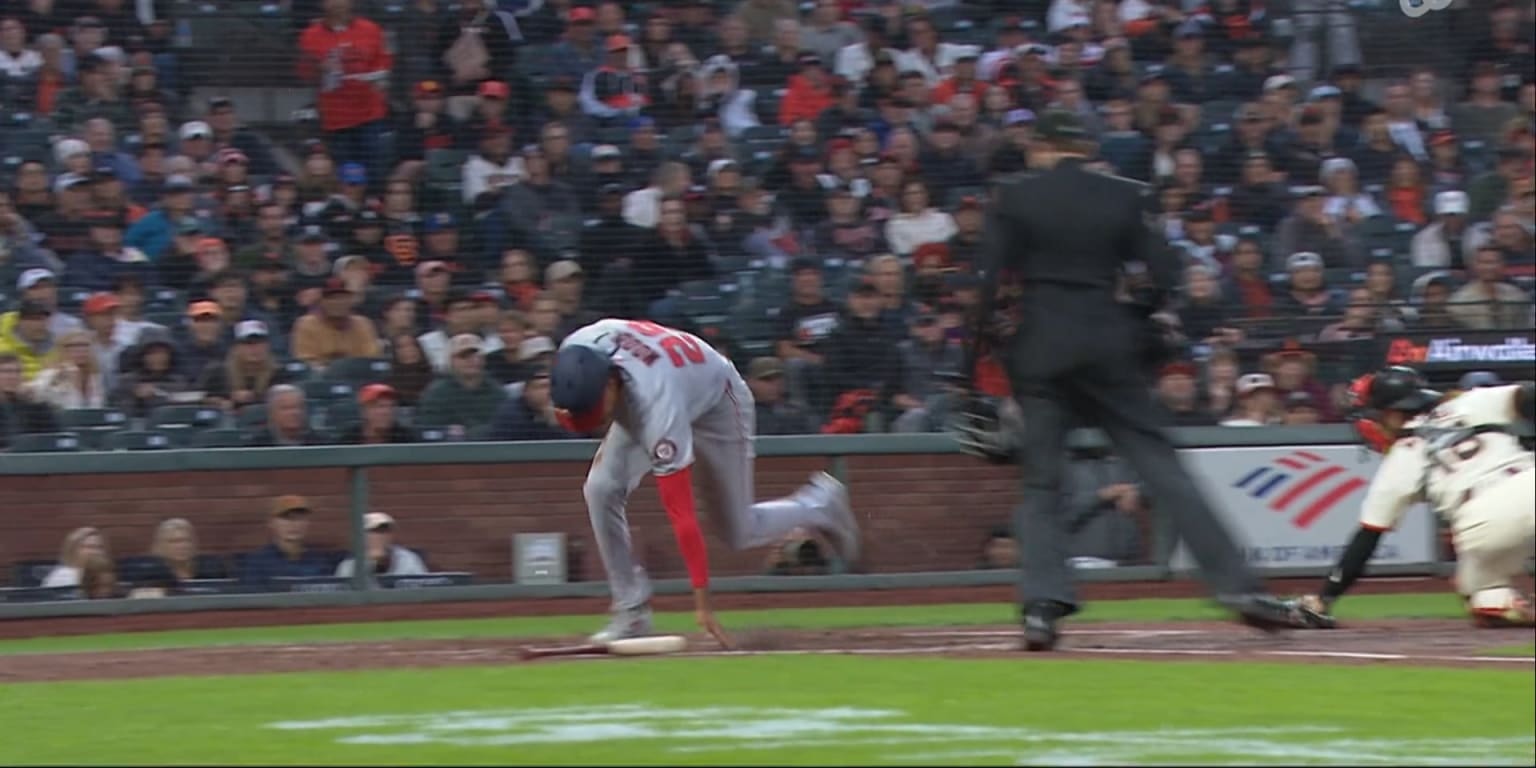
The next moment was built around contact and geometry. Wood charged around third and headed for home, aiming to avoid a throw from right fielder Jung Hoo Lee. In the process, his helmet came loose and bounced back into his face. MLB reported Wood picked up a minor scrape on his lower lip from that sequence, a reminder that baserunning aggression can look clean from the dugout but still carries everyday risk at full speed.
What made the play notable, though, was the finish. Rather than attempt the slide that most hitters default to when approaching home, Wood reached down and touched the plate with his left hand, avoiding Eric Haase’s tag on the way in. MLB framed it as something “only a 6-foot-6 athlete with that kind of wingspan can do,” a small but vivid illustration of how reach can turn a borderline scoring chance into a clear one.
That distinction matters because home-plate defense is designed for a specific script. Catchers are coached to anticipate the slide angle, the timing of a glove swipe, and the momentum of a runner’s hips. A runner who changes his approach, especially one who can put a hand down before the body arrives, compresses those defensive calculations. The result is not just a run, but a new problem for the next runner who reads the same cues from the same positions.
For the Nationals, Wood’s baserunning decisions are part of a larger offensive pattern, even on nights when the hits are not converting into steady scoring. Turning a hard-contact single into immediate secondary baserunner pressure helps a team manufacture more at-bats with less margin for error. Even in a scoreless game stretch, getting into scoring position quickly can alter how a pitcher attacks the next hitter and where in the strike zone defensive help becomes most tempting.
For baseball generally, the play serves as a reminder that “best practice” in baserunning is not one-size-fits-all. Sliding can be the right answer because it protects a runner from the tag and keeps a lower center of gravity under control. But when a player’s reach changes what is possible at the plate, the decision becomes situational and personal. Wood’s night at Oracle Park becomes a case study that coaches and teammates will watch, because it is the rare physical tool that directly answers a technical question in real time.
What to watch next is whether Washington leans into that style, particularly as the Giants adjust their coverage and anticipating habits for a tall runner who can either slide or simply reach depending on the throw lane. On the opposite side, San Francisco will likely take note of how right field and the catcher coordinate on late incoming runners, because the play depended on timing and positioning as much as it depended on height.
Why It Matters
- It shows how physical tools, especially reach, can change defensive expectations at home plate.
- For Washington, converting hard contact into aggressive baserunning pressure can raise the ceiling of a scoreless stretch.
- For San Francisco, the play highlights where coordination matters, right field coverage and catcher timing against unconventional plate approaches.
- It provides a live template for how runners may adapt their technique based on height, wingspan, and the throw lane.
Key Facts
- James Wood is listed at 6-foot-6 and used his reach to score from third at Oracle Park.
- In a scoreless sixth inning, Wood recorded a 114.3 mph single up the middle against Giants ace Logan Webb.
- Wood then stole second base, putting the Nationals’ first runner into scoring position of the night.
- After Luis García Jr. recorded the next hit, Wood went from third toward home and sought to avoid a throw from right fielder Jung Hoo Lee.
- Wood’s helmet came loose during the sprint and he picked up a minor scrape on his lower lip.
- Instead of sliding, Wood reached down and touched home plate with his left hand, avoiding Eric Haase’s tag.