
THE APEX TIMES
Jared Young’s unlikely rise from KBO to Mets impact, as team searches for consistent offense in 2026
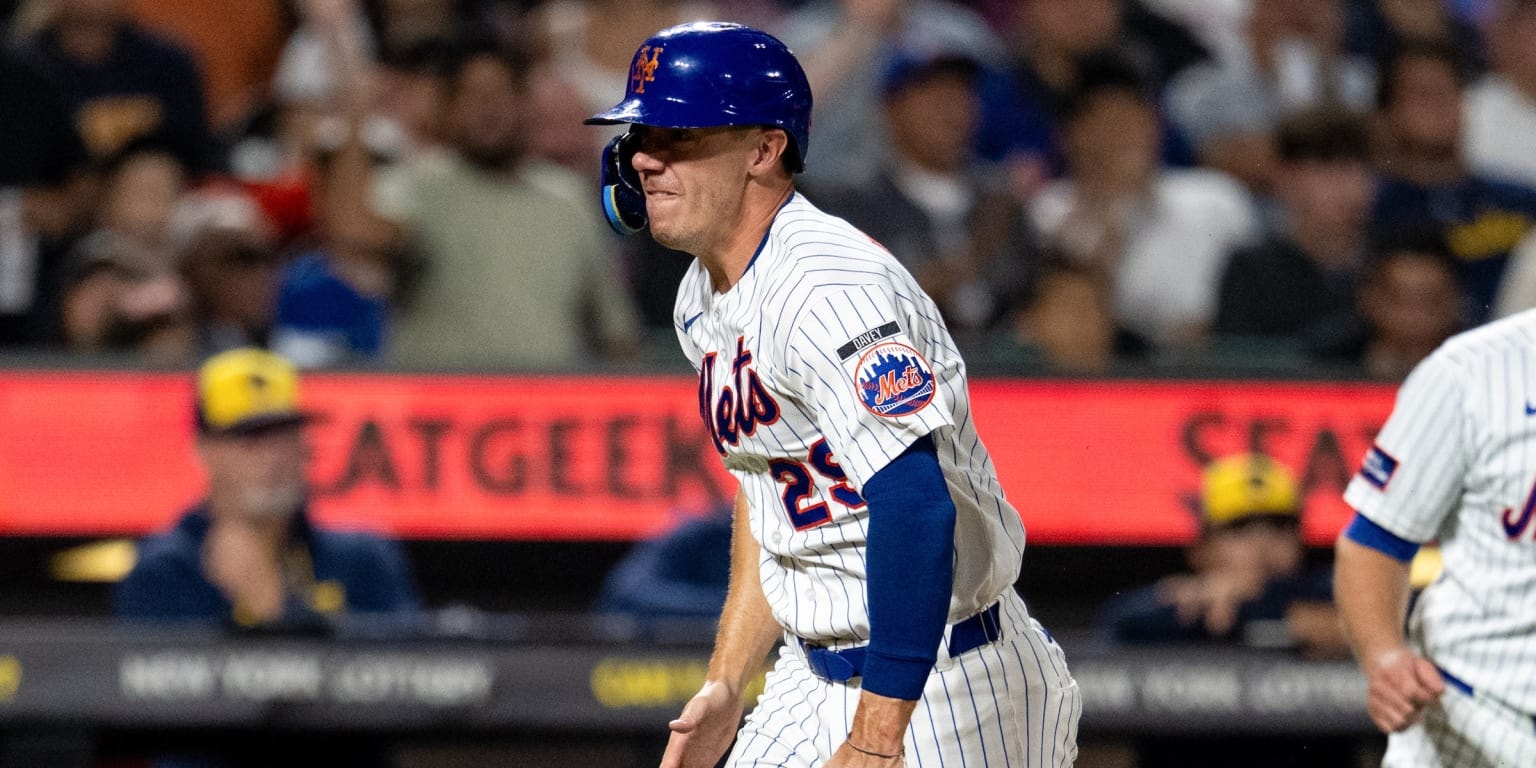
Even with established stars sidelined at different points, New York’s steady production has come from a player whose path to the majors ran through South Korea’s KBO. Jared Young has become a key reference point for the 2026 Mets offense.
New York’s search for reliable at-bats in 2026 has had an unexpected answer in Jared Young. In a season where the typical names are not always available, the Mets have pointed to Young as a current driver of run creation, to the point that team attention has shifted toward the out-of-the-ordinary hero rather than the usual franchise staples.
The framing in the Mets’ own release is straightforward: the question is who leads the club in OPS among active players, and the answer is not Juan Soto, even though he is widely viewed as the sort of hitter who would be near the top if he were available. The same is true of Francisco Lindor, whose offensive profile is central to New York’s identity but is not the active-season benchmark the club is referencing in this moment.
Instead, the Mets highlight Young, whose journey began outside MLB. Before arriving in Queens, Young played in the KBO, bringing a set of skills and a hitting background that were not the mainstream pipeline for Mets prospects. The relevance of that detour is that it shows how quickly a player can adjust once he finds the right role, reads, and approach at the major-league level.
Carson Benge is also mentioned in the Mets’ recap as part of the season’s set of storylines around young production. While Benge’s breakthrough is framed as real, Young’s contribution is presented as the more direct measure of day-to-day offensive impact, particularly through an advanced, league-agnostic lens like OPS.
As for the wider context, the Mets’ emphasis on “active” players is more than a technicality. Baseball seasons are often shaped by absences, and the club’s decision to focus on who is performing right now underlines the practical need of roster construction: lineup production cannot wait for full health or ideal lineup availability to arrive before it becomes meaningful.
What to watch next is how New York sustains the profile it is identifying through Young. If the Mets are using him as an offensive anchor, then his ability to keep OPS production consistent over the remainder of the season will matter for how the team balances its order and leverage at-bats late in games.
Equally important is whether this “unlikely hero” continues to show up against the variety of pitching the Mets face in the final stretch, since the difference between a good month and a playoff-caliber role is often how a hitter performs when opponents adjust. For now, the club’s message is clear: in 2026, Young’s KBO-to-Queens path has turned into a central part of the Mets’ present-tense offense.
The Mets’ release also implicitly connects the dots between different developmental threads: Young’s emergence as an established adjustment, Benge’s rookie spark, and the continued presence of elite names like Soto and Lindor as reference points, even if they are not the active leaders in the measure the team is spotlighting today. Together, those storylines describe a roster that is still finding its most dependable offensive identity.
Why It Matters
- OPS-based production is a quick way to gauge whether a lineup has enough multi-skill output (on-base ability plus power) to score in different game states.
- When established stars are unavailable, teams need repeatable at-bats from other roster options, and the Mets’ focus on “active” leaders underscores that need.
- Young’s KBO-to-MLB transition is a reminder that development is not limited to domestic prospect pipelines, which can broaden how teams evaluate international and nontraditional backgrounds.
- Sustaining strong production from nontraditional leaders affects lineup stability, late-inning roles, and how the Mets distribute batting-order leverage down the stretch.
Key Facts
- The Mets released a season update emphasizing who leads the team in OPS among active players.
- Juan Soto is referenced as a hitter who would be near the top in OPS if available, but is described as not currently active due to the injured list.
- Francisco Lindor is also referenced as a key offensive player, but not the active OPS leader in the Mets’ framing.
- Jared Young is identified in the Mets’ update as the active OPS leader and as exceeding expectations in 2026.
- Young’s path to Queens includes playing in the KBO before joining MLB.
- Carson Benge is mentioned as part of the Mets’ younger offensive storyline for 2026.