
THE APEX TIMES
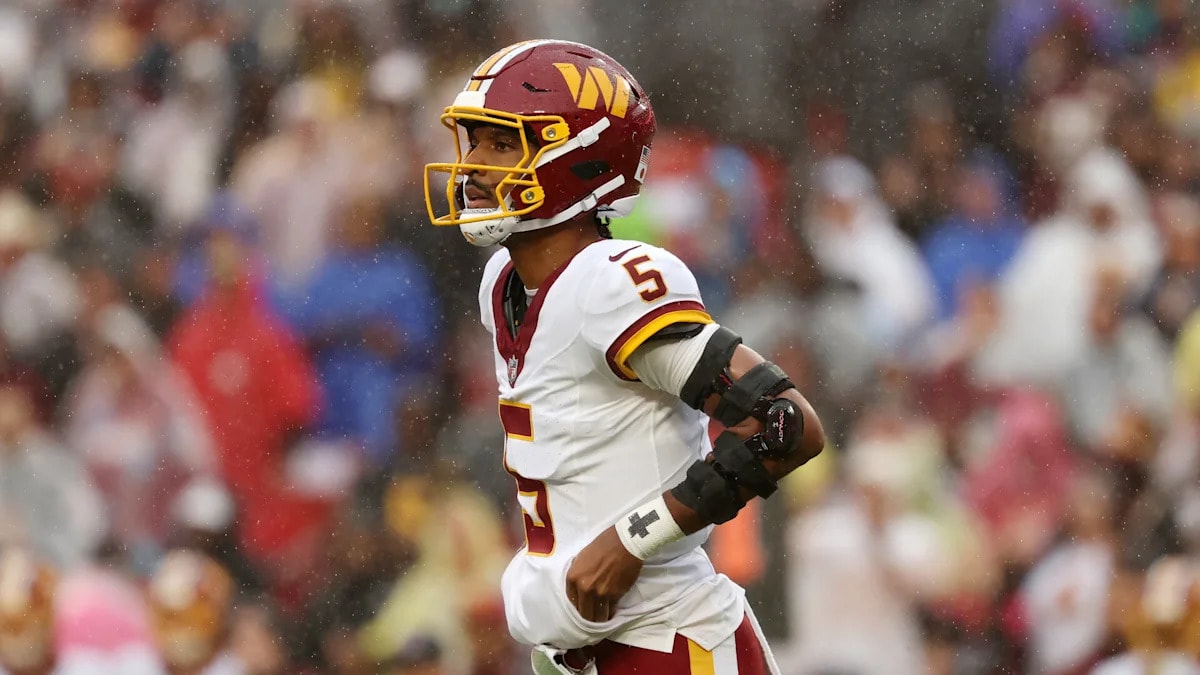
Jayden Daniels accepts responsibility for Commanders’ overtime clock mistake vs. Giants
After a bizarre overtime sequence ended with the clock running out, Jayden Daniels said the outcome ultimately rested on him and that Washington must be sharper when games hinge on a few seconds.
Jayden Daniels is taking personal ownership of the Washington Commanders’ late overtime timing breakdown against the New York Giants on Sunday. As the game moved into sudden-death overtime, a chance to attempt a winning field goal inside the Giants’ 25-yard line slipped away when the clock ran out before the Commanders could get the kick attempt off.
The final stretch, as described in the report, was a head-scratcher in its execution. After the Commanders had the ball positioned for a potential game-ending attempt, the possession ended without Washington reaching the field-goal try it seemed to have set up. That kind of misstep, in overtime, is usually the difference between leaving with a win and walking away empty-handed.
Daniels addressed the moment directly at the end of the game, framing it as a quarterback responsibility issue. “Ultimately it’s on me to be better,” he said, according to Yahoo Sports. For a quarterback, the statement underscores the control they are expected to exert over end-of-game and end-of-possession details, from cadence to clock management to ensuring the team gets the opportunity it needs.
Clock management is often discussed in broad terms, but this case highlights how quickly a game can swing on the margins. When a team is close enough for a field-goal attempt, the tactical expectation is clear: the offense must preserve time, operate within the available downs and seconds, and make sure the kicking unit gets its chance. Letting the clock expire before the attempt turns a workable plan into a lost one.
The Commanders now have to process not only the result of that overtime possession, but also the lesson attached to it. In the NFL, overtime is not just an extra period, it is a high-leverage environment where small execution errors become definitive. Daniels’ comments suggest Washington’s leaders understand the mistake cannot be treated as “bad luck,” even if the play sequence itself felt unusual.
The next step is straightforward: clean it up. Watch whether Washington’s quarterback and play-calling staff emphasize sharper clock procedures on late-game drives going forward, especially in situations where they have the ball in field-goal range and the game timeline is tight. With overtime always on the horizon in close contests, those seconds matter as much as the yards.
Why It Matters
- Overtime execution swings quickly, and the missed field-goal opportunity illustrates how timing errors can decide a game.
- Daniels’ comments reinforce that quarterback leadership includes end-of-possession clock control, not just play design.
- For the Commanders, cleaning up late-game clock management could be a season-defining adjustment in close matchups.
Sources
Key Facts
- The Commanders’ overtime possession ended with the clock running out before they could attempt a field goal.
- The chance came after Washington had the ball inside the Giants’ 25-yard line.
- Jayden Daniels said at the end of Sunday’s game that the responsibility ultimately “is on me to be better.”
- The report characterizes the final overtime sequence as bizarre.