
THE APEX TIMES
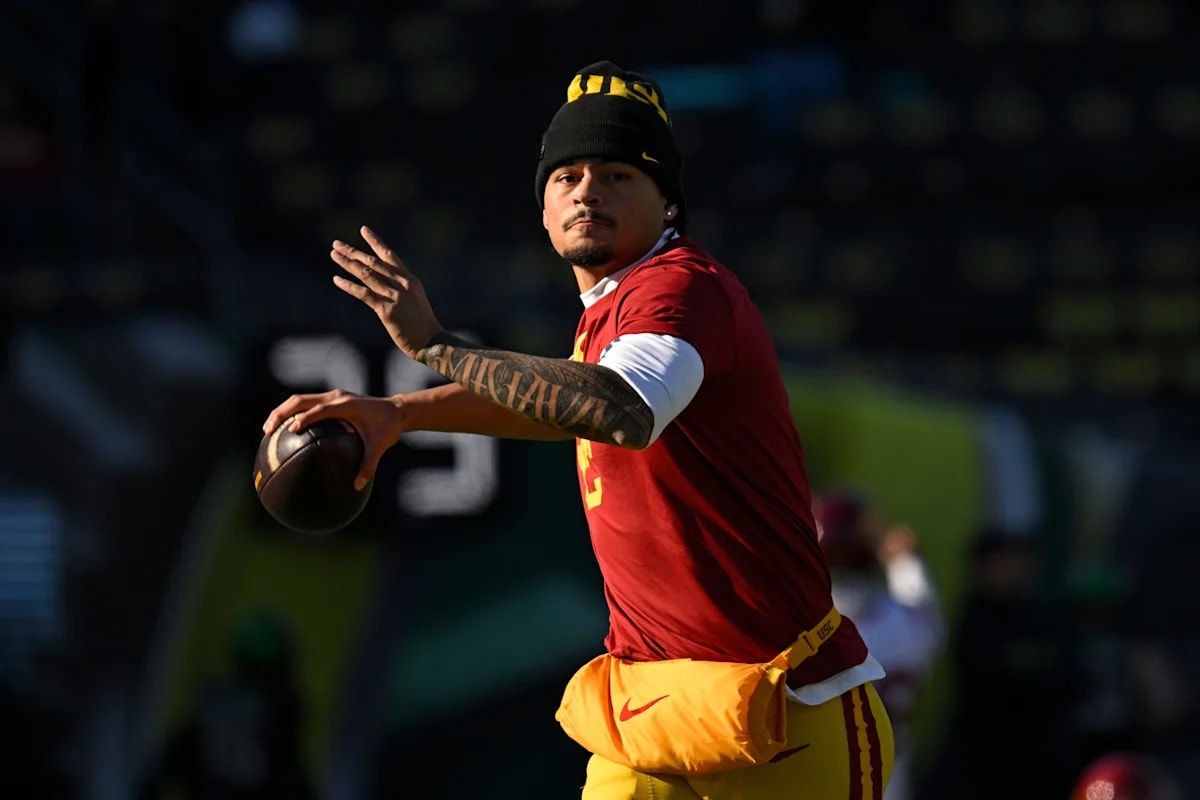
Jayden Maiava’s time to shine at USC sets up a make-or-break 2026 test
In a system built for quarterbacks to orchestrate tempo and decisions, USC’s 2026 outlook hinges on whether Jayden Maiava can reach full mastery of the Riley-era blueprint after years of learning and fitting in.
USC is stepping into the 2026 season with an unglamorous but central question: can Jayden Maiava consistently run the offense at the level the program expects? A new look at USC’s quarterback development frames 2026 as a make-or-break year for Maiava, emphasizing that he is not arriving without context. The argument is that he has enough experience around the offense to be judged on execution rather than on adjustment alone.
The timeline matters. The USC plan, as described in the coverage, is that Maiava learned the Lincoln Riley system in 2024, continued growing into it in 2025, but did not fully master it. That distinction is the hinge for 2026. If the offense is going to reach the next tier of production, the claim is that it will require more than competence, it will require repeatable mastery of play-calling, timing, and decision-making.
Part of the pressure is that USC has a recent reference point for what “mastery” looks like in this exact style. Under Lincoln Riley in 2022, USC won 11 games, a high-water mark of the Riley era, and Caleb Williams won the Heisman in a season in which the quarterback position functioned at its highest possible level. The parallel in the 2026 discussion is straightforward: Maiava does not need to recreate the Williams story, but the quarterback cannot be the limiting factor if USC wants to win big again.
The same analysis points to internal structural advantages around the quarterback, describing Maiava as having the experience, a supporting running back environment, and an offensive line that gives him a foundation to work with. That matters in college football because quarterback-centered offenses often live or die on how efficiently they translate spacing and tempo into clean throws and sustained drives. When the framework is in place, evaluation shifts toward whether the quarterback is calling and coordinating at an elite level.
Still, there is a caution built into the framing. The coverage does not suggest USC’s answer is merely about opportunity. Instead, it makes the case that 2026 is about consistency, not flashes, and that Maiava’s development must show up in how the offense operates through different game states. A quarterback in this system is expected to process quickly and manage the offense in a way that supports the playmakers, not one that repeatedly forces the unit to regain rhythm late.
What to watch next is how USC’s offense looks once the season settles in, especially in phases where execution tends to be revealed. If Maiava’s decision-making and play speed hold steady across weeks, the “make-or-break” language will start to feel justified. If the offense still looks like it is translating rather than operating, the 2026 narrative will tighten around whether USC’s quarterback development is catching up to the standard the program set in the early Riley years.
For USC fans, this is also a team identity story. The Riley-style offense has typically relied on quarterback command to turn play-calling into production. Maiava’s 2026 challenge is essentially to prove that USC can run the system at full strength, with him as the quarterback who not only understands it, but owns it.
As the 2026 season approaches, Maiava’s role will remain the focal point for a reason that is easy to miss: the quarterback is the system. If USC believes the pieces around him are ready, then the next step is a quarterback who can deliver the offensive precision that turns good drives into repeatable wins.
Why It Matters
- In a quarterback-driven offense, USC’s ability to “win big” in 2026 will depend heavily on whether Maiava can consistently execute the system rather than still be in an adjustment phase.
- The 2022 USC baseline under Lincoln Riley sets a demanding standard, making the 2026 quarterback evaluation part of a larger identity test for the program.
- If Maiava reaches mastery, the offense can convert tempo and decision-making into sustained production, which is usually the difference between average and elite seasons in college football.
- If the development stalls, the narrative may shift from quarterback development to whether USC can reach the next level without a clear command of the system.
Key Facts
- Jayden Maiava’s 2026 season is framed as a make-or-break test for mastery of the Lincoln Riley system at USC.
- The development timeline described places Maiava learning the Riley system in 2024, growing into it in 2025, and needing mastery in 2026.
- USC won 11 games in 2022 under Lincoln Riley, highlighted as the best year of the Riley era.
- The 2022 season included Caleb Williams winning the Heisman while excelling at the quarterback role in the Riley offense.
- The discussion notes that Maiava has experience and the broader offensive components needed to support high-level execution, putting greater emphasis on quarterback command.