
THE APEX TIMES
Jazz Chisholm Jr. says he needs a “cooler head” after ejection at Fenway
The Yankees second baseman acknowledged the day after being sent out in the sixth inning, emphasizing that his response to umpiring needs to be calmer.
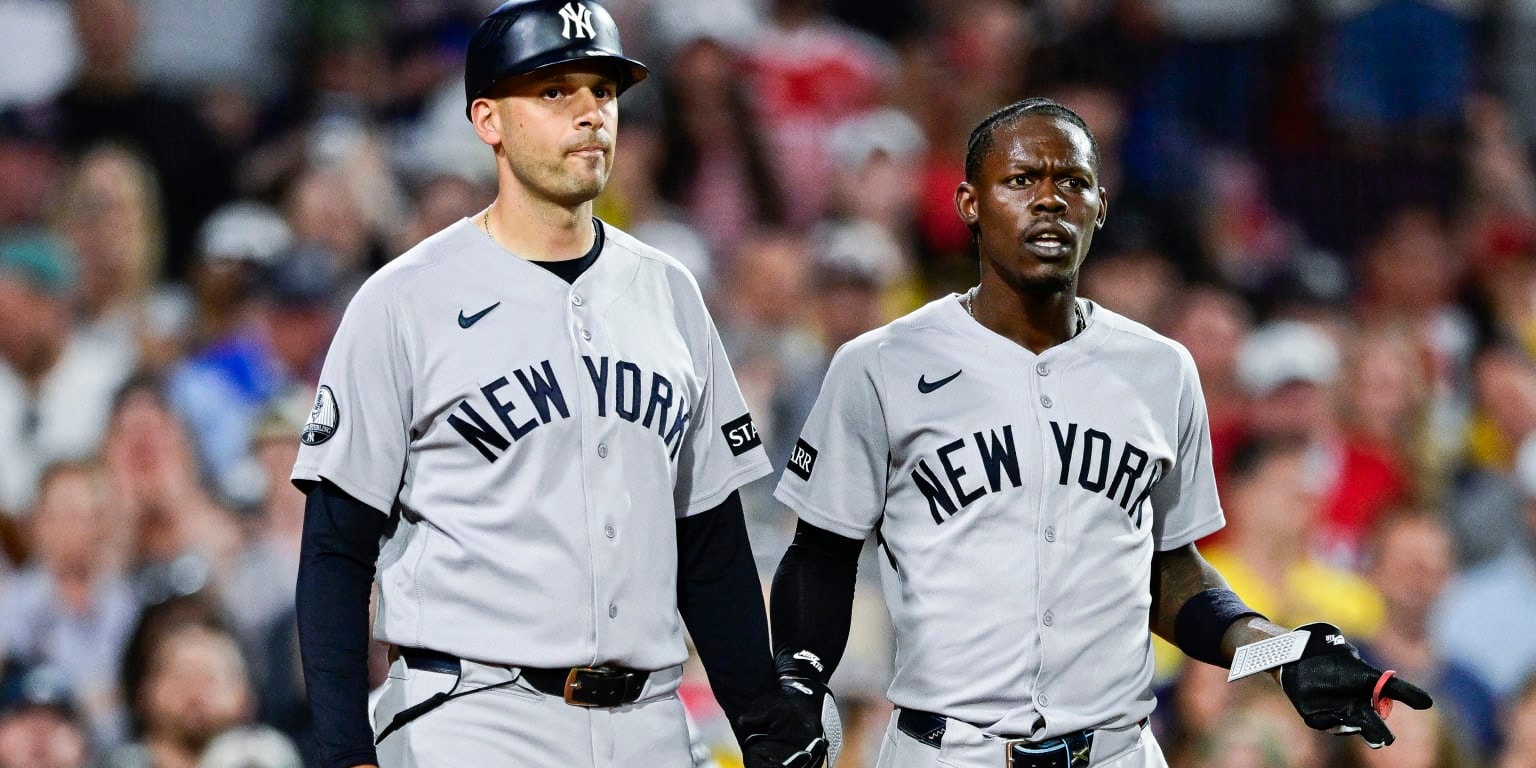
One day after Jazz Chisholm Jr. was ejected in the sixth inning of the Yankees’ game against the Red Sox at Fenway Park, the Yankees second baseman said he understands he needs to approach those moments with a cooler head. In an MLB report published June 29, Chisholm acknowledged that his reaction toward home-plate umpire Adam Hamari was not the way he should have handled the situation in the heat of the moment.
The incident came after Chisholm became upset with a call by Hamari. According to the league report, the argument escalated to the point that Chisholm was removed from the contest during the sixth inning. The next day, he reflected on what happened, focusing less on the specific decision and more on his own demeanor and the importance of staying composed when dealing with umpires.
Chisholm’s comments were framed as an apology and a lesson learned. Rather than treating the ejection as simply a dispute that can be sorted out in real time, the Yankees player pointed to the need for better control going forward. MLB reported that he recognized that a steadier approach is required in those settings, particularly when emotions run high and the game is still well underway.
From a broader baseball perspective, ejections often have ripple effects beyond the instant frustration. Even when the outcome of a single at-bat can swing momentum, losing a position player to an early night can alter lineups, defensive alignments, and the rhythm of a club that is trying to manage baserunners and leverage in late innings. That is why players and teams treat postseason-similar discipline issues with urgency, even during the regular season.
For the Yankees, the episode also lands in a context where clubhouse accountability and on-field focus matter as much as physical execution. Chisholm has built his profile on energy and intensity, traits that can be assets when channeled. MLB’s report makes clear, however, that the Yankees want that intensity expressed without letting it drift into confrontations with officials that lead to ejections.
The key next question is how Chisholm’s approach carries into the immediate follow-up games. The league report indicates he is taking ownership of his conduct, and the practical test will be whether he can keep his composure in similar scenarios involving close pitches, strike-zone disagreements, and late-inning emotion. For fans, it is also a reminder that the same competitor who plays hard also has to manage himself when the game’s human elements, including umpiring, become part of the story.
As the Yankees move beyond the Fenway incident, Chisholm’s statement sets a tone: frustration is inevitable, but the response determines the cost. His acknowledgement a day after the ejection suggests the moment is being treated as a controllable lesson, one that could help him avoid repeating the same mistake when stakes rise again.
Why It Matters
- Ejections can affect a team’s in-game flexibility, including lineup continuity and defensive plans.
- Player-official confrontations add preventable distractions, especially in tight, momentum-driven stretches.
- Chisholm’s emphasis on demeanor highlights the balance between intensity and discipline that impacts day-to-day performance.
Key Facts
- Jazz Chisholm Jr. was ejected in the sixth inning of the Yankees’ game against the Red Sox at Fenway Park.
- The dispute involved home-plate umpire Adam Hamari.
- MLB reported that Chisholm acknowledged needing a calmer demeanor when dealing with umpires.
- Chisholm’s remarks came the day after the ejection, framed as an apology and a recognition of how he should handle those moments.