
THE APEX TIMES
Jeremiyah Love frames Cardinals’ workload plan around self-expectations after back-to-back production
After a junior season that produced consecutive 1,100-yard rushing efforts and 20 all-purpose touchdowns, the Doak Walker winner says the next step is adapting to a shared role within the Cardinals’ offense.
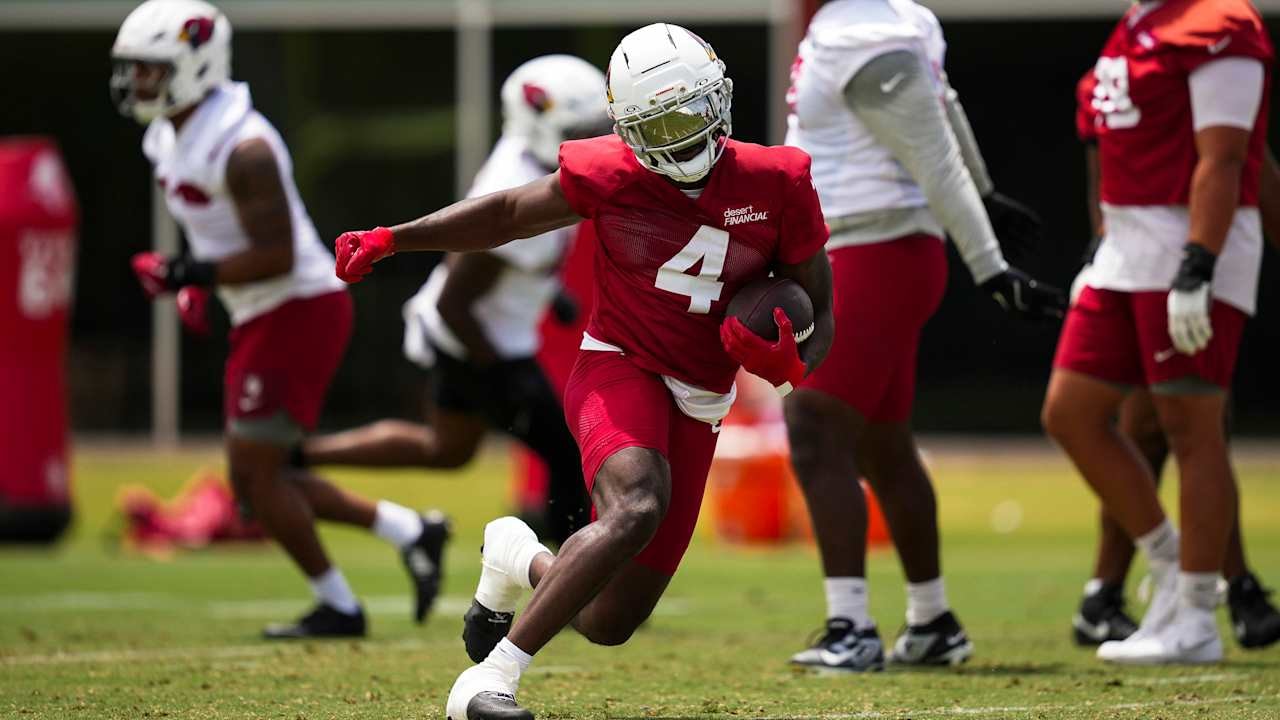
Jeremiyah Love is entering the next phase of his career with a clear internal benchmark: he wants his production to remain at the level it reached during his junior season, even as he expects to share snaps with others in the Cardinals’ backfield. In a Cardinals team story released June 22, Love described his offseason mindset as “self- expectations in lockstep with Cardinals needs,” framing workload balance as part of how the program functions rather than a personal deviation from his ceiling.
The yardage and scoring expectations he set for himself were built on back-to-back statistical seasons. Love’s junior year followed a previous campaign in which he rushed for more than 1,100 yards, and the repeat performance carried into his current profile as a featured offensive catalyst. According to the team’s account, he also reached the kind of all-purpose production that goes beyond pure rushing numbers, scoring 20 all-purpose touchdowns in consecutive seasons, a marker that indicates he can be deployed in multiple ways as a runner and as an option in space.
Those results did not stay limited to box-score impact. Love’s junior-year production earned him the Doak Walker Award, given to the nation’s top college running back, and he finished the season as a finalist for the Heisman Trophy. The team release positions those honors as both validation and pressure, meaning the standard he is talking about is not simply “be effective,” but sustain excellence in a role that may require more cooperation than a solo-starter environment.
At the center of Love’s message is the idea that shared work does not dilute responsibility. The Cardinals’ backfield, in his framing, will include multiple contributors, and the correct approach is to absorb that structure while still meeting the personal goals that came with his postseason recognition. In other words, he is not describing a plan that revolves around preserving touches at all costs, but rather maintaining performance even when the workload is distributed across teammates.
That balance matters for how an offense protects itself across a long season. When a run game can be anchored by an experienced, decorated back while also rotating complementary backs, the offensive line and play-calling staff can keep continuity even if one player’s role changes from week to week. Love’s comments suggest the Cardinals view his production as a baseline that other running backs can build around, allowing the offense to adjust without losing its identity.
Love’s honors also change the way opponents prepare. A Doak Walker winner and Heisman finalist can draw the defense’s most attention, including more disciplined run fits and the kinds of coverage and gap responsibilities that tend to reduce a lone back’s options. If the Cardinals are expecting to split carries, it also implies they intend to convert any extra attention Love attracts into room for teammates, while still keeping him involved enough that defenses cannot shift focus away from the run game.
The next question for Cardinals football is how that shared workload translates into game-by-game usage. In practical terms, the story from June 22 sets an expectation that Love will remain central to the offense, but not necessarily in a “every down” capacity. What to watch next is whether the team’s early-season rhythm reflects his self-described priorities: production that stays consistent, but with more backfield plurality than a traditional single-feature role.
Why It Matters
- A backfield that balances a featured performer with multiple contributors can keep the run game stable over the full season.
- Having a Doak Walker winner and Heisman finalist as a key option raises defensive attention, which can open opportunities for teammates.
- If Love’s role is more shared than traditional, the Cardinals’ offensive continuity will depend on how effectively complementary backs are used alongside him.
Key Facts
- Jeremiyah Love said his approach is based on “self-expectations” that align with what the Cardinals need offensively.
- He expects to share the workload with other running backs in the room.
- Love’s profile includes rushing for more than 1,100 yards in back-to-back seasons.
- He scored 20 all-purpose touchdowns in consecutive seasons.
- He won the Doak Walker Award and finished as a finalist for the Heisman Trophy after his junior year.