
THE APEX TIMES
Jets and Buccaneers Share the Field at Camp, Highlighted by 2-Minute Drill Situations
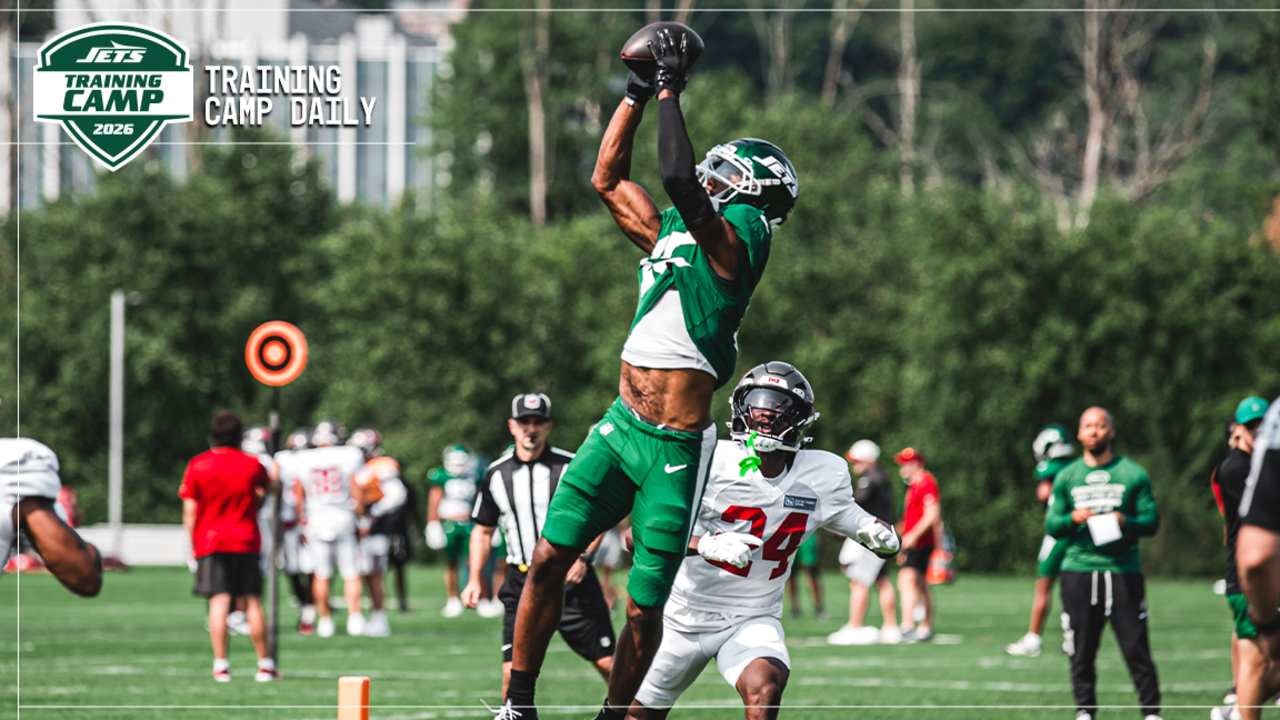
New York’s training camp slate on Wednesday included a joint practice with Tampa Bay, with sessions structured to test tempo, execution, and late-game decision-making.
The New York Jets’ training camp on Wednesday, Aug. 12, included a joint practice session with the Tampa Bay Buccaneers, part of a routine that gives both clubs a real-time look at their systems against live, competitive looks. The Jets’ official camp report framed the day as a busy one, with multiple segments designed to move beyond individual work and into scripted team periods.
According to the Jets’ daily release, the joint practice featured work that carried game-like pressure, including “2-minute drill situations.” That type of practice typically emphasizes quick reads, efficient clock management, and sharp execution in condensed offensive and defensive sequences. For the Jets, the value is straightforward: it offers a structured environment to test preparation under hurry-up tempo without waiting for preseason game conditions to do the same.
The team’s recap also described a “Green & White Wrap” theme for the day, indicating that the practice coverage grouped highlights by Jets offense and defense areas. While the report emphasizes process and drill format rather than single moments, the underlying point is that joint practices are built to stress both sides. For Tampa Bay, facing New York’s looks in controlled live periods creates a useful mirror for how their own packages may perform when opponents play with urgency and variety.
Joint practices also serve as a functional bridge between earlier camp days and later preseason preparations. By late August, teams are typically trying to narrow the gap between installation and consistent execution. A day that includes dedicated two-minute-style work fits that pattern, since late-game scenarios expose miscommunications, bad leverage, and timing issues that can stay hidden during more measured team work.
As with any camp practice, the public-facing summaries usually do not capture every rep, and they often avoid granular evaluations of individual players unless a specific moment is noteworthy. That means the day’s true competitive takeaways are more likely to be internal: how offensive timing looks under hurry-up conditions, how defensive rotations hold up when the offense pushes the ball quickly, and whether special teams and situational packages are ready to function in tight sequences.
What to watch next is how both teams carry the emphasis from Wednesday into the rest of the week. For the Jets, the key question is whether their camp tempo and situational execution stay consistent when the schedule moves back to more routine practice blocks. For the Buccaneers, the focus is similar: sustaining the same defensive communication and offensive timing seen during 2-minute drill segments when the look is no longer shared with a joint practice opponent.
Why It Matters
- 2-minute drill situations are designed to test late-game execution, tempo, and situational decision-making, which are hard to fully replicate in non-game-like practice segments.
- Joint practices provide a higher-intensity look at systems against a live opponent, helping coaches calibrate what is working before preseason games.
- For both teams, the session is a step toward compressing installation and building consistency under hurry-up conditions.
Sources
Key Facts
- The Jets’ official training camp report for Aug. 12 described a joint practice with the Tampa Bay Buccaneers.
- The Wednesday session included “2-minute drill situations” as part of the on-field work.
- The Jets’ release characterized the day as busy, with multiple practice segments beyond standard individual work.
- The recap used a Jets “Green & White Wrap” format to summarize the day’s content.