
THE APEX TIMES
Jets defensive coordinator Brian Duker praises T’Vondre Sweat’s impact, reflecting on Frank Reich’s sideline perspective
On an August notebook from the New York Jets, defensive coordinator Brian Duker highlighted why he believes defensive tackle T’Vondre Sweat’s presence can shift games, while also describing how head coach Frank Reich’s approach has always been tied to the “bird’s-eye” view from the coaches’ box.
New York Jets defensive coordinator Brian Duker used this week’s notebook to explain how his long coaching background shapes what he looks for on game day, including the kind of player impact he expects from the middle of the defense. Duker singled out defensive tackle T’Vondre Sweat as a potential “game changer” type, arguing that his influence can show up over the span of a drive, and more broadly across a season, when the details in the trench play fall into place.
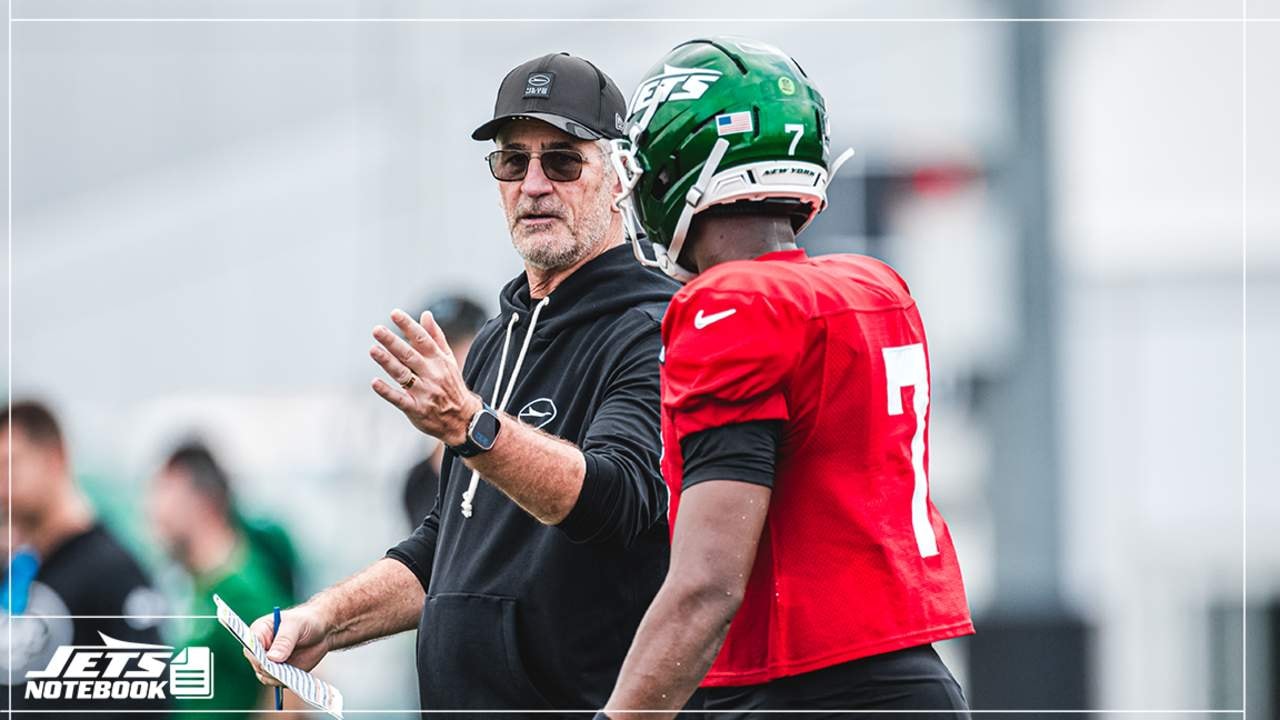
Duker’s comments also offered a window into how head coach Frank Reich has operated during games. According to the Jets, Reich has been the type of coach who positions himself on the sideline to get a wide view of what is happening, a vantage point that staff members can use to judge matchups, formation tendencies, and how a play develops from different angles. The emphasis is not just on calling from the booth or studying in advance, it is about staying close enough to see the flow of the game.
The Jets framed Reich’s sideline habits through the lens of his own career path. The team noted that Reich’s coaching résumé has moved through multiple roles and offensive leadership responsibilities, from earlier positions including time coaching receivers, to quarterback-focused work, and later offensive coordinator duties. The point in the notebook is that Reich has built a consistent habit of watching the game from a higher, controlled perspective, even as his responsibilities have evolved.
That continuity matters for the Jets’ staff because the game-day picture is especially important for teams trying to develop chemistry early and refine in-game adjustments. When coaches emphasize a “bird’s-eye” view, it usually translates into a focus on spacing and leverage across the field, plus an attention to how pre-snap looks turn into post-snap protection and assignment outcomes. In practical terms, it is the kind of perspective that helps offensive and defensive leaders communicate with their units in real time.
Duker’s remarks on Sweat connected back to that same idea of seeing the game in sequences rather than isolated plays. Defensive tackles are frequently tasked with setting the tone at the line of scrimmage, occupying blockers, and creating cleaner running lanes or disruptive pressure paths for the rest of the front. The notebook stopped short of listing specific statistical benchmarks, but it made the case that Sweat’s role is the kind that can change what both offenses and quarterbacks feel comfortable doing.
The wider context for Jets fans is that this notebook comes from the team’s day-to-day communications during the 2026 preseason cycle. With early August training priorities moving into the preseason atmosphere, staff messages about players and coaching habits become part of the learning process, as teams evaluate who consistently wins matchups, handles communication responsibilities, and performs within the scheme’s intended roles.
Going forward, the practical test of these ideas will be visible in how the Jets’ defensive interior holds up when the opponent shortens the playbook and leans into repeated run looks, and when pass rush plans demand consistent interior push and containment. If Sweat is truly the kind of “game changer” Duker describes, his value should show up in the most common moments that decide third downs and red-zone drives, where the margin for structural mistakes is smallest.
For Reich, the staff framing suggests an ongoing emphasis on staying connected to the game’s real-time geometry. Fans can watch whether that sideline perspective translates into crisp adjustment conversations and clearer reads by the offensive group, especially when opponents show looks designed to disrupt protection or force conservative play-calling. In a league where game scripts turn quickly, both the player focus on Sweat and the coaching habit described for Reich point to a shared theme: control what you can see, then adjust what you can’t.
Why It Matters
- A defensive tackle described as a game-changer indicates how the Jets are thinking about interior impact, which can shape both run defense and pass-rush plans.
- Staff emphasis on Reich’s sideline perspective reflects how play-calling and adjustments can be influenced by real-time sightlines and communication.
- These themes align with preseason evaluation priorities, where teams assess who wins matchups consistently and who executes within defined roles.
- How Sweat’s presence translates into repeatable trench outcomes will be a key indicator of the defense’s ceiling as the season approaches.
Key Facts
- Jets defensive coordinator Brian Duker described defensive tackle T’Vondre Sweat as a potential game-changer type.
- The Jets notebook said Reich has consistently preferred a wide, sideline “bird’s-eye” perspective during games.
- The team characterized Reich’s coaching career as spanning multiple offensive roles including wide receiver coaching, quarterback coaching, and offensive coordinator duties.
- Duker’s comments were framed around his own 20-year coaching experience across different positions.
- The notebook emphasized in-game visibility and perspective as a coaching priority.