
THE APEX TIMES
Jets DL T’Vondre Sweat returns to practice, indicating a return to full defensive workload
Back at training camp for a second straight practice session, the defensive tackle says he feels ready as New York works to tighten its run defense and add pressure up front under head coach Aaron Glenn.
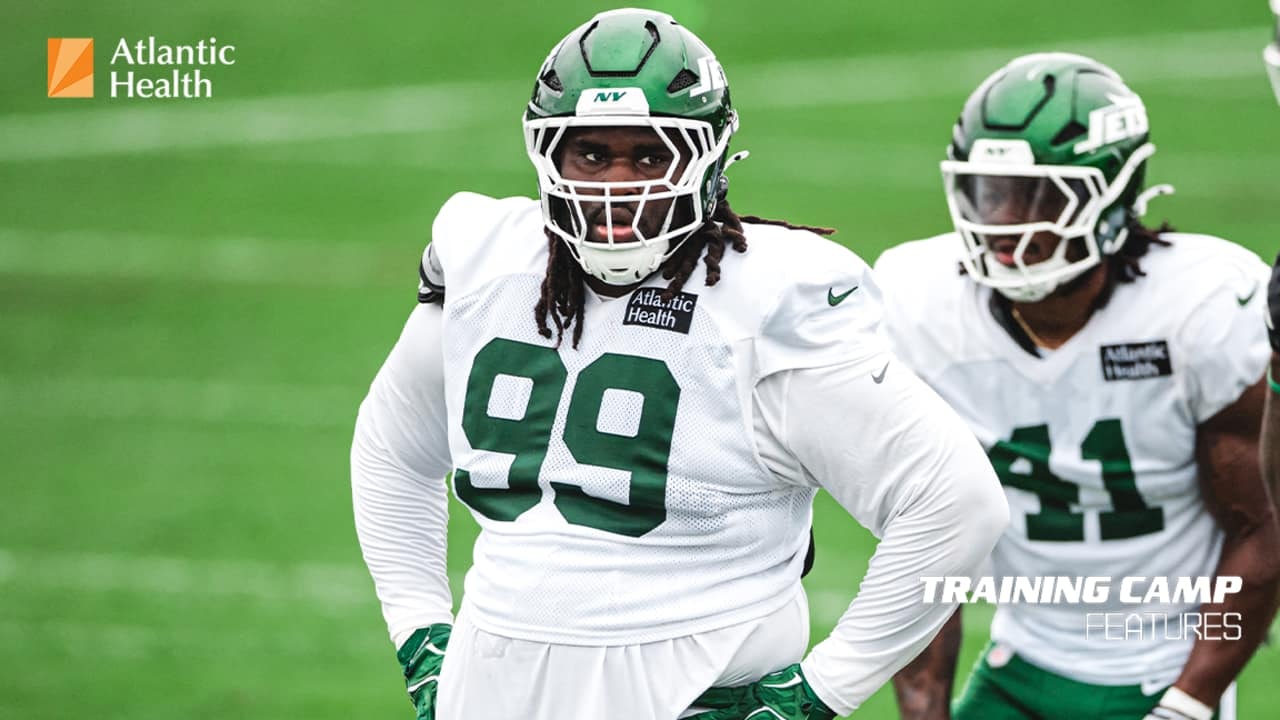
New York Jets defensive tackle T’Vondre Sweat was back on the practice field Tuesday and, according to the team, made it through a session as part of his return from an injury. The appearance marked his second practice participation of training camp, an early and meaningful step for a player who anchors both the run-stopping and interior pressure parts of a defensive front.
The timing matters for a Jets defense built around defensive coordinator Aaron Glenn’s emphasis on physicality and assignment discipline. Glenn is widely associated with constructing fronts that can hold up at the line of scrimmage and still affect passing downs through interior push. A large defensive tackle who can do both changes the math for opponents, forcing teams to think twice about how aggressively they can run between the tackles and whether their protection schemes can account for pressure inside.
Sweat’s return to the field also comes with a practical benefit for the coaching staff: repeated reps. The Jets described him as a practice participant on Tuesday, and they noted that he had already returned for practice once previously. That repeated exposure is how coaches gauge conditioning and how they calibrate game readiness, especially for players coming back from an injury where snap count and intensity often have to be managed.
In his first interaction with the news media after returning, Sweat gave brief comments that the team characterized as encouraging for the head coach, Aaron Glenn. While the Jets stopped short of turning that into a detailed public statement, the framing suggests Glenn viewed Sweat’s posture, readiness, and willingness to get back into the work as a positive sign. For a defensive line unit, even small indicators from a returning player can influence how smoothly the group can re-integrate him into run-stops and pass-rush packages.
Roster and scheme fit are particularly important for an interior player in Glenn’s system. Defensive tackles often play a central role in establishing leverage, controlling gaps, and collapsing pockets from the inside. When they are limited or unavailable, other linemen must take on larger responsibilities, sometimes shifting their assignments and reducing the variety of looks a defense can present. By getting Sweat back on the field, the Jets aim to reduce that disruption and reestablish the defensive front as a stable group rather than a moving patchwork.
There is still a standard caveat with any return to practice: the return does not automatically translate into full game availability or an uninterrupted ramp of workload. Training camp is where teams test readiness, but injuries can carry over in how players respond to contact, pace, and recovery. The Jets will likely continue to treat Sweat’s reps with care, and observers should watch how many sessions he is listed as participating in, how his snaps scale, and whether he appears consistently in both run defense and passing situations.
Why It Matters
- Sweat’s return helps restore stability to the Jets defensive front, reducing the ripple effects that come when an interior starter is limited.
- A healthy, disruptive defensive tackle affects both run-stopping plans and third-down pass-rush pressure, two areas coaches typically prioritize early in camp.
- Repetitions in consecutive practices give Glenn’s staff a better read on readiness and fit as they refine run-stop and pressure packages.
- How Sweat’s workload develops next will be a key indicator for the Jets’ ability to enter the regular season with a full-strength interior presence.
Key Facts
- New York Jets defensive tackle T’Vondre Sweat participated in practice on Tuesday after returning from an injury.
- The Tuesday session was Sweat’s second practice participation of training camp.
- The Jets reported Sweat made short, positive comments to the media in his first session back.
- Head coach Aaron Glenn was described as seeing Sweat as having a complete package that helps the Jets on run defense and pass rush.
- The team emphasized Sweat’s role in being able to impact both phases of the game from the interior.