
THE APEX TIMES
Jets’ offensive line enters 2026 with youth front and center, highlighted around Olu Fashanu and Armand Membou
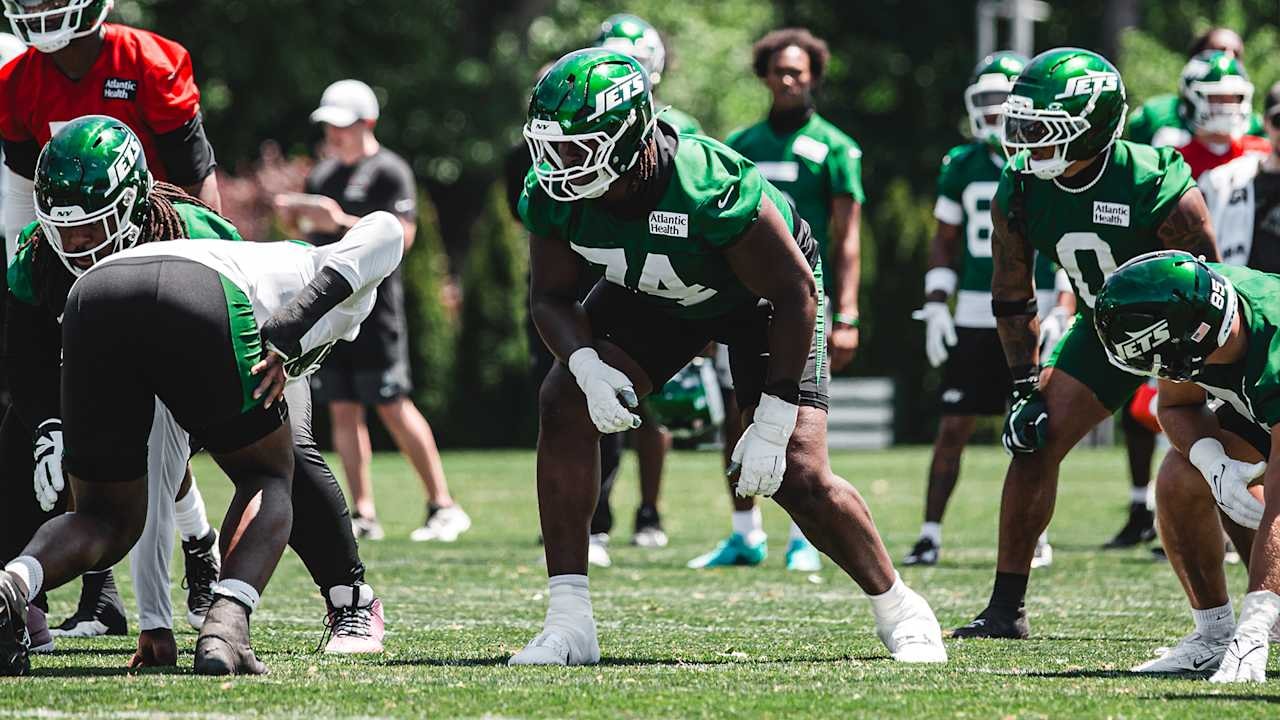
In an offseason preview tied to the team’s 2026 yearbook, New York frames its offensive line as a unit still developing and still growing together, with the second-year tackle duo of Olu Fashanu and Armand Membou at the center of the plan.
The New York Jets are treating their offensive line as a work in progress, and they are doing it openly. In a new team piece from Darren Mougey that will also appear in the Jets’ 2026 yearbook this summer, the organization describes the group as “young and growing,” setting the tone for what the unit needs to become in 2026: steadier in protection, more coherent in run fits, and better at sustaining the kind of drives that keep play-calling flexible.
Mougey’s focus in the article centers on the Jets’ tackle group, specifically naming Olu Fashanu and Armand Membou as the key building blocks around whom the rest of the line’s development can be organized. For a team, that matters because tackles are the anchors of pass protection and the first line of defense in edge run containment. When those players are still ascending rather than purely established, the goal typically becomes turning individual traits into consistent unit performance.
The Jets’ framing also reflects how NFL teams build “continuity” without pretending the line is finished. Even when personnel remains stable across a few weeks of minicamp and early camp, offensive lines are still reshaping their communication, their protections, and their spacing based on who is available and how quickly five different players can process the same defensive looks the same way. A young line’s growth usually looks less like one dramatic leap and more like repeated gains in timing, footwork, and leverage that start showing up late in games.
In Mougey’s yearbook-focused approach, the development story is broader than any single position group. A growing offensive line is also a quarterback-environment issue. Better protection extends the pocket and buys time for deeper routes to develop. Better run blocking influences play design, because when the ground game earns even modest gains early, defenses have to respect it, and the passing game becomes harder to crowd. For the Jets, placing their young tackle duo at the center of that narrative indicates that they believe the line’s ceiling is tied to how well the tackles set the tone for the entire unit.
The timing of the publication also matters. These summer team features are designed to give fans a roadmap for what the Jets are emphasizing entering the next training-camp cycle. By anchoring the “young and growing” message around Fashanu and Membou, the organization is effectively telling readers that progress in 2026 is expected to be measurable, but not necessarily immediate, and that the process of maturation will be the storyline to watch.
As the offseason continues, the practical questions are straightforward: can the Jets keep the line working as a cohesive group rather than a collection of prospects, and can the tackles’ development translate into protection that holds up consistently across different blitz packages and pass-rush looks? Those are the areas that separate “potential” from a functioning offense, and they will likely shape how the Jets evaluate the line as training camp progresses.
What to watch next is how the unit performs when the coaching staff tests it with varied fronts and pressure patterns, and whether the Jets can pair the tackles’ growth with the quicker, cleaner execution needed up front. If the line’s communication tightens and its run fits improve, the Jets’ stated identity as a young unit still trending upward will start to look less like a preseason storyline and more like a repeatable strength.
Why It Matters
- Tackles and pass protection set the tempo for everything else, so their development strongly influences how much freedom the rest of the offense gets.
- A young offensive line’s ability to function as a unit is often the difference between early-season inconsistency and late-season stability.
- Improved run blocking and protection can change play-calling constraints, especially in AFC East matchups where the Jets face strong defensive fronts.
- Because the Jets are building around growth rather than finished production, offseason camp and early-season continuity will be a key storyline.
Sources
Key Facts
- The Jets published an offseason piece tied to Darren Mougey that will be included in the New York Jets 2026 yearbook.
- Mougey’s piece characterizes the team’s offensive line as “young and growing.”
- The article specifically highlights the offensive line’s development around tackles Olu Fashanu and Armand Membou.
- The organization’s messaging suggests a focus on maturation and unit cohesion entering the 2026 season.