
THE APEX TIMES
Jim Carter went from booed linebacker to Pro Bowl captain during a turbulent Packers era
In Green Bay’s long, post-Lombardi stretch, middle linebacker Jim Carter earned the coaching staff’s trust, endured a fan backlash tied to Ray Nitschke, and still rose to Pro Bowl recognition and the role of team captain.
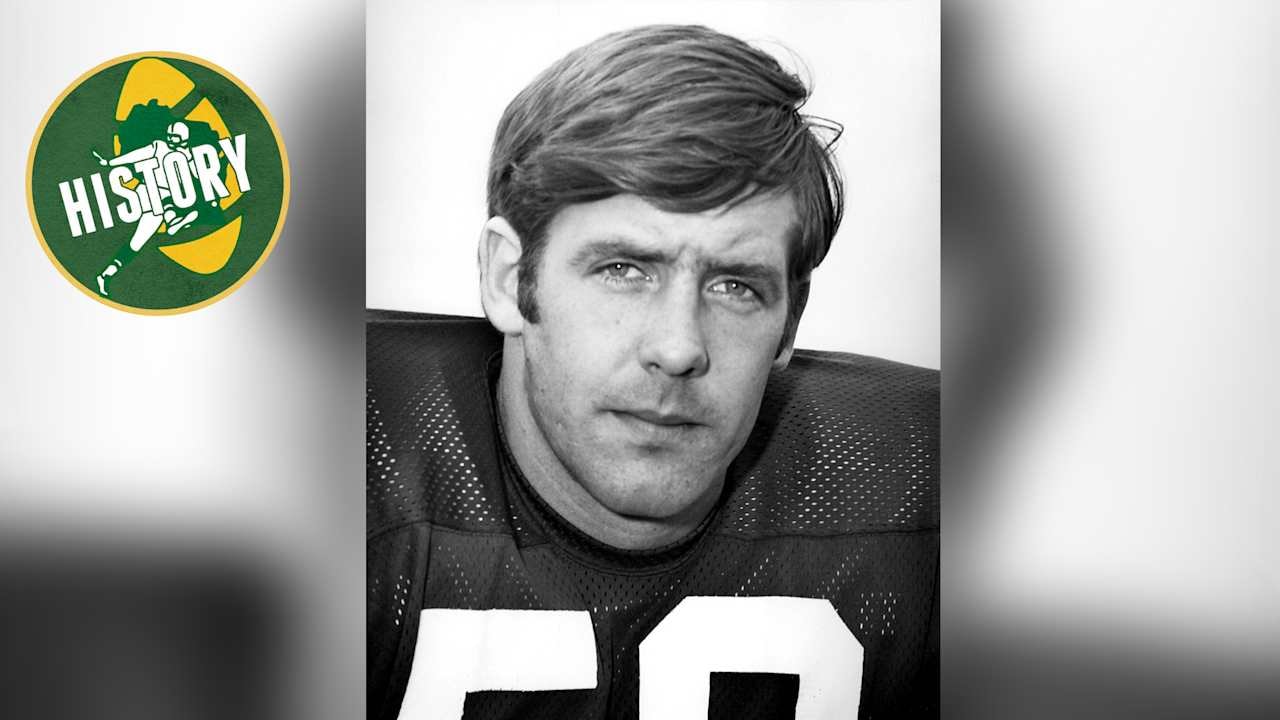
Jim Carter’s Packers story has a paradox at its center. He arrived as a rookie in the 1970s and took on major responsibility in the middle of one of the franchise’s most chaotic periods, when leadership and on-field decisions were under constant pressure. Yet the linebacker who drew a level of hostility that went beyond ordinary criticism also became a Pro Bowl-caliber player and, eventually, a team captain. The Green Bay Packers’ own oral-history work, led by former team writer Cliff Christl, revisits how Carter’s tenure was shaped as much by public reaction as by production.
Carter played middle linebacker for the Packers early in their long post-Lombardi slide and also during a stretch described by the team as marked by brutal in-fighting among team officials, coaches, and players. Before turning pro, he was a product of the University of Minnesota, where he played football as a fullback and also lettered in hockey. He was drafted in the third round in 1970, and he went on to play eight seasons in Green Bay.
His break into the starting lineup came quickly. During his rookie season, Carter started the final 10 games at left linebacker after an injury sidelined Dave Robinson, a three-time Associated Press All-Pro. In his second season, Carter replaced 35-year-old Ray Nitschke at middle linebacker. The change created expectations and, for some fans at Lambeau Field, resentment, as the franchise shifted from one established identity to another.
The 1971 season shows how Carter’s start was built on taking over amid circumstances he did not control. He missed the opener with a hamstring injury, but he returned to start the final 13 games while Nitschke sat out. Carter stayed in the middle through the 1975 season stretch as the Packers continued to search for consistent answers. Across those seven seasons as a starter, the team finished with a winning record only once, reinforcing the larger context that individual standouts were operating inside a broader environment that was not stable or consistently successful.
For Carter, performance did not erase the reaction from the stands. The Packers’ account describes how much of the fan backlash, including booing during pre-game introductions, was directed at him for taking Nitschke’s job. He faced regular chants including “We want Nitschke” during games, and the narrative ties that hostility to moments when he missed tackles or allowed completions. Still, the story insists on a key point: Carter kept playing, kept starting when healthy, and did not let the surrounding turmoil determine his role.
Injuries and timing complicated his career path, but they did not end it. Carter missed the 1976 season with a broken arm, then resumed his starting responsibilities in 1977. He finished his career in 1978 as more of a reserve option rather than a full-time starter. Even in that role shift, the Packers note that his Pro Bowl recognition and eventual captaincy were not theoretical achievements. They were outcomes earned in a decade where the roster and the organization’s internal stability were constantly in flux.
That is why Carter’s place in Packers history matters beyond nostalgia. His arc is a reminder of how NFL careers are judged under dual pressures: what happens on the field, and what the building thinks it sees in the person wearing the jersey. The same season-to-season uncertainty that surrounded Green Bay in the 1970s also produced moments where a player could rise to league-wide recognition and leadership responsibilities despite a hostile crowd. For fans trying to understand the emotional texture of that era, Carter’s experiences offer an unusually clear lens into what “accountability” looked like in the stands as well as the locker room.
Why It Matters
- Carter’s tenure captures how roster transitions, especially replacing an icon like Nitschke, can turn into long-term crowd pressure even when a player earns a larger role.
- His Pro Bowl and captaincy stand out as leadership outcomes achieved inside a period the Packers describe as filled with organizational and interpersonal turmoil.
- Understanding the fan reaction toward Carter helps contextualize how the Lambeau environment shaped perception of on-field performance in the 1970s.
Sources
Key Facts
- Jim Carter was a middle linebacker for the Green Bay Packers and played eight seasons starting after his 1970 third-round selection.
- Carter started the final 10 games of his rookie season at left linebacker after an injury to Dave Robinson.
- In his second season, Carter replaced Ray Nitschke at middle linebacker.
- Carter missed the 1971 opener with a hamstring injury but returned to start the final 13 games while Nitschke sat out.
- Carter remained a starter through 1975, missed 1976 with a broken arm, resumed starting in 1977, and finished his career as a reserve in 1978.
- The Packers describe fan booing and “We want Nitschke” chants directed at Carter, tied to the transition from Nitschke and to on-field mistakes.
- Despite the turbulence around the team, the Packers note Carter made the Pro Bowl and served as a team captain.