
THE APEX TIMES
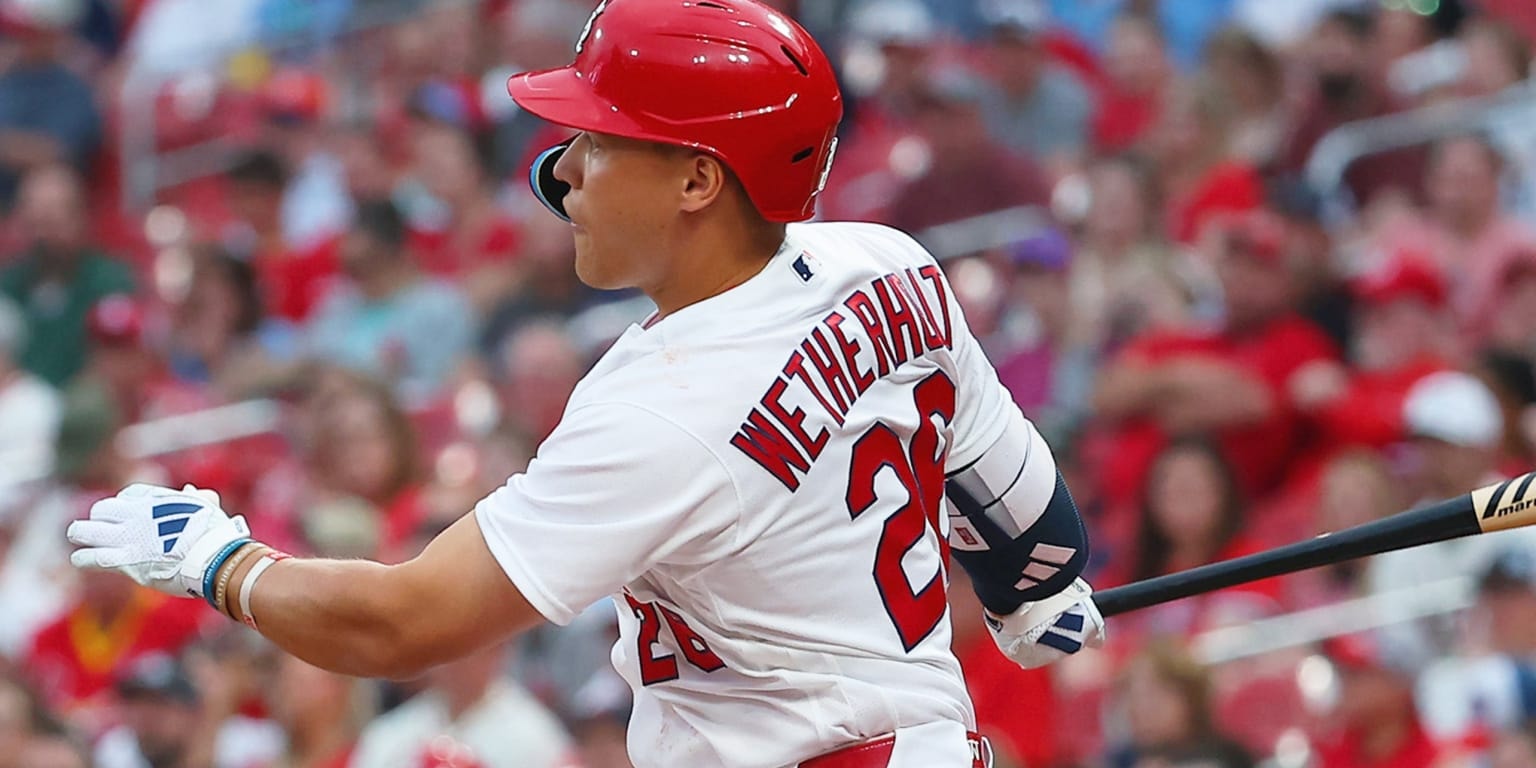
JJ Wetherholt leans into a simpler swing and elite second-base defense for Cardinals
The Cardinals’ rookie, the No. 7 pick in the 2024 Draft, used an appearance on MLB Network to describe the mechanics and plate-discipline choices powering his breakout.
JJ Wetherholt’s first major-league season has drawn attention for more than one reason. A recent MLB Network appearance offered a clearer look at how the Cardinals’ rookie second baseman thinks about his swing and, just as importantly, what has made his defense stand out at the keystone. In a league where young hitters are often evaluated through batting lines alone, Wetherholt has arrived with a combination that changes how a team can build both its lineup and its infield stability.
Wetherholt is listed as the Cardinals’ top prospect entering the season and was selected with the No. 7 pick in the 2024 Draft. Through the early part of 2026, the report tied to his studio conversation described him as producing a.753 OPS with a 116 OPS+ while playing second base. Those numbers are not presented as a finished verdict on his long-term offensive ceiling, but they do place him among the more impactful rookies by run-creation rate rather than pure contact or batting average.
On MLB Network, Wetherholt traced part of that progress to changes he made in his lower-body timing. He described using a “super high leg kick” earlier in his development, saying that when he arrived at college, the adjustment became necessary because the pitch velocity would rise. As he put it in the interview, he shortened the kick after concluding that the bigger move would not match the tempo of upper-level pitching. The point for a major-league hitter, as Wetherholt framed it, is that mechanics have to be functional under speed, not simply repeatable in practice.
He also emphasized that the swing adjustments are only one piece of what has helped him manage at-bats. The report noted that his strikeout, walk, and chase rates grade as “well above average,” and Wetherholt said plate discipline has been a central part of his game since he was younger. In his words, he “always wanted to control the zone,” and he has found ways to do so “pretty decently at most levels.” For a rookie, the ability to see pitches longer and to make fewer outs on pitches out of the strike zone often determines whether early production can hold up as scouting and adjustments intensify.
The other half of the story is defense, and it is not framed as a mild strength. According to the same coverage, Wetherholt’s work at second base rates as elite across advanced metrics. Outs Above Average placed him at +11, tying him as the second-best defender in baseball, behind only Bobby Witt Jr. at +16. Defensive Runs Saved listed his mark at +8, ranking it among the top-10 figures in the majors. In short, the Cardinals are not treating his glove as a “promise,” they are treating it as a present contribution.
Wetherholt’s approach to defense, as described in the report, centers on reads and footwork, and on the confidence that comes from repeating those fundamentals. He said the work he and the organization put in helped him feel “solid,” and that the result has been showing up on the field. He also added that he wants to stay aggressive, indicating that his defensive value is tied not just to range, but to how decisively he charges, receives, and moves through plays.
Finally, the production and value are being reflected in broader impact measures. The report stated that Wetherholt has been worth 2.5 WAR (per FanGraphs), ranking second among Cardinals players at the time of the writing. That matters because it suggests his rookie profile is not a one-dimensional adaptation story. He is contributing in the two ways most likely to stabilize a roster’s daily effectiveness, at the plate and in the field, and he is doing it from a position where defensive runs are often the difference between close innings.
If the early picture holds, the Cardinals will have to decide what the rest of their roster looks like around a middle-infield centerpiece who can handle both the bat and the glove. The immediate question is whether his offensive gains stay anchored as pitchers adjust to him, particularly if he maintains the zone-control approach he described. For fans, the short-term watch item is whether his defense continues to translate into outs above expectation as he faces bigger-league speed every day, not just in bursts.
Why It Matters
- A rookie middle infielder who contributes both offensively and defensively changes day-to-day lineup flexibility and improves the team’s floor.
- Wetherholt’s described plate-discipline approach suggests his production may be more durable than typical early-career batting surges.
- Elite defensive metrics at second base can swing run prevention in the tight margins that often decide playoff spots.
- His mechanics adjustments offer a case study in how hitters evolve to match major-league velocity, which will likely shape how he continues to develop.
- If the Cardinals keep receiving top-tier play from their infield, they can allocate resources and roster spots toward other areas with less compromise.
Sources
Key Facts
- JJ Wetherholt joined MLB Network to discuss his swing mechanics and his defensive approach at second base for the Cardinals.
- Wetherholt, the Cardinals’ top prospect entering the season and the No. 7 pick in the 2024 Draft, has been described as producing a.753 OPS and a 116 OPS+ in his debut season.
- In the interview, Wetherholt said he shortened a previously high leg kick after college because he believed pitch velocity made the larger move less workable.
- The coverage said Wetherholt’s plate discipline is well above average, with strikeout, walk, and chase rates cited as such.
- Outs Above Average was cited placing Wetherholt at +11, tied as the second-best defender in baseball.
- Defensive Runs Saved was cited at +8, ranking as a top-10 mark in the majors.
- The report also cited Wetherholt at 2.5 WAR (per FanGraphs), ranking second among Cardinals players at the time.