
THE APEX TIMES
John Lynch says 49ers will stay “active” at the trade deadline, with health as a key factor
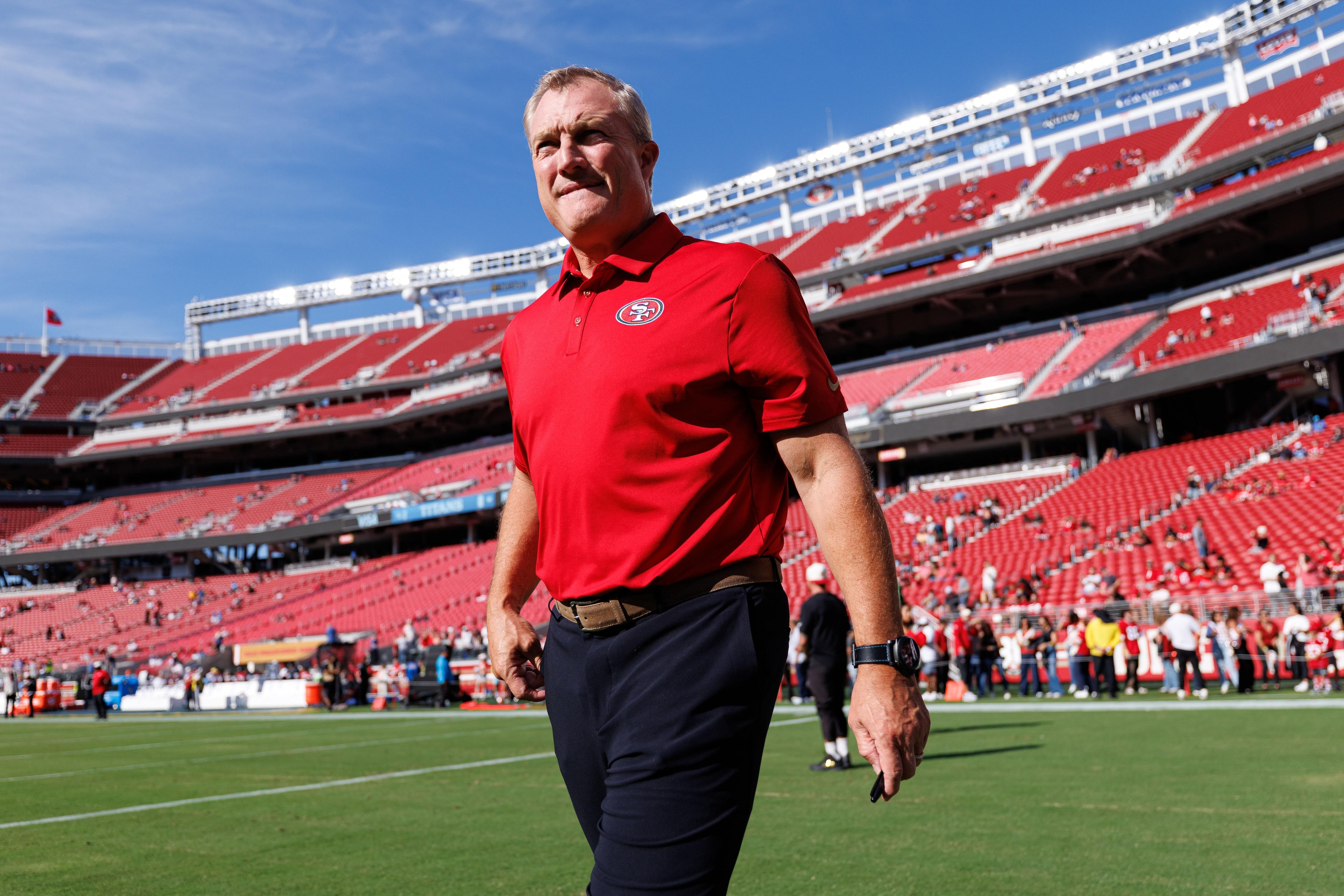
San Francisco general manager John Lynch said the team’s approach to NFL deals will be guided by player availability as the league’s trade deadline nears, pointing to recent deadline acquisitions that helped shape deep playoff runs.
San Francisco 49ers general manager John Lynch indicated that the team will keep its decision-making in “active mode” as the NFL trade deadline approaches, while tying the possibility of a move to one practical variable: health. Speaking ahead of the deadline window, Lynch suggested that the 49ers do not view trade-season decisions as something separate from day-to-day roster planning, but instead as a continuation of it.
Lynch’s comments arrive with roughly a month-plus left until the league deadline, putting San Francisco in the familiar position of weighing whether a midseason addition can improve the roster without disrupting an already functioning core. The backdrop matters for a team that has repeatedly used trades to change the shape of its season after the calendar turns.
The 49ers have a recent track record of turning deadline targets into playoff-impacting players. Lynch referenced past examples of the franchise swinging for the moment, including Emmanuel Sanders in 2019, Christian McCaffrey in 2022, and Chase Young in 2023. Each of those acquisitions came during a stretch when the 49ers were already built to contend, and in each case, the move aligned with runs that ended with the team reaching championship-level games.
That history, Lynch implied, is not just a list of transactions, but part of an internal operating philosophy. When San Francisco has made significant late additions, the goal has not been simply to add talent, but to reinforce the specific phases of the roster that are most vulnerable during a long season. In the trade-deadline context, that often means betting that the added player’s skill set can show up quickly, integrate smoothly, and perform in high-leverage postseason roles.
Health being a determining factor also matters because a trade deadline is, in practice, a question about timing. If the roster is intact, the urgency to change may be lower. If key players are limited, the 49ers may look for a player who can cover a gap created by availability. Lynch’s wording did not specify any particular injuries or personnel concerns, but his emphasis pointed to a common front-office reality in the NFL: the most effective deals are usually the ones that match the team’s on-field needs at the moment they are needed.
For San Francisco, the stakes are shaped by recent postseason outcomes. Lynch’s broader framing connected deadline decisions to championship results, noting the team’s sustained success including two Super Bowl appearances and an NFC Championship appearance. While a single transaction cannot guarantee postseason results, teams like the 49ers tend to treat deadline acquisitions as one more lever to keep the roster at its most functional level during the final stretch of the year.
What to watch next is not only whether San Francisco engages in trade discussions, but how the 49ers manage their weekly availability leading up to the deadline. If the team’s health holds, the “active mode” approach could still produce moves, but it may also mean the front office is more selective. If the team’s situation changes, Lynch’s comments suggest that the roster evaluation process will respond quickly, with the goal of keeping the playoff picture intact rather than betting on distant improvements.
For now, Lynch’s message is a clear one: the 49ers plan to be proactive, and they will calibrate their aggressiveness based on what the team can actually put on the field. That blend of urgency and pragmatism is the core of how San Francisco has approached recent deadline windows, and it will likely define what happens next in this year’s race to lock in a contending roster.
Why It Matters
- Trade deadline activity can directly affect a contending team’s matchup readiness for the late-season schedule and playoffs.
- By emphasizing health, San Francisco is framing roster decisions as response tools rather than purely talent-based maneuvers.
- The 49ers’ past deadline history suggests they are willing to make meaningful midseason upgrades, which can raise expectations for the front office’s aggressiveness.
- If the 49ers’ availability changes, Lynch’s comments imply they may prioritize targeted help in specific areas rather than broad roster churn.
- How active San Francisco is at the deadline can also influence how competitors plan for their own postseason positioning.
Sources
Key Facts
- John Lynch said the 49ers aim to be in “active mode” as the NFL trade deadline approaches.
- Lynch indicated player health and availability will be a determining factor in whether a trade move is pursued.
- The deadline discussed is a little more than a month away.
- Lynch referenced recent 49ers deadline acquisitions: Emmanuel Sanders (2019), Christian McCaffrey (2022), and Chase Young (2023).
- Lynch tied the team’s trade approach to deep postseason runs, including two Super Bowl appearances and an NFC Championship appearance.