
THE APEX TIMES
Joint practice observations: Texans’ pass rush gives Panthers offense a tough day
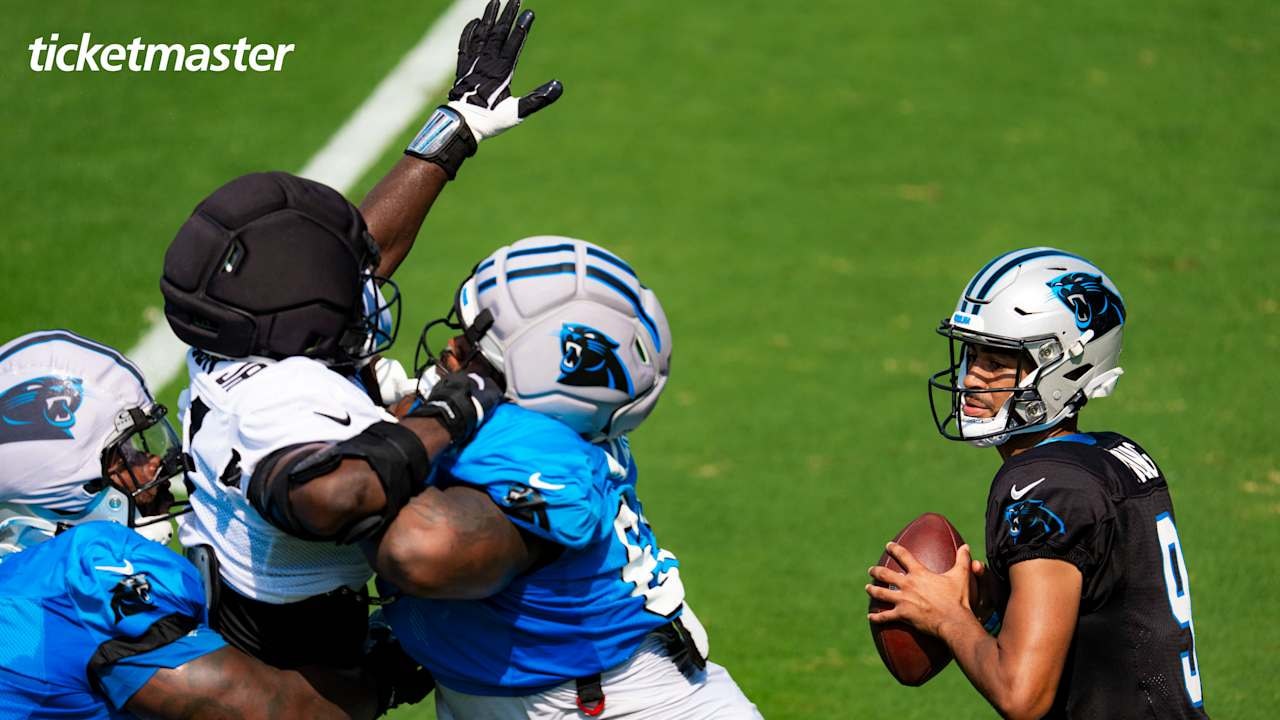
In Wednesday’s joint practice, the Carolina Panthers struggled to generate consistent momentum against Houston’s defensive front, with Texans pass-rushers Danielle Hunter and Will Anderson Jr. leaving a strong impression in practice matchups.
The Carolina Panthers walked into Wednesday’s joint practice looking for clean reads and steady production, but the Texans’ defense set a physical, disruptive tone early. According to the Panthers’ recap of the session, the Panthers “didn’t have much success” working the ball against Houston’s top pass-rush threats, a theme that stood out throughout their offensive work.
The most obvious matchup was between Carolina’s offense and Houston’s edge group featuring Danielle Hunter and Will Anderson Jr. The team’s practice notes specifically point to Hunter and Anderson as the primary drivers of the Panthers’ difficulties, describing a day in which Carolina’s plans met resistance rather than rhythm. For both players, the purpose of a joint practice is to stress-test assignments and timing, and the Panthers’ observers suggested Houston created more problems than they solved for the offense.
The defensive impact was not described as a single rep, but as a pattern. The Panthers’ staff pointed to the Texans’ pass rush in particular as a factor in limiting Carolina’s ability to sustain drives during the practice competition. In practical terms, that often translates to fewer “easy” completions, less pocket time, and more urgency for the quarterback and offensive line.
Still, joint practices are also about the learning curve. The Panthers’ recap framed the session as a valuable opportunity for Carolina’s offense to see what a live front can look like, especially from a group built to win quickly off the snap. Getting pressed by a premier set of rushers during a controlled setting can help a team refine protections, adjust routes, and calibrate how quickly they expect to release the football.
Along with the pass-rush headline, the Panthers’ update also mentioned other key figures from the day’s matchups. It cited Monroe Freeling and Bryce Young among the players involved in the practice observations, indicating the session included multiple player-versus-player looks meant to inform the teams as they continue preparations.
The Panthers’ note also contrasted the earlier defensive work with “a better day for the defense,” suggesting that while the offense ran into trouble against Houston’s pressure, Carolina also saw improvements in its own side of the ball as the practice progressed. That kind of back-and-forth is typical in joint practices, where both teams are experimenting but also competing for rep quality.
What to watch next is how each team processes the information from a day like this. For Carolina, the central emphasis will be the adjustments that follow an opponent’s pass rush dominating practice tempo. For Houston, the test is to carry forward the discipline and disruption they showed against Carolina, turning that performance into repeatable fundamentals as the preseason workload continues. As always, practice tape is not the same as game conditions, but the matchup lessons are real for both coaching staffs.
Why It Matters
- For Carolina, a joint practice that is dominated by an opponent’s pass rush is a direct diagnostic of protection and timing under pressure.
- For Houston, getting sustained disruption against an NFL offense in practice reinforces edge-rush effectiveness and assignment execution.
- Both teams can use the reps to fine-tune game-prep details such as protections, quick-game answers, and how they handle edge pressure.
- Practice momentum can influence how coaches prioritize corrections in the days immediately following the joint work.
Key Facts
- The Panthers and Texans held a joint practice on Wednesday.
- Carolina’s offensive work did not have much success against Houston’s pass-rush group in the Panthers’ practice observations.
- The recap specifically highlighted Texans pass-rushers Danielle Hunter and Will Anderson Jr. as key factors.
- The Panthers’ update framed the session as a learning opportunity for Carolina’s offense.
- The Panthers’ recap referenced matchups involving Bryce Young and Monroe Freeling.
- The Panthers noted that there was “a better day for the defense” as well during the overall session.