
THE APEX TIMES
Jonathon Brooks plays into the second quarter in Panthers’ preseason debut, getting touches early
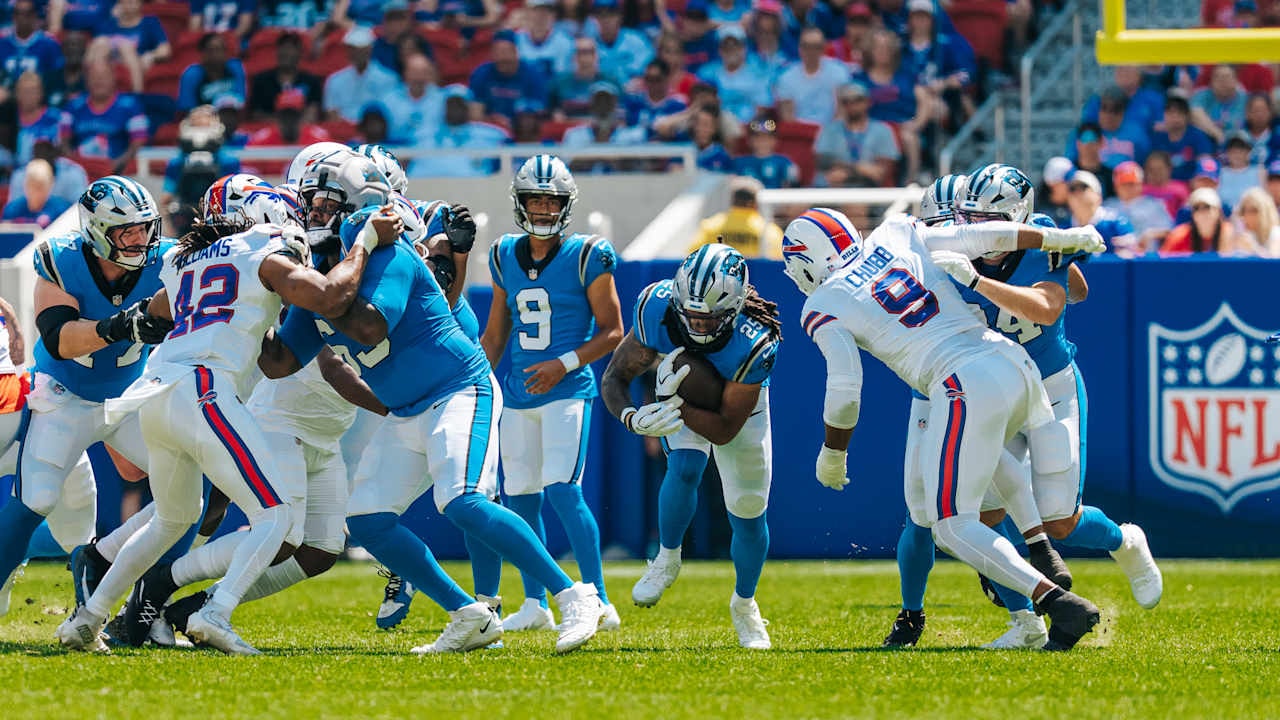
Carolina used its running back committee as a look ahead to the regular season, and Brooks arrived with meaningful first-offense work in his first game action of the summer.
The Carolina Panthers brought Jonathon Brooks into his preseason debut and let him play beyond the opening moments, with the rookie running back factoring into the flow of the offense during the early stages of the first half. In the team’s first look, Brooks received a role that went beyond a simple cameo, touching the ball on four of the nine snaps taken by the Panthers’ first offensive unit by the first quarter’s end.
According to the Panthers’ game recap, the coaching staff’s intent was to see what Brooks could do with the football, and they were comfortable giving him opportunities quickly rather than keeping his workload limited to the later phases of the game. That approach matters because preseason reps are often where roles start to crystallize, even if final depth-chart decisions are still weeks away.
Carolina’s plan appears rooted in competition and evaluation. Brooks’ early touches came while the Panthers were actively mixing personnel, a common preseason strategy that allows a coaching staff to evaluate running lanes, pass-protection reliability, and ball security habits under game-speed conditions. The fact that Brooks played into the second quarter suggests the staff viewed his early work as useful information rather than a one-and-done outing.
The Panthers’ backfield context is also important. The team’s recap frames the outing around the broader running-back group, explicitly referencing Chuba Hubbard alongside Brooks. For Hubbard, a featured role typically comes with expectations to anchor the rushing attack and provide steadiness in the middle of games. For Brooks, earning early touches in the same preseason window is a report that the Panthers are treating him as a legitimate development priority, not merely a future depth piece.
While the Panthers have not indicated that preseason production alone decides regular-season status, the structure of Brooks’ workload is still telling. Coaches generally want to observe not only carries, but also how a running back responds when the play slows down, when gaps change, or when the offense is asked to adjust protections and assignments at the line of scrimmage.
From a game-preparation standpoint, reps in the second quarter carry additional weight. The second quarter often brings increased defensive variety, more special teams cameos from fringe players, and more rotations that can make individual decisions harder to execute. Brooks staying on the field past the opening quarter gives Carolina at least one extended window to evaluate his decision-making and processing as the game shifts.
What to watch next is whether the Panthers continue to feature Brooks with defined, repeatable usage as the preseason progresses. If Carolina keeps giving him first-unit snaps early in games, it would reinforce that the staff sees him as part of the weekly offensive plan, even if the exact balance within the backfield remains to be finalized. If his role narrows, that would suggest the staff wants to separate evaluation phases, focusing more on specific situations such as pass plays or late-game carry responsibilities. Either way, Brooks’ preseason debut sets a baseline for how quickly he can translate practice momentum into game action.
Why It Matters
- Early preseason touches can accelerate how quickly a running back establishes trust with the play-caller and earns more first-unit work.
- Playing into the second quarter suggests Brooks’ first exposure to game speed was viewed as worthwhile by the staff.
- The way Carolina balances Brooks with Chuba Hubbard can hint at the team’s regular-season rotation philosophy.
- Brooks’ usage will be a useful barometer for how Carolina is thinking about long-term offensive identity at running back.
Sources
Key Facts
- Jonathon Brooks made his preseason debut for the Carolina Panthers in Orchard Park, N.Y.
- Brooks played into the second quarter.
- By the time the first offense had taken nine snaps, Brooks had touched the ball on four of them.
- The Panthers’ recap emphasized the coaching staff wanted to see what Brooks could do with the football.
- The game coverage referenced Chuba Hubbard as part of the backfield context.