
THE APEX TIMES
Jordan Love rallies Green Bay’s passing attack for 367 yards in 31-7 win over the Bears
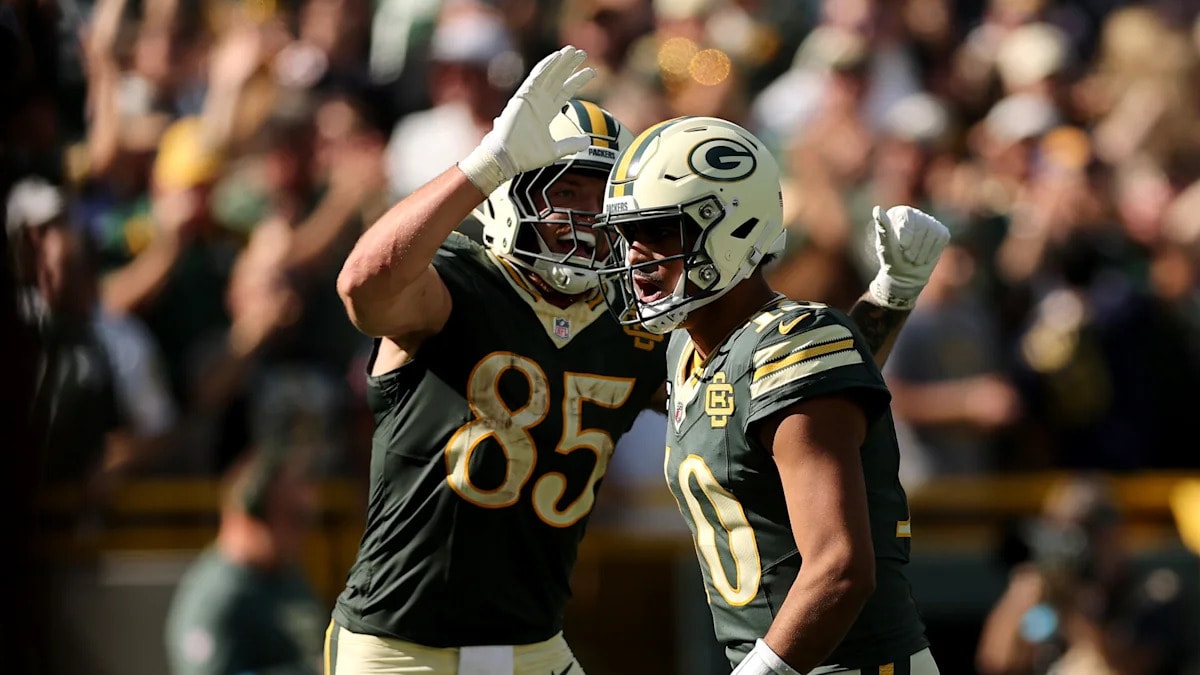
Love threw two touchdown passes as the Packers opened the afternoon by stretching the field and controlling Chicago with a 31-7 victory.
Green Bay’s offense looked built for the long play Sunday. Quarterback Jordan Love produced 367 passing yards and two touchdown throws to power the Packers to a 31-7 victory over the Chicago Bears, turning a matchup that can hinge on field position into a steady, repeatable passing performance.
According to the game report, the Packers completed five passes of at least 40 yards. That kind of downfield efficiency does more than pad totals. It forces a defense to defend space in multiple layers, which can open windows for intermediate routes and shorten the distance for playmakers to generate yards after the catch.
The Bears struggled to keep pace once Green Bay established its rhythm. The final margin, 31-7, suggests Chicago’s offense never settled enough to keep the contest within one or two possessions for long. When a team allows multiple deep completions early, the defensive approach often becomes reactive, leaving coverage vulnerable to additional chunk plays.
Love’s performance also matters for how Green Bay can shape its week-to-week offensive identity. A quarterback who can consistently hit the 40-plus yard range gives the play-caller more flexibility: the same passing concepts that threaten deep can also be used to create underneath progressions and clock-management sequences later in games.
Even with big statistical nights, there is always a caveat in reading single-game results. Passing yardage and scoring reflect both offensive execution and defensive breakdowns. The more important question for the Packers will be whether they can replicate the downfield efficiency without relying on unusually favorable matchups, especially as opponents adjust their coverages in the next meetings.
For Chicago, the priority going forward is limiting the deep pass while sustaining pressure up front. If the Bears cannot keep teams from stringing together 40-yard completions, offensive possessions are likely to be forced into more urgent, higher-risk plays, which can compound problems as games progress.
What to watch next is how Green Bay carries this form into its next opponent and whether Love’s ability to stretch the field becomes a consistent weapon rather than a one-week outburst. For the Bears, the focus will be whether their secondary can tighten its communication and gap coverage so that chunk plays do not dictate the tempo again.
Why It Matters
- A 31-7 result widens the gap between the teams in this matchup and reinforces Green Bay’s ability to win through the air.
- Big-play passing affects defensive strategy, often changing coverage rules and how aggressively a defense can play the intermediate areas.
- Love’s downfield output helps define Green Bay’s offensive ceiling and can increase the effectiveness of the entire route tree.
- For Chicago, allowing multiple 40-plus yard completions can force personnel and scheme changes in subsequent games to prevent similar gamescript swings.
Key Facts
- Jordan Love threw for 367 yards against the Chicago Bears.
- Love recorded two touchdown passes in the Packers’ 31-7 win.
- Green Bay completed five passes of at least 40 yards.
- The game ended with a 31-7 final score in favor of the Packers.
- The Packers’ passing production drove control of the matchup for most of the afternoon.