
THE APEX TIMES
Justin Gaethje’s insistence on title fights raises questions about UFC’s next challenger picture
An opinion piece argues Gaethje’s approach to his next bout, even if understandable from a business standpoint, could clash with the sport’s merit-based momentum and the UFC’s willingness to reward challengers beyond whoever feels most deserving.
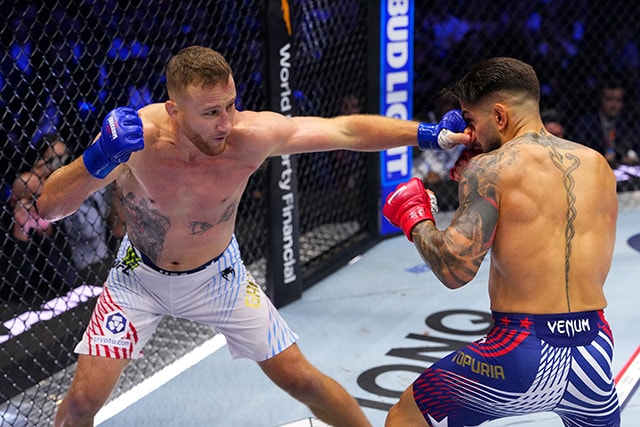
Justin Gaethje is drawing more than casual attention for how he wants his next UFC fight framed, and an opinion column suggests those “title demands” may be harder for the UFC to honor cleanly as the division sharpens. The debate centers on whether Gaethje is simply positioning himself for the biggest upside available, or whether his attempt to control the identity of the next opponent risks undermining the blue-collar persona that helped define his UFC rise.
The underlying argument in the piece is straightforward: Gaethje has earned the right to chase lucrative, meaningful matches. At the same time, the author contends that trying to dictate the next challenger could become a self-defeating strategy, especially once the UFC has a cluster of contenders who can plausibly claim they have earned their shot. In that setting, “only title fights” may read as a negotiating posture, but it can also narrow the UFC’s options at the exact moment it wants flexibility.
The opinion points to a key backdrop in Gaethje’s recent run. It notes that the UFC booked Gaethje against Paddy Pimblett for an interim championship while Ilia Topuria handled personal issues, and that Gaethje then delivered a dominant performance that secured him a subsequent title date. From there, the column says Gaethje produced one of the sport’s most significant title-fight upsets by knocking off Topuria in a bout described as taking place at “UFC Freedom 250.”
If the story’s sequence is meant to establish anything, it is that Gaethje has benefited when the UFC made bold, title-adjacent choices. According to the opinion, the promotion’s willingness to put Gaethje on high-stakes stages helped turn his momentum into the ultimate outcome: an undisputed championship goal realized. That history is part of the case for why Gaethje’s demands might sound reasonable to him, even if it creates friction elsewhere in the division.
Where the opinion turns is the question of legitimacy. The author argues that other contenders, most notably Arman Tsarukyan, arguably had a stronger claim to fight Topuria at the time Gaethje’s title path was emerging. In other words, if Gaethje’s stance is “accept only title fights,” it may force matchmakers to choose between honoring what fans see as merit-based momentum and accommodating a marketable champion-quality opponent who is also demanding a specific lane.
The column also emphasizes the UFC’s long-standing tendency to reward fighters who act like lifers in the promotional system. Gaethje’s “loyal soldier” reputation, as framed by the opinion, is presented as a factor the UFC can use when deciding how to meet him. Still, it is precisely because Gaethje’s résumé includes title runs built through interim opportunities that the author warns about the optics of dictating terms when other names in the mix feel they are closer to the title than ever.
For fight fans and the sport’s pecking order, the immediate takeaway is not that Gaethje is wrong to want the title, but that the UFC’s next-challenger conversation will get sharper. When multiple contenders can reasonably argue they have the clearest path, the promotion often chooses between the cleanest competitive argument and the most commercially compelling matchup. If Gaethje continues to insist on title-only outcomes, the UFC may have to manage competing narratives, not just schedules.
Over the next stretch, the key question to watch is how matchmakers reconcile “deserving” with “available.” Will the UFC treat Gaethje’s demand as a strategic inevitability that drives toward a title bout quickly, or will it test whether the ecosystem of contenders can coexist with a champion-quality opponent who wants full control over the stakes? Either way, the decision will shape the division’s sense of order, because once the title picture feels negotiable, the rest of the ladder tends to look less stable to everyone climbing it.
Why It Matters
- The next challenger decision affects how the division’s competitive ladder is perceived, especially when multiple contenders can claim momentum.
- Gaethje’s stance, if it becomes a consistent bargaining point, could influence how the UFC balances merit-based matchmaking with promotional flexibility.
- The legitimacy narrative matters in MMA because title shots are the sport’s main currency, and perceptions can affect fan buy-in for future matchups.
- If matchmakers repeatedly need to satisfy a single star’s preferences, it could create collateral uncertainty for other top names seeking their turn.
Key Facts
- Justin Gaethje’s “title demands” and insistence on title fights are the central focus of an opinion column published by Yahoo Sports.
- The opinion argues Gaethje’s approach could undermine the blue-collar reputation he built by potentially trying to dictate who the next challenger should be.
- The column describes Gaethje being booked for an interim championship against Paddy Pimblett during a period when Ilia Topuria was dealing with personal issues.
- The piece says Gaethje’s performance against Pimblett led to a title fight with Topuria at “UFC Freedom 250,” where Gaethje is described as producing a major upset.
- The opinion notes that other contenders, especially Arman Tsarukyan, were believed by some to have stronger claims to face Topuria for the title at the time.
- The author frames the UFC as having a history of rewarding “loyal soldiers,” presenting that dynamic as part of why Gaethje’s position might be accommodated.