
THE APEX TIMES
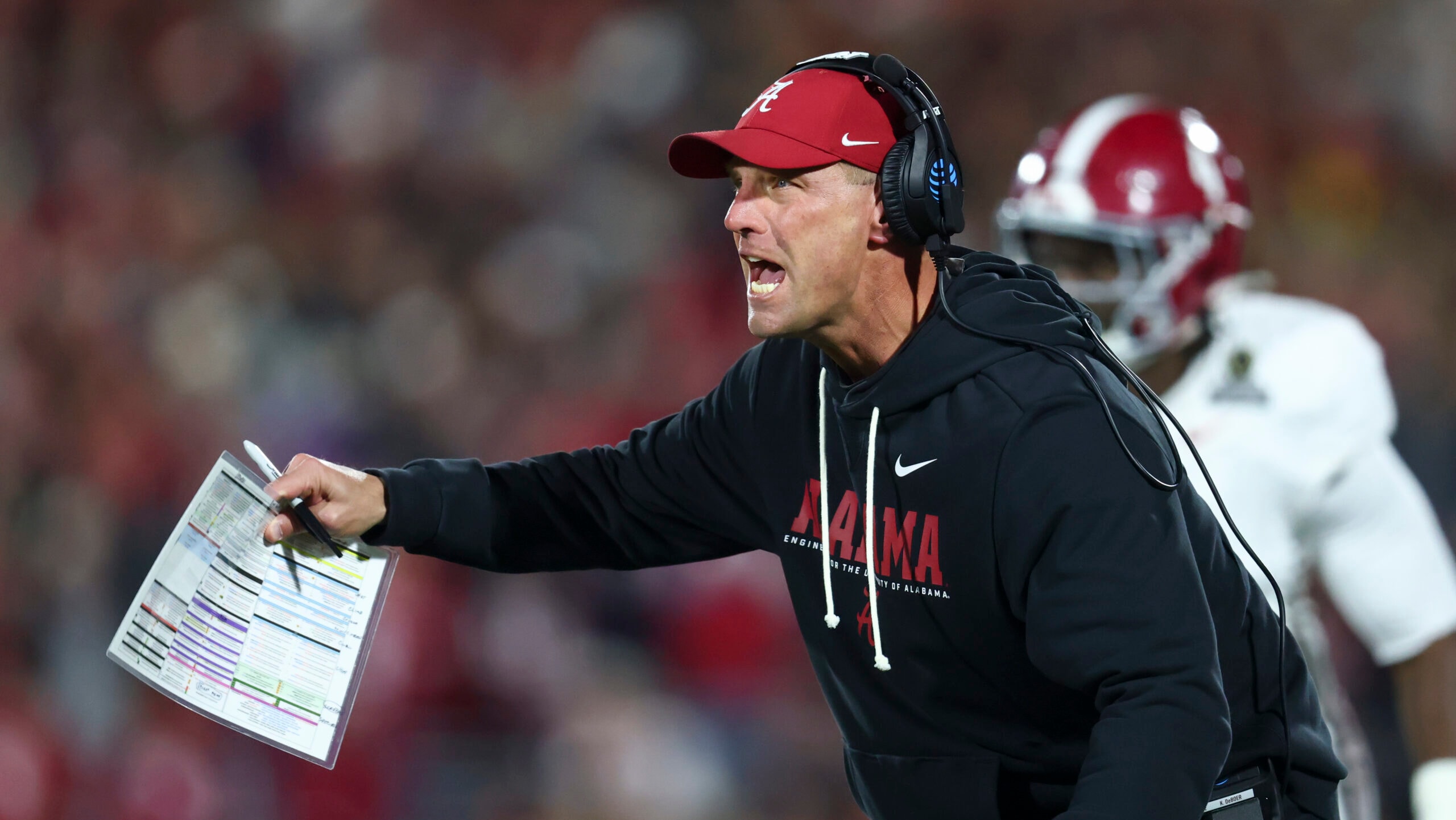
Kalen DeBoer disputes idea that pass-heavy offenses cannot dominate
Alabama’s head coach pushed back against the view that an offense built around the forward pass is inherently limited, arguing that the mindset and details determine whether it can control a game.
Kalen DeBoer is taking aim at a common criticism of modern college football offenses: the idea that a pass-heavy plan cannot physically impose its will on opponents. In comments reported by Saturday Down South, DeBoer pushed back on that negative perception, arguing that a passing approach can still create leverage, control tempo, and wear defenses down when executed correctly.
The pushback matters in Alabama football context because DeBoer is not only leading a program with a long history of power runs and field-position identity, he is also inheriting the scrutiny that comes with changing how a team looks week to week. In the current era, teams that throw frequently often face a dual burden. They must prove they can score consistently, and they must also prove they can protect the football and handle pressure when games become more chaotic.
DeBoer’s core message, as described in the report, is that the label “pass-heavy” should not be treated as a ceiling. Instead, the ability to dominate comes from what the offense designs and what the quarterback and skill players are able to do in-game. That includes route concepts, timing, protections, and the balance between attacking downfield and taking what the defense gives underneath.
This kind of coaching rebuttal also reflects a broader trend in college football coverage, where viewers sometimes reduce an offense to its highest-percentage play type. The report frames DeBoer’s response as a correction to that simplification. It is a reminder that pass-centric offenses can build run-game advantages, stress coverage discipline, and set up explosive plays in multiple ways, depending on the distribution and play-calling plan.
For Alabama fans and SEC observers, the question going forward is not whether the Crimson Tide will pass. It is how DeBoer and his staff translate a philosophical argument into repeatable execution. The program will be evaluated on whether third downs stay manageable, whether drives convert without relying on a handful of big plays, and whether the team’s offensive answers stay effective when opponents adjust coverage and pressure. Those are the practical measures that decide whether a pass-heavy identity becomes a strength or a vulnerability in the league.
Why It Matters
- Perception shapes expectation, and DeBoer’s comments report he is trying to reframe how Alabama’s offensive identity will be judged.
- In SEC play, defenses frequently adjust quickly, so the staff’s ability to turn a pass-heavy approach into sustained drives is the real test.
- Alabama’s ability to convince critics with consistent third-down efficiency and controlled tempo would reduce the narrative pressure around scheme fit.
Sources
Key Facts
- Kalen DeBoer pushed back against the notion that pass-heavy offenses cannot physically impose their will.
- The report specifically ties the discussion to Alabama and the way DeBoer’s offense is perceived.
- Saturday Down South described DeBoer’s comments as a disagreement with a negative perception of pass-heavy scheme limitations.
- The argument presented is about execution and details, not about pass frequency being a hard constraint.