
THE APEX TIMES
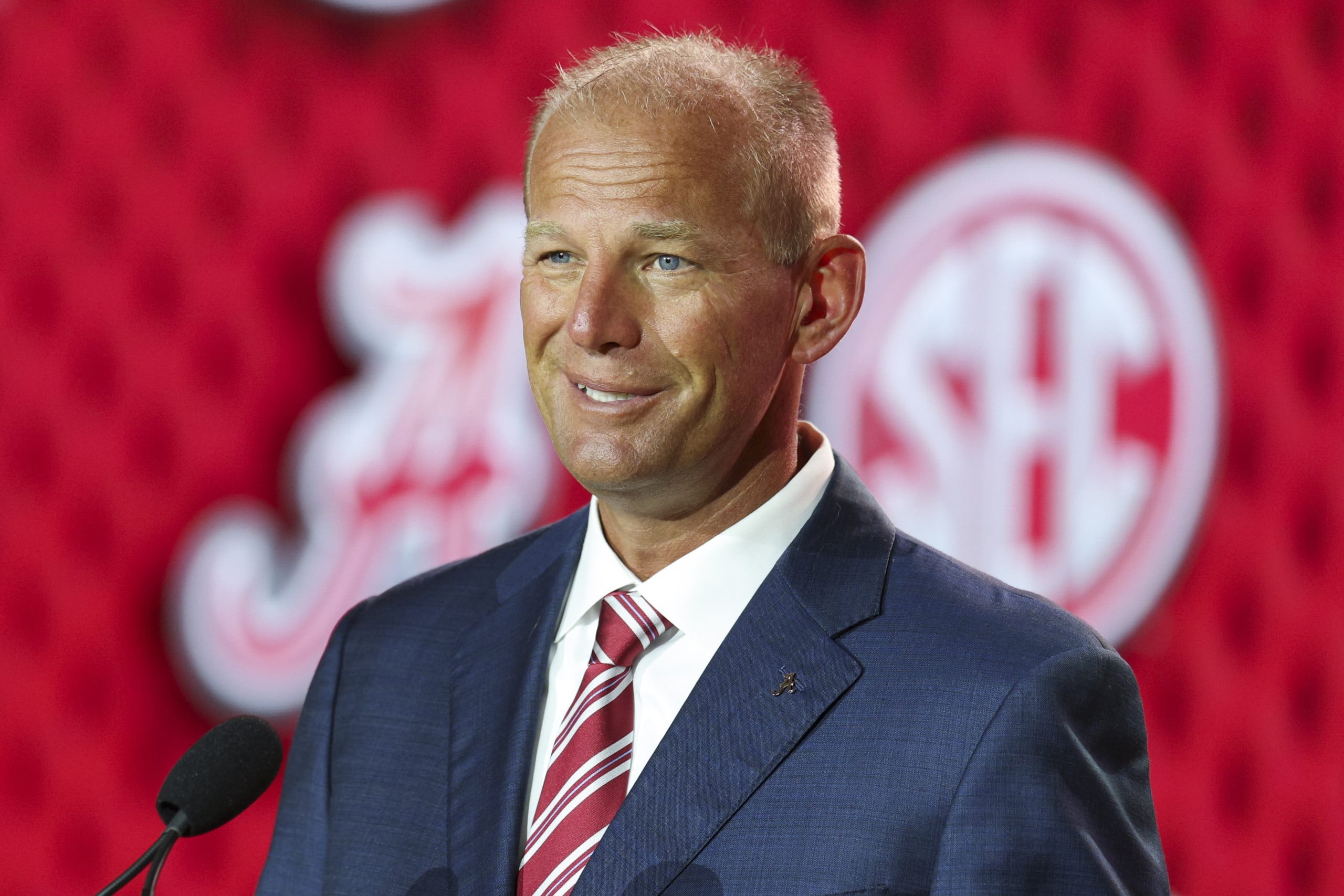
Kalen DeBoer emphasizes Alabama’s practice standard: offense and defense should both demand violence
Alabama’s new head coach is pressing a simple theme in training camp mode. He wants the unit-versus-unit intensity to be real, even when nobody is keeping score.
Alabama head coach Kalen DeBoer is trying to set a hard tone early, using a blunt, competitive message to describe what he wants in practice: the offense and the defense should both play with the intent to beat the other side at a physical and mental level. In comments reported by Saturday Down South on Aug. 5, DeBoer framed that standard as a matter of details and discipline, not just effort, and described the goal in an aggressive way, saying each side should “kick the other side’s ass” during practice.
The nuance in DeBoer’s framing, as presented in the post, is that he is not merely demanding energy from one unit or trying to spark highlights. Instead, he is pushing the idea that Alabama should be able to withstand its own internal competition. If both units believe they must earn reps, the coaching staff can make evaluations on technique, assignment soundness, and decision-making under pressure, rather than relying on passive walk-through execution.
That approach also indicates how DeBoer appears to view team football as a whole, with offense and defense developing in parallel rather than in separate bubbles. Even in a closed-camp setting, each side can learn from the way the other attacks. Offensively, working against defensive looks can expose where timing, leverage, and protection plans break down. Defensively, facing offensive tempo and route integrity can show what coverage disguises really do, and whether the front can sustain gaps when the play is live.
Because the comments in the Saturday Down South item focus on practice culture more than on schematic specifics, it would be a mistake to overread the message as a promise of a particular statistical profile. What is clearly supported is the mindset he is trying to install: competitiveness that shows up in the small things, repeated enough times to become habit. The “details” language matters here, because physical intensity without correct fundamentals can create the exact kind of sloppy football a coach is trying to eliminate before games begin.
Alabama’s offseason-to-fall-camp timeline has its own built-in pressure. Head coaches and coordinators typically use early camp to establish who plays fast, who communicates, and who can handle live-ball stress. DeBoer’s public emphasis on the offense-versus-defense standard suggests he is aiming to accelerate that learning curve by making the internal battle a daily expectation, not a special-team moment or a one-off drill.
For fans and observers, the most useful way to watch this story develop is not to look for a single quote to predict a season. Instead, pay attention to whether Alabama’s practices show consistent identity on both sides: the offense’s composure under defensive pressure and the defense’s ability to rally to the ball while playing assignment-correct football. If the standard is working, those traits should be visible in how the team responds to contact, how it handles misreads, and how quickly it corrects errors in real time.
As always, practice intensity can be a double-edged sword. Teams can sometimes chase aggression and lose discipline, especially early. If DeBoer’s emphasis is truly about nuance and details, the next question becomes whether Alabama pairs “kick the other side’s ass” with clean execution, manageable penalties, and controllable fundamentals that translate from camp to the opener. The season will answer that, but the camp process will offer the earliest clues.
Why It Matters
- Internal competition is a key part of preseason player evaluation, especially for a coaching staff trying to establish identity quickly.
- A consistent practice standard can affect how both units learn to handle live-ball pressure and communicate under stress.
- If executed with discipline, unit-on-unit intensity can help reduce late-season breakdowns by sharpening fundamentals earlier.
- Alabama’s ability to translate camp competitiveness into real-game football is likely to be tested immediately once the season begins.
Sources
Key Facts
- Kalen DeBoer described a practice standard in which Alabama’s offense and defense should compete aggressively against each other.
- Saturday Down South reported DeBoer’s emphasis on nuance and details as part of that competitive approach.
- The reported message focuses on internal unit-versus-unit intensity rather than a game-specific prediction.
- The comments were published by Saturday Down South on Aug. 5, 2026.