
THE APEX TIMES
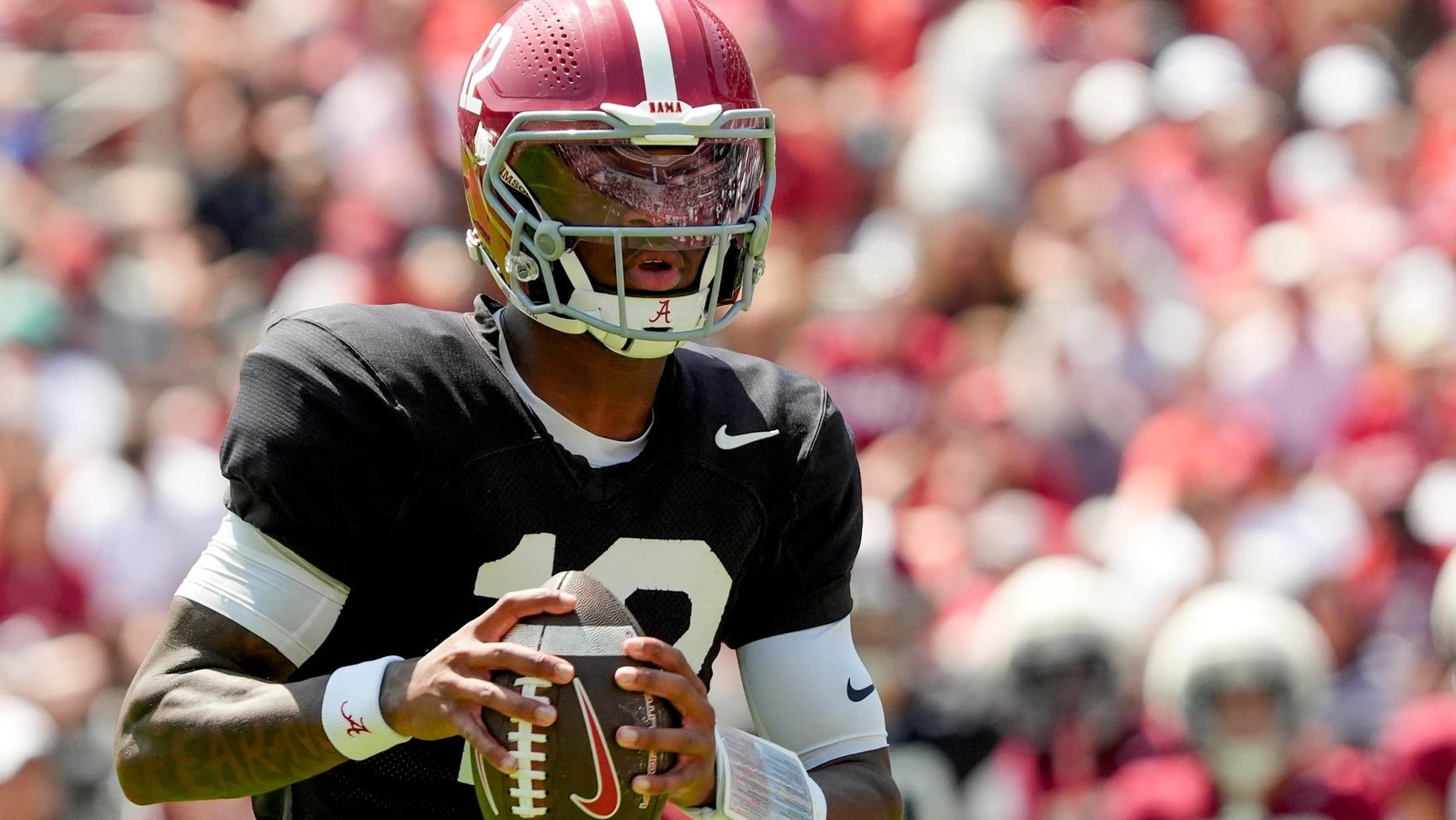
Kalen DeBoer explains how Keelon Russell won Alabama’s QB1 job
Alabama coach Kalen DeBoer addressed what set Keelon Russell apart as the Crimson Tide named their redshirt freshman report-caller to lead the offense over a more experienced, fourth-year option.
Alabama’s quarterback competition has produced a clear answer in the early stages of the 2026 season, with the program going with Keelon Russell as its QB1. In an explanation shared publicly, head coach Kalen DeBoer laid out the rationale for why the redshirt freshman earned the starting spot over a fourth-year veteran who also competed for the role.
The decision matters because Alabama treats quarterback play as a complete job description, not just a weekly stat line. When the Crimson Tide select a starter this early, it indicates how they plan to run the offense and how comfortable the staff is with game-plan execution at speed. A QB1 designation also shapes practice priorities, with the first-team installation and situational work often revolving around the starter’s development and chemistry with the supporting cast.
DeBoer’s comments, as reported by Saturday Down South, centered on the difference between Russell’s performance and the more experienced option’s candidacy for the job. The coach’s framing suggests that “who gives the offense the best chance to operate correctly” outweighed “who has the most time in the program,” a theme that comes up frequently in elite programs when a younger quarterback shows decisive progress.
Russell’s path to QB1 is notable in part because redshirt freshmen quarterbacks do not typically get the same margin for command-and-control learning that underclassmen do at other schools. Alabama’s quarterback room, under DeBoer, has been expected to blend physical playmaking with disciplined decision-making, especially in a league where defenses adjust quickly and punishing mistake windows shrink as the season progresses.
The specific comparison DeBoer highlighted is straightforward: the staff chose Russell as QB1, and DeBoer explained why Russell earned that status over a fourth-year veteran. While the overall takeaway is clear, the deeper details of what separated them in the evaluation process, such as specific practice examples or the kinds of plays that tipped the scale, should be treated as coach-specific and competition-specific, not as a universal rule for every QB battle.
For Alabama fans, the most practical takeaway is how the coaching staff views Russell’s immediate readiness. A QB1 nod for a redshirt freshman also affects the timing of the offense’s rhythm, from tempo decisions to which routes are emphasized and when deeper passing concepts can be installed with confidence.
Looking ahead, the key question will be whether Alabama can keep turning the quarterback situation into something that feels stable as fall preparation continues. QB battles can be resolved quickly, but the quarterback development workload never stops, and the staff’s next job is to translate DeBoer’s evaluation into consistent performance week to week.
Why It Matters
- A QB1 designation sets Alabama’s offensive identity early and influences first-team installation and in-game decision-making.
- Choosing a redshirt freshman over a more experienced option suggests the staff valued readiness and execution more than experience alone.
- The quarterback decision impacts how quickly the offense can expand its playbook in preparation and regular-season games.
Key Facts
- Kalen DeBoer explained why Keelon Russell won Alabama’s QB1 job.
- Russell is a redshirt freshman who earned the starting quarterback role.
- DeBoer’s explanation contrasted Russell with a fourth-year veteran quarterback option.
- Saturday Down South reported the coach’s reasoning in a post published on August 24, 2026.