
THE APEX TIMES
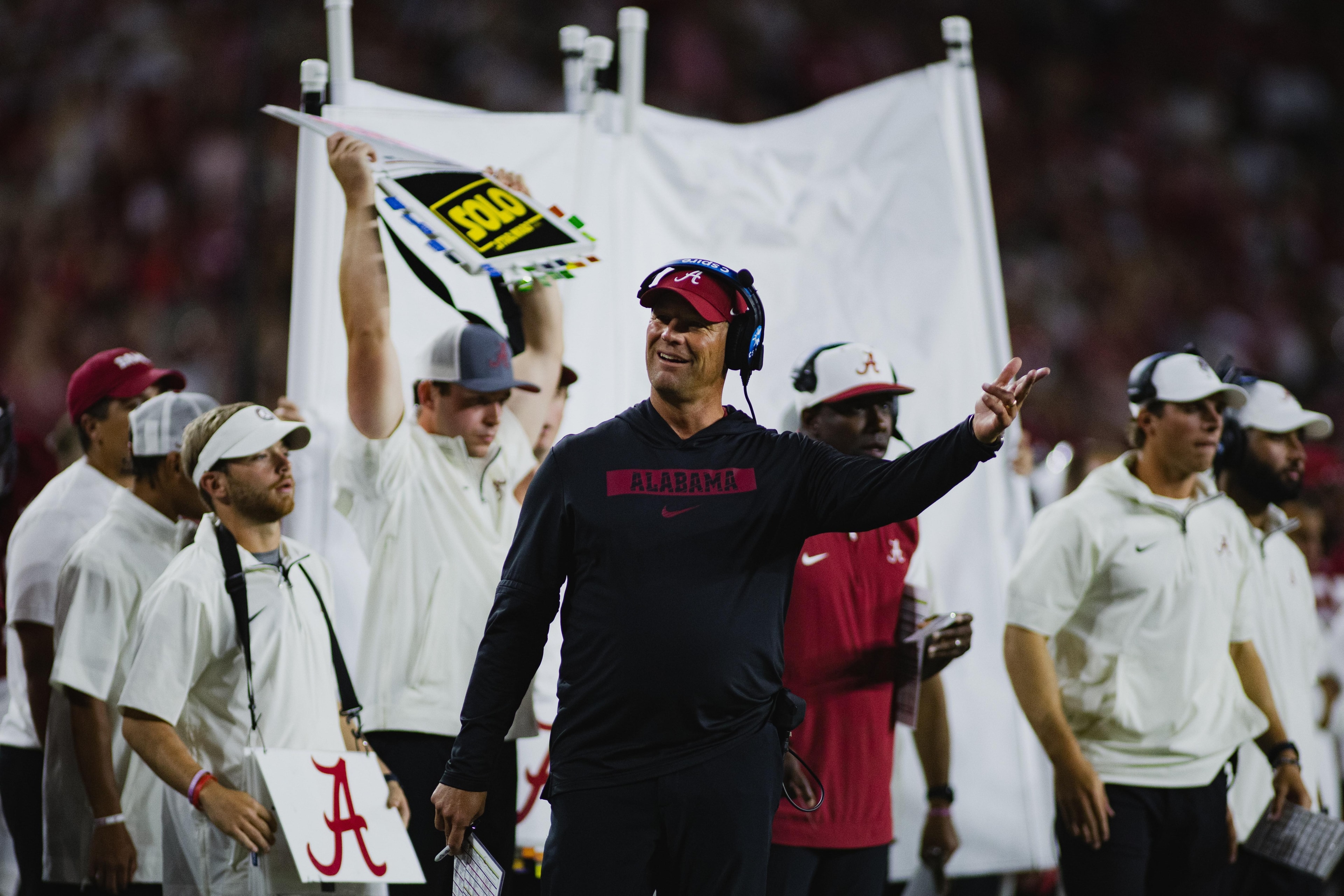
Kalen DeBoer’s Late-Game Mindset Becomes a College Football Conversation Starter
A new Yahoo Sports piece asks what a coach like Kalen DeBoer is thinking when a marquee matchup swings into either a blowout or a near-comeback, and why those decisions shape how offenses, defenses, and recruiting perceptions form over a season.
A Yahoo Sports column published Oct. 11, 2026, uses Kalen DeBoer as the lens for a familiar college football problem: when a big game is winding down, somebody still has to win, and somebody still has to decide how hard to press. The piece is built around a simple premise, late in a contest there is always more than one “right” way to play the last minutes, and the coach’s priorities show up quickly, even if the broadcast never does a deep dive into them.
The article frames the situation as a test of awareness. If the game is already decided, the coach must weigh risk against reward, including how much to expose starters to contact, how to protect a playbook rhythm, and whether to treat the final drives as a chance to sharpen execution or a chance to avoid unnecessary variance. If the game is close, the same coach faces a different set of pressures, settling the play-calling identity, choosing between methodical drives and shots downfield, and handling time management with the reality that a single mistake can erase weeks of preparation.
What the DeBoer question highlights is that modern college football is less about a single “style” and more about decision-making under changing probabilities. Late-game choices are not only tactical, they are psychological indicates to both teams. The staff can communicate expectations through formations, tempo, and personnel, whether the message is “we will keep playing fast and decisive” or “we will simplify and make every snap count.” Those messages influence how opponents defend, too. Even when games feel out of reach, defenses can still react to whether the offense is protecting the score line or still trying to create big plays.
The column also points toward how a coach’s mindset affects preparation, not just the outcome. When a staff expects to be in different late-game states, it has to build wrinkles into the practice week. That means scenarios for second-half comebacks and “safe-running” possession plans. It also means the offense and special teams have to be ready for the same personnel to operate in different modes, such as keeping a passing game alive without abandoning ball security, or shifting to run-heavy looks without giving up exploitable matchups.
There is a recruiting and program-building layer to those decisions that gets overlooked. When fans and prospects evaluate programs, they notice not only touchdowns, but the way a team finishes. A late-game approach that looks disciplined can strengthen trust in a coaching brand, while an approach that seems chaotic can raise questions about whether the staff can manage pressure. Even if recruits do not know the analytics behind the fourth-quarter play-calling, they recognize whether the team appears organized when time gets short.
Still, the central caution is that the “what was DeBoer thinking?” framing is not a box score breakdown. Without more primary detail, it is best treated as interpretive analysis rather than a report of specific sideline discussions. What can be stated from the column’s framing is that the late moments of games are an identity test, and that DeBoer is being used as a proxy for how elite coaches handle the hardest part of the sport: winning without losing control.
For the next games, the watch item is not one play but the pattern. Does the team lean into its strengths early in late-game drives, or does it slow and simplify as uncertainty rises? Does it preserve energy and reduce risk when leading, or does it continue to attack aggressively? In close situations, does the offense look like it has a clear endgame plan, or does it improvise its way through the final minutes? Those answers will determine whether the conversation raised by the Yahoo column is about philosophy or about results.
Why It Matters
- Late-game approach can shape how a program is perceived for both recruits and fans, not just how it wins a single game.
- Fourth-quarter decisions affect both opponents’ behavior and a team’s confidence, which can carry into future weeks.
- How a staff manages variance when a contest is decided can influence player development and continuity.
Key Facts
- A Yahoo Sports column titled “What Was Kalen DeBoer Thinking?” was published on Oct. 11, 2026.
- The piece discusses late-game scenarios in college football, including the contrast between blowout contexts and close finishes.
- It frames end-of-game coaching decisions as a test of priorities, including risk management, execution, and identity.