
THE APEX TIMES
Karl-Anthony Towns says Knicks contract-talk shutdown left him “very disappointed,” calling it “news to me”
New York’s decision to end extension negotiations, communicated through a Friday statement, has sparked an immediate public response from Karl-Anthony Towns as the Knicks weigh their roster direction with the season approaching.
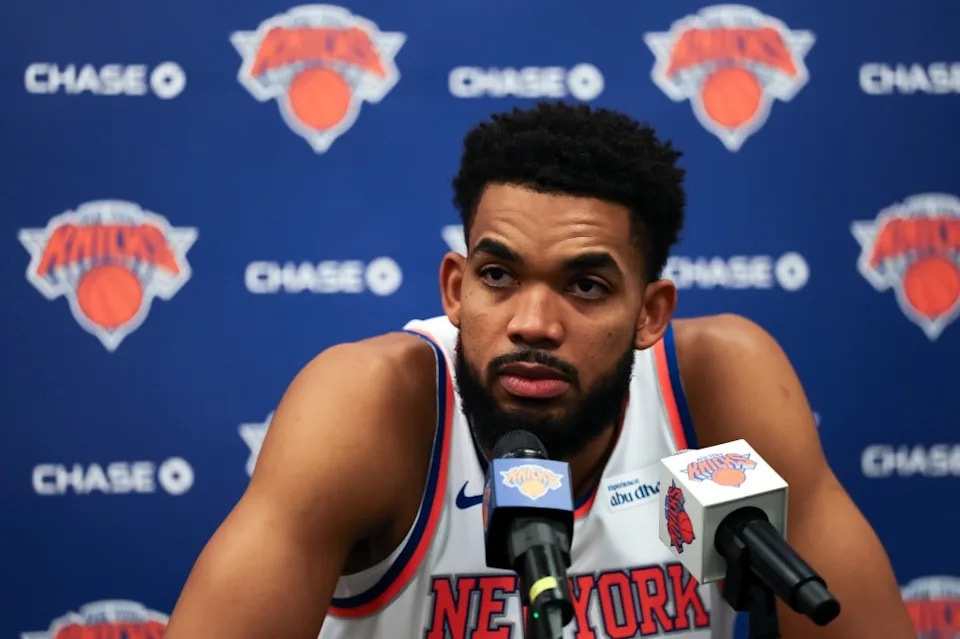
Karl-Anthony Towns did not soften his reaction after the New York Knicks moved to end extension talks. According to the report, the Knicks informed Towns that they were shutting down contract extension discussions through a statement released Friday, and Towns said the news did not land well, describing it as “very disappointed” and adding that it was “news to me.”
The comment matters because contract negotiations are not just administrative for an NBA roster. They shape how a team plans its frontcourt rotation, how it allocates long-term financial flexibility, and how it indicates whether a player is being viewed as a long-term centerpiece or a player whose future is expected to be resolved through other paths.
Towns’ response, as characterized in the report, suggests a disconnect between what the Knicks communicated publicly and what he understood to be the status of talks. In the same reporting, Towns’ posture implies frustration with the timing and method of communication, particularly that the Knicks’ decision arrived as a statement rather than a private, ongoing negotiation process.
The Knicks, for their part, have now made the stance explicit: extension talks are off the table, at least for the moment. While the report focuses on Towns’ emotions and reaction, the team’s decision framed in a Friday statement indicates New York wanted the message to be clear and public rather than left to speculation.
For Towns, the immediate practical impact is uncertainty about how his season fit will be understood within the broader front-office conversation. Even without any additional transaction details in the report, public disputes and abrupt negotiation shifts can influence how teammates, media, and opponents interpret a star player’s place in the organization’s near-term planning.
Looking ahead, the key question is how both sides respond to this public break in tone. If the Knicks hold their line, Towns may shift to an approach centered on performance and day-to-day preparation rather than negotiation leverage. If talks are revisited later, the story will likely turn to what changed and whether communication returns to a more typical bilateral process. Either way, the report makes clear that, at least for now, contract ambiguity has become part of the Knicks’ narrative.
Why It Matters
- Abrupt changes in extension negotiations can alter how a team approaches roster building and long-term salary planning.
- For a star center/forward like Towns, public uncertainty can affect how his role and future are discussed during the season.
- The Knicks’ decision to issue a statement suggests they prioritized clarity over keeping negotiations private, which can shape the media storyline going forward.
Sources
Key Facts
- The Knicks ended contract extension talks with Karl-Anthony Towns, communicated through a statement released Friday, according to the report.
- Towns said he was “very disappointed.”
- Towns said the news was “news to me,” indicating he did not expect the talks to be shut down in that manner.
- The reaction became public shortly after the Friday communication, with the report describing his emotional response.