
THE APEX TIMES
Kodai Senga emerges as a late-inning option for Mets after turning save chances into outs
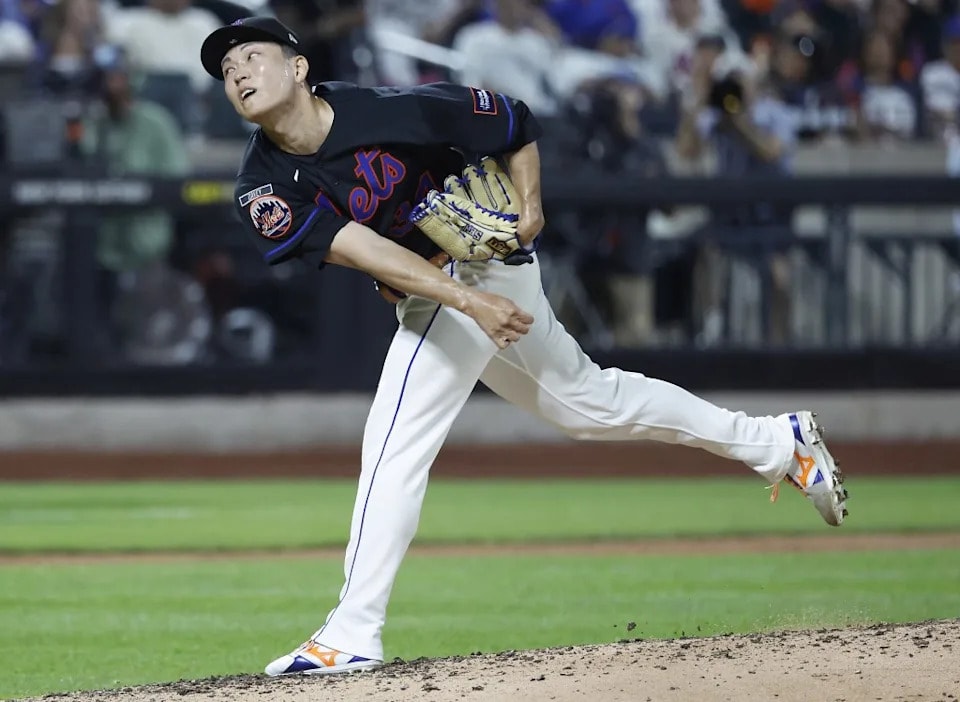
With New York’s season marked by instability, Kodai Senga has begun to look more like the bullpen fix the Mets have needed, closing out the ninth in a 4-1 win over Washington at Citi Field.
The Mets’ bullpen has spent much of the 2026 season navigating instability, so every clean late inning matters. On Friday at Citi Field, Kodai Senga entered the top of the ninth with a lead and finished the job, recording the save in New York’s 4-1 win over the Nationals. The moment came with a familiar soundtrack, Michael Jackson’s “Beat It” blaring over the ballpark sound system as Senga took over the final frame.
Senga’s path to that assignment has been defined by gradual trust rather than a straight-line role. According to the game report, his first three short-inning relief outings in this stretch had come on the road, and now he was being used at home in a more traditional, closing-type spot. That shift speaks to how quickly bullpen roles can evolve in August, particularly when a club is looking for stability to protect the outcome once the offense has done just enough.
The win over Washington followed a prior success that further shaped the Mets’ confidence. The reporting notes that Senga picked up a save in the Mets’ 4-1 win on Aug. 14, 2026 at Citi Field, described as his second save at that point. Together, those late-inning results suggest Senga is not simply collecting appearances, but producing the outs the Mets need when games narrow to the last few hitters.
For the Nationals, the matchup was built around Washington’s attempt to get something going after surrendering runs. But the final innings became a test of nerves and command, and Senga was positioned to decide it. In a bullpen environment where one hitter can change the complexion of a close game, the Mets’ willingness to use Senga in the ninth indicates they view his present form as more reliable than the team’s broader season narrative.
This is also the kind of development New York can prioritize as roster-building priorities shift toward October. When a team’s early plan does not fully materialize, the bullpen becomes the most efficient place to manufacture late-game leverage. Senga moving into a ninth-inning role is less about one outing and more about what multiple recent outs can do for manager decision-making: who gets the ball when the game is tight, and how quickly the bullpen can be sequenced without unnecessary strain.
The practical question now is how the Mets sustain this look if the margin tightens again. A closer-like assignment is rarely guaranteed by a single week of performance, even when results are positive. What to watch next is whether Senga continues to be deployed in similar game states, and whether New York’s late-inning plan stays anchored to him when conditions are less forgiving, such as higher-leverage situations or runners on base.
Why It Matters
- If Senga continues to handle ninth-inning leverage, it gives the Mets a more dependable end-game option as their playoff margin becomes clearer.
- Clearer bullpen roles can help a team avoid exhausting higher-leverage arms in earlier innings, which often becomes a problem in August close games.
- A trusted late-inning pitcher can also stabilize decision-making, making it easier to plan bullpen matchups rather than react inning by inning.
- For the Nationals, Senga’s emergence as a closer-type option shifts how the Mets’ lineup has to protect slim leads late, changing the game’s overall late-inning dynamics.
Key Facts
- Kodai Senga entered the top of the ninth in the Mets’ 4-1 win over the Nationals at Citi Field and closed out the game to earn the save.
- Reporting describes Senga’s use as part of a late-inning progression, with his first three short-inning relief outings coming on the road.
- The Aug. 14 win referenced in the coverage is described as Senga’s second save at that point.
- The game atmosphere is described as “Beat It” playing over the Citi Field sound system as Senga took over in the ninth.