
THE APEX TIMES
Kyle Whittingham leans on Michigan’s defensive line depth as Week 1 approaches
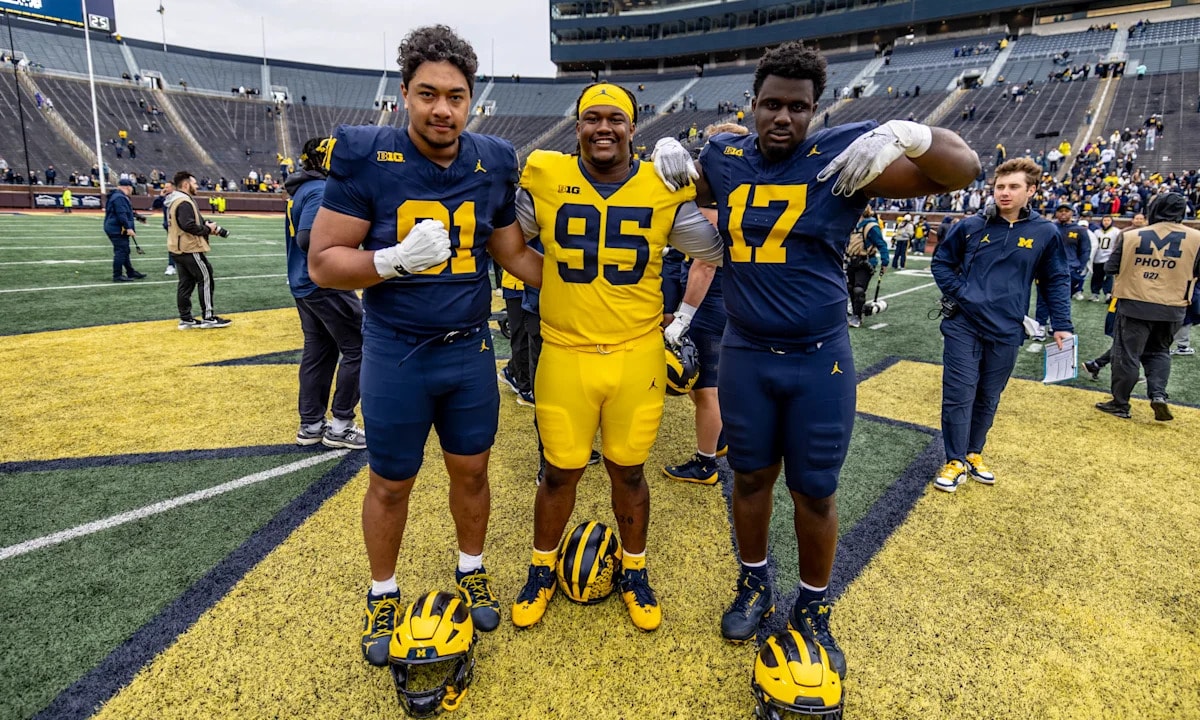
In the lead-up to the season opener, Michigan coach Kyle Whittingham framed the Wolverines’ defensive front as the team’s current strength, pointing to what he calls a deep rotation and resilience through attrition. He also cited a “stacked” backfield as a complementary advantage.
ANN ARBOR, Mich. With the season opener on the near horizon, Michigan coach Kyle Whittingham is indicating where he believes the Wolverines can separate themselves. Speaking ahead of Week 1, Whittingham said Michigan’s defensive line is the team’s strength, a view he had emphasized since spring, even as observers wondered whether roster attrition at the position could turn into a weakness by fall.
Whittingham’s central message is that the group has not only held its ground, it has continued to perform through the offseason. According to Whittingham, the defensive line has the kind of depth that allows Michigan to keep its identity on the field, rather than getting forced into a limited plan because of personnel turnover. He pointed to evidence from on-field work, including spring action earlier in the year, as a sign that the unit did not “lose a step.”
That framing matters because defensive line play often sets the tone for everything around it. When the front can pressure the pocket and hold up run fits, it simplifies assignments for the linebackers and secondary, and it can influence how opponents plan their whole week of practice. By emphasizing depth specifically, Whittingham is suggesting Michigan does not want to rely on a single standout or a narrow set of rotations, but instead wants sustained output across snaps and game states.
Alongside that emphasis on the defensive front, Whittingham also described Michigan’s running back room as “stacked.” The point, as presented in the report, is not just that the Wolverines have capable backs, but that they have options and flexibility. In practical terms, a deep backfield can help an offense stay consistent even when defenses adjust, and it allows different styles of runs and pass-protection looks depending on the opponent.
The context behind the comments is the way preseason expectations can shift when a program loses personnel. The defensive line is a position group that can be particularly exposed during transitions, because depth is tested by both practice volume and the physical demands of the position. Whittingham acknowledged that, in spring, his declaration that the defensive line was the strength surprised some people because of the attrition that had been part of the conversation entering the year.
As Michigan moves closer to its first game, the most important element will be whether the approach translates under live, opponent-specific pressure. Whittingham’s comments set up a clear watch item for the early season: can the defensive line rotation keep producing disruptive plays, and can Michigan’s front control the run game while still creating passing-game opportunities?
On offense, the watch item is whether the “stacked” running back room turns into clear in-game advantages, including maintaining rushing efficiency in different situations and keeping play-calling options varied. Together, the coach’s two themes suggest Michigan is trying to build a season identity around physicality at the line of scrimmage.
If Michigan’s depth and rotation hold up, the Wolverines should be able to play with fewer constraints and with more confidence in both phases. If they do not, the season could force a re-evaluation of where the team’s real margins are coming from. Either way, Whittingham’s offseason emphasis gives fans a roadmap for what he wants to see early.
Why It Matters
- Defensive line depth can stabilize a team’s run defense and pressure rate across different game scripts, not just in isolated bursts.
- Michigan’s ability to keep fresh bodies on the field affects how consistently the rest of the defense can execute assignments.
- A deep running back room can broaden an offense’s menu and help it respond to opponent adjustments early in the season.
- Coach Whittingham’s dual emphasis suggests Michigan wants to establish a physical baseline on both lines to shape the team’s identity from the start.
Key Facts
- Kyle Whittingham said Michigan’s defensive line is the team’s strength as the season approaches Week 1.
- Whittingham’s comments came from spring emphasis and were framed in light of reported attrition concerns at the position.
- He said the defensive line group showed in spring work, including April spring game action, that it had not fallen off.
- Whittingham also described Michigan’s running back room as “stacked.”
- The report ties both themes to Week 1 preparation and the broader team-building message for the start of the season.