
THE APEX TIMES
Kyle Whittingham Says Bryce Underwood Is Still Michigan’s Starting QB, But Explanation Fuels Doubts About Offense
The Michigan coach reiterated that Bryce Underwood remains his starting quarterback and framed that decision as the Wolverines’ best path to winning, even as questions persist about the production of an offense that has struggled to generate consistent results.
Michigan coach Kyle Whittingham made a point of clarifying the quarterback picture Monday, saying Bryce Underwood remains the starting quarterback. The message was direct, but the reasoning offered for why Underwood is still the answer left room for skepticism, particularly given the broader concern that Michigan’s offense has not been producing at the level the program expects.
Whittingham’s explanation, as reported, centers on his belief that Underwood gives Michigan its best chance to win. That is a traditional coaching framework, but for Michigan fans and observers trying to reconcile coaching confidence with on-field results, the decision raises a fair question: how much faith can an offense afford to place in potential rather than measurable output.
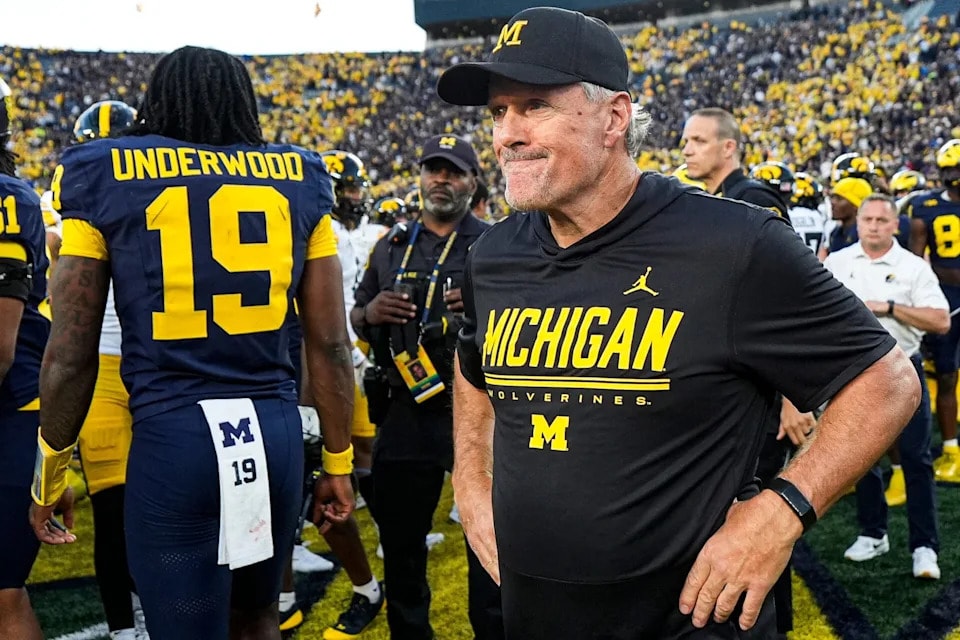
The timing matters. The renewed focus on Underwood’s role is coming after a close, late-game moment that underscored Michigan’s struggles to separate, with the program associated in the reporting and imagery with a 20-19 loss to Iowa. In that kind of tight, finish-driven game, the quarterback is not only a play-caller in the film room, he becomes the centerpiece of the final decisions, both execution and timing.
Whittingham’s comments also highlight a familiar tension in college football coaching. Teams often emphasize “process” and “development” when results lag, and a quarterback can become the focal point for those narratives. But when a starter is publicly reaffirmed, the program’s message can be read two ways at once: that the staff sees its quarterback as the most complete option, and that the staff may be willing to tolerate uneven production while other parts of the offense catch up.
For Michigan, the debate now is not only whether Underwood is capable, but whether he can consistently translate capability into drives that move the chains, sustain momentum, and create scoring opportunities without relying on late-game volatility. If the offensive unit remains stuck in a cycle of stalled sequences, play design becomes part of the conversation as much as personnel, including how receivers are getting open, how the line is sustaining protection, and how the run game is being used to create manageable down-and-distance.
What to watch next is whether Michigan’s offensive staff responds to the questions raised by Whittingham’s own framing. If Underwood’s starting job is rooted in “best chance to win,” then the Wolverines will need to show that the approach is producing more steady returns, not just keeping the same quarterback in place.
At the same time, Whittingham’s decision could reflect more than one issue. Sometimes the quarterback can be viewed internally as the player who best fits the offense’s current constraints, even if the results do not yet show it. The public explanation, though, makes the coming weeks more important, because the standard for “best chance” will inevitably become performance on the field, drive after drive. The quarterback debate will not fade just because the starter is confirmed; it will sharpen until the offense can deliver outcomes that close the gap between belief and production.
Why It Matters
- When a program publicly confirms its starter, it can report stability, but it also raises expectations for improved offensive output.
- Michigan’s offensive performance will determine whether Whittingham’s “best chance to win” framing holds up in tight games.
- Underwood’s role will likely remain central to how fans and analysts evaluate the staff’s offensive plan and in-game decisions.
- If production does not improve, the next quarterback-related headlines may shift from “who starts” to “what needs to change around the starter.”
Sources
Key Facts
- Kyle Whittingham reaffirmed that Bryce Underwood remains Michigan’s starting quarterback.
- Whittingham explained that he believes Underwood gives Michigan its best chance to win.
- The reported explanation has intensified questions about the Wolverines’ struggling offense.
- The reporting and associated imagery reference a 20-19 loss to Iowa, placing recent results in the quarterback debate context.