
THE APEX TIMES
Lane Kiffin is still pressing LSU to finish the job on the offensive line
Fourteen practices into fall camp, the Tigers’ coach says the work up front is not complete, even with a promising starting group that includes Colorado transfer Jordan Seaton.
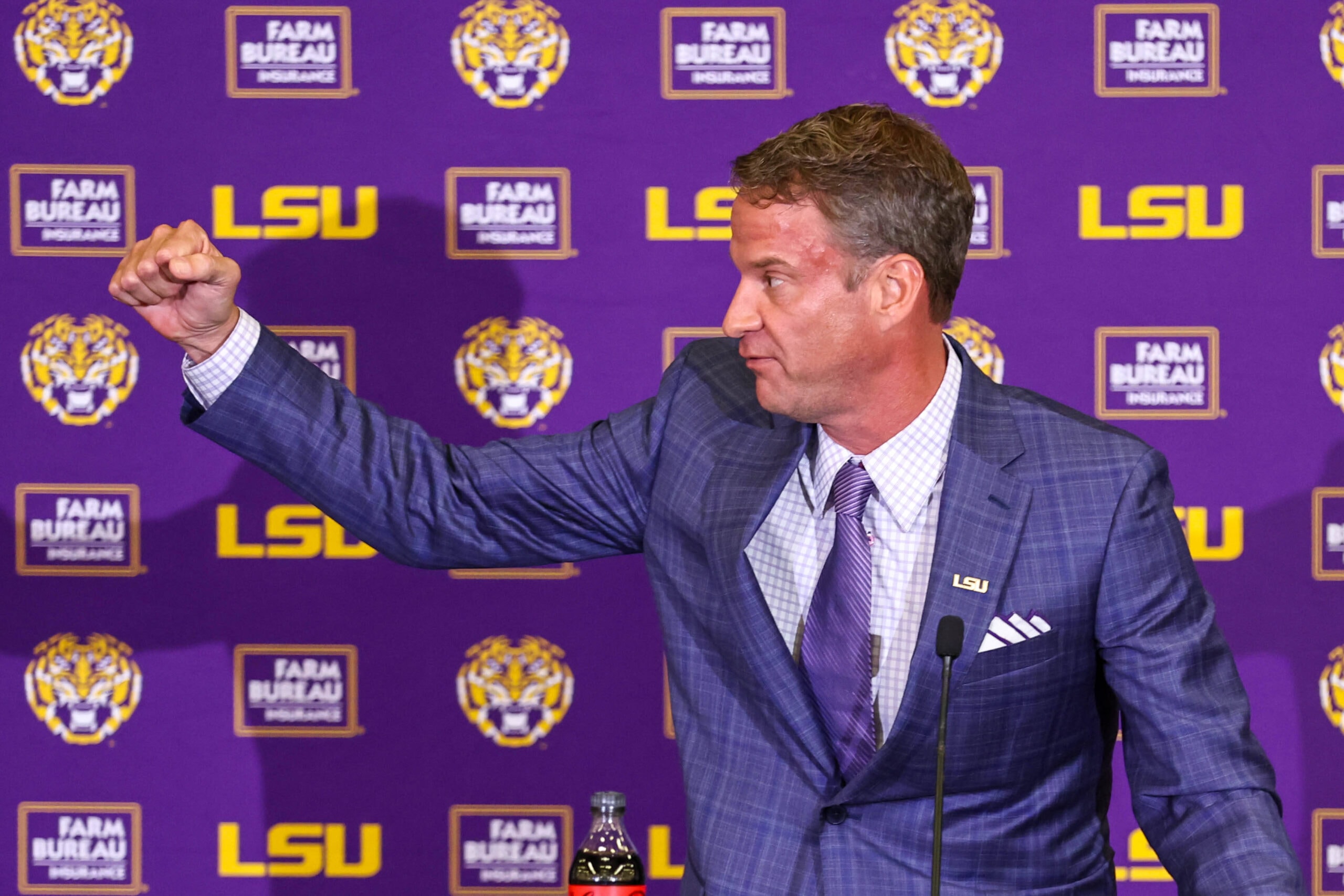
LSU is deeper into fall camp than many teams would be willing to admit, and yet Lane Kiffin still sounds like a coach who believes the offensive line has more to prove. Fourteen practices into camp, Kiffin told reporters that he is “high on [his] list of concerns” the Tigers must address, and he framed the offensive line as the area where the job is not finished.
The Tigers spent the offseason trying to strengthen their protection and run-blocking foundation, aiming to make the unit more dependable from week to week. But Kiffin’s public comments suggest the team’s internal standard remains higher than what has been demonstrated so far in practice. In other words, LSU can look settled at the top of the depth chart while still carrying major questions about what happens when starters need to be replaced or when games get physical.
Part of the reason for LSU’s optimism is that the starting five already projects as a strength. According to the report, the group is led by Colorado transfer Jordan Seaton, a move that indicates LSU’s willingness to invest in immediate, visible improvement rather than waiting for development to fully play out.
Still, the concern is not centered on Seaton and the first group. The issue, as Kiffin described it, is what LSU has behind the starting unit. The report notes that beyond the starters, “the picture is much less settled,” which points to a need for more consistency in practice depth, more reliable reps across the line rotation, and greater certainty about who can absorb quality snaps early in the season.
For LSU, the timing of that message matters. Fall camp is when coaches separate “good on paper” from “good on game days,” and when they decide whether certain roles are secure or still vulnerable. If the offensive line remains unfinished, it can ripple across the entire offense, tightening the margin for play-calling, shortening the list of what can be trusted when protections break down, and increasing the difficulty of evaluating the quarterback and skill positions under pressure.
Kiffin’s tone also underscores the reality of the college football calendar. With the season approaching and the competitive nature of the SEC, it becomes harder to hide weaknesses in the trenches once players face speed and power that mirror what they will see on Saturdays. Even if LSU’s first line is solid, depth issues can show up quickly in the form of uneven communication, inconsistent leverage, or penalties that force the offense into more conservative sequences.
What to watch next is whether LSU’s second and third groups look more secure as camp continues, and whether Kiffin’s language shifts from “concerns” to confirmation. The report suggests the starting five is a baseline, not the finish line, so the next camp reports will likely hinge on the line’s overall stability, not just the top matchup.
In the near term, the Jordan Seaton factor is straightforward: LSU brought in a transfer to help drive improvement now. The bigger question is whether that improvement extends through the rotation well enough that LSU can sustain a consistent offensive rhythm when fatigue, game flow, or strategic adjustments require changes along the line. If the Tigers keep hearing the same concerns from Kiffin, it may be a sign that the most urgent work is still ahead of them.
Why It Matters
- Offensive line instability can limit an offense’s efficiency, especially when substitutions or injuries force lineup changes.
- A settled starting group helps, but SEC play often exposes weaknesses in depth and rotation reliability.
- Kiffin’s comments indicate LSU’s evaluation priorities, which can shape how aggressively the coaching staff trusts certain line combinations early in the season.
- If LSU cannot secure depth, the offense may need to simplify protection and scheme choices more often than intended.
Key Facts
- LSU has spent the offseason trying to improve its offensive line.
- Lane Kiffin said after 14 practices into fall camp that he is still not convinced the job is finished.
- The Tigers’ starting five is described as promising, led by Colorado transfer Jordan Seaton.
- Kiffin’s concerns are centered on what the offensive line looks like beyond the starters, which the report describes as unsettled.