
THE APEX TIMES
Lane Kiffin’s Kentucky loss returns old credibility problem
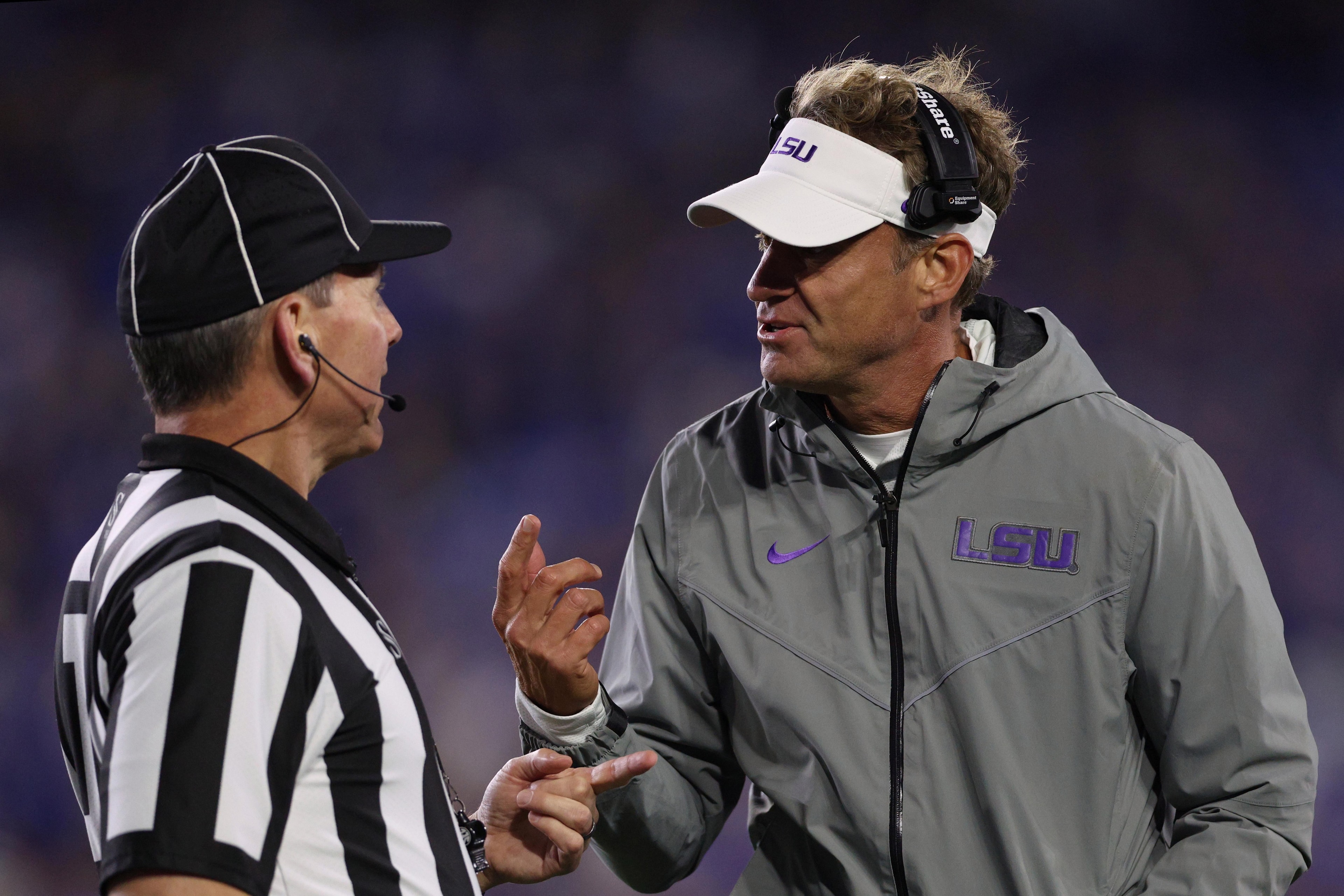
At Kentucky, Ole Miss coach Lane Kiffin’s anger after a late first-half score landed differently with audiences who say he has told too many ref-related stories in the past.
Ole Miss coach Lane Kiffin did not just react to a difficult first half at Kentucky on Saturday, he built a narrative around it. According to Yahoo Sports, after Kenny Minchey scored on a quarterback sneak to end the first half, Kiffin was furious, and the moment immediately revived questions that have followed him for years: when Kiffin points to officiating, do people believe him?
The concern is not that coaches are never disappointed in officiating, it is the pattern. Yahoo Sports looked back at prior comments from Kiffin in which he said a referee told him he could not stop a Kentucky touchdown because he would be “be killed.” Stories like that, even when they are meant to explain what players were or were not allowed to do, can become ammunition for critics when they are repeated often enough that fans start to question the premise rather than the mechanics.
That credibility issue matters because college football is built on margins and decision-making. Even if a complaint about rules or enforcement is fair in isolation, the broader reaction changes when audiences feel the same themes show up again and again. In that sense, what Kentucky represented to Ole Miss in the game is also what the moment represents beyond the game, a test of whether Kiffin’s emphasis on outside interference sounds like a one-off explanation or part of a familiar refrain.
Kiffin’s post-score frustration, as described by Yahoo Sports, came after Minchey’s touchdown gave Kentucky momentum heading into halftime. A quarterback sneak touchdown, especially when it ends the first half, tends to feel like a statement because it can shift how both teams think about what is available in the red zone and short-yardage situations. For Ole Miss, that kind of swing is precisely what makes coaching reaction visible, and what makes the next “interpretation” of officiating or opportunity feel heavier.
The NCAA coaching carousel also means there is an attention economy around high-profile programs and high-profile coaches. Ole Miss has recruited and positioned itself for sustained competitiveness, and fans expect that disappointment gets filtered through preparation and execution as much as it does through officiating. When that balance tilts toward explanations that others see as dismissible, it changes the way the team’s future is read, whether those reads are about the next opponent, the next drive, or the next season.
Still, it is also important to separate two things: the emotional truth of a coach in the moment and the factual question of whether something was mishandled. Yahoo Sports’ framing focuses on whether anyone is buying the excuse, not on an adjudication of what the officials did on a specific play. Without an official explanation, replay review record in the public trail, or a contemporaneous rules clarification tied to the exact event, the public remains left with interpretations.
What to watch next is how Ole Miss responds in the coming games, both on the field and in how Kiffin chooses to communicate. If the team’s preparation shows up in crisp execution, the anger will be seen as a normal coaching intensity. If problems persist and the language around officiating becomes the dominant narrative again, Kiffin’s credibility challenge is likely to deepen, because fans and media will treat each new allegation as part of a larger history rather than a fresh data point.
Why It Matters
- When a coach’s officiating explanations lose credibility with fans, every subsequent complaint can become harder to separate from prior controversy.
- Short-yardage, end-of-half touchdowns are momentum swings that amplify how coaches interpret the game’s turning points.
- Ole Miss’s ability to move beyond narrative depends on whether coaching reaction is followed by consistent execution.
- High-profile coaching communication can influence how quickly a program’s struggles are normalized versus challenged.
Key Facts
- Yahoo Sports reported that Ole Miss coach Lane Kiffin was furious after Kentucky quarterback Kenny Minchey scored on a quarterback sneak to end the first half.
- The same Yahoo Sports piece tied the postgame reaction to prior Kiffin comments involving officiating, including an anecdote where he said a referee told him he would be “be killed.”
- The article’s central argument was that Kiffin has repeated ref-related claims enough that audiences question whether they should be accepted at face value.
- Minchey’s touchdown was specifically described as a first-half quarterback sneak score.
- The coverage focused more on credibility and public perception than on resolving the officiating issue as a matter of record.