
THE APEX TIMES
LaVell Edwards’ investment in Kalani Sitake became part of BYU’s coaching DNA
A look back at how the BYU legend’s mentorship shaped the man now leading the Cougars, and what that legacy indicates for the program’s identity.
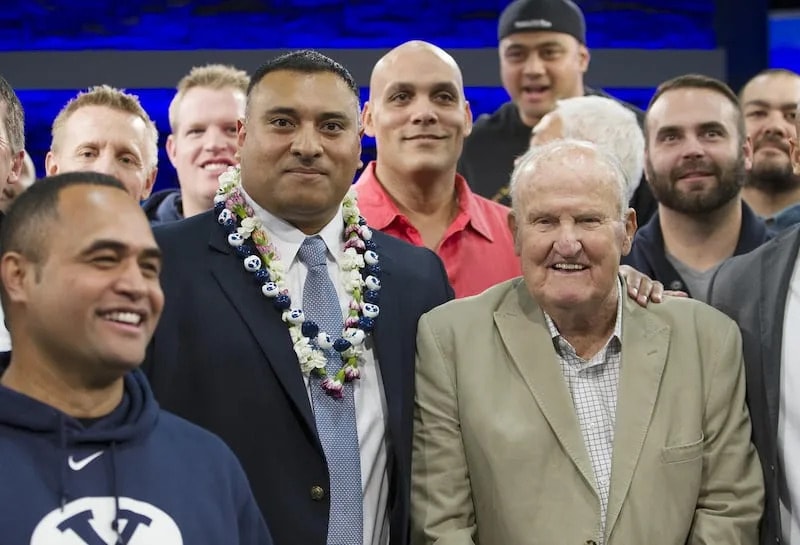
BYU’s football culture has long been tied to one name, LaVell Edwards. In a new feature published by Yahoo Sports, the focus shifts from what Edwards built on the field to what he built in people, specifically his relationship with Kalani Sitake, now the Cougars’ head coach. The piece is framed as the first installment in an occasional series examining Edwards’ long-term leadership legacy, and it argues that Edwards did more than hire assistants or teach schemes. He helped form a way of approaching responsibility, preparation, and commitment that Sitake carried forward.
Edwards is widely recognized as the architect of the modern BYU offense, but the article’s central point is personal. It describes Edwards as investing in Sitake’s life during their time together at BYU, treating mentorship as a form of coaching that extends beyond Sundays and game week. The story emphasizes the difference between learning football and learning how to lead through football, a distinction that matters in a program where expectations are high and the spotlight never really leaves Provo.
That influence, according to the narrative, showed up later when Sitake was asked to shoulder more responsibility. Edwards’ tutelage is presented as a foundation for how Sitake communicates, how he handles staff and players, and how he thinks about consistency in both performance and standards. In that telling, Sitake’s rise is not portrayed as a sudden breakthrough. It is framed as the culmination of long habits shaped by an established coach who valued character and discipline as much as play-calling.
The piece also places Edwards’ mentorship in the context of a program with its own identity. BYU is not simply competing for wins. It is recruiting into a specific culture, with a fan base that expects the team to represent the institution in a particular way. When a coach comes up through that environment, the job becomes less about importing a new system and more about translating what worked into the present. The article suggests Sitake has tried to keep the spirit of Edwards’ approach while operating in a different era of college football.
For readers watching BYU’s trajectory, the immediate takeaway is that the Cougars’ leadership model has roots, not just headlines. An Edwards-to-Sitake connection indicates continuity in how the program views quarterback development, offensive tempo, and the role of the coaching staff in building trust. It also speaks to how BYU tries to protect its identity during turnover in conferences, staffing, and the broader landscape of college football.
As the season approaches, this kind of legacy story can feel abstract. Yet leadership and staffing decisions often reveal themselves in the details: preparation routines, game-week composure, and the consistency of standards across positions. If Sitake continues to draw from the Edwards philosophy described in the feature, BYU’s next stretch will be worth tracking for evidence of that “life investment” translating into on-field clarity.
Ultimately, the feature is less a scoreboard argument than a program-building one. It frames Edwards’ impact as enduring because it was personal, and it frames Sitake’s present job as carrying obligations tied to that relationship. In a sport where coaching changes are frequent, the idea that one mentorship can shape a whole coaching identity is the kind of long-range story fans do not always get to see.
Why It Matters
- Leadership continuity can be as consequential as X-and-O innovation in building a team identity.
- A coaching philosophy rooted in a program’s history can influence recruiting messaging and player development priorities.
- How a head coach runs staff and sets standards often becomes visible over the course of a season, not just in hiring announcements.
- For BYU, the Edwards-Sitake connection reinforces the idea that the program’s culture is an on-going project, not a static brand.
Sources
Key Facts
- The Yahoo Sports feature is presented as the first in an occasional series exploring LaVell Edwards’ legacy of leadership.
- The article centers on LaVell Edwards’ influence on Kalani Sitake’s development while they were connected through BYU coaching.
- The piece characterizes Edwards’ impact as mentorship that extended beyond football strategy.
- It frames Sitake’s current role as head coach as a continuation of a leadership approach Edwards helped shape.