
THE APEX TIMES
LeBron James and Jaylen Brown debut for the 76ers in preseason, but the real test is what carries over
Philadelphia’s revamped look featured two major arrivals on opening-run tape. The preseason answer is partial, the questions remain clear.
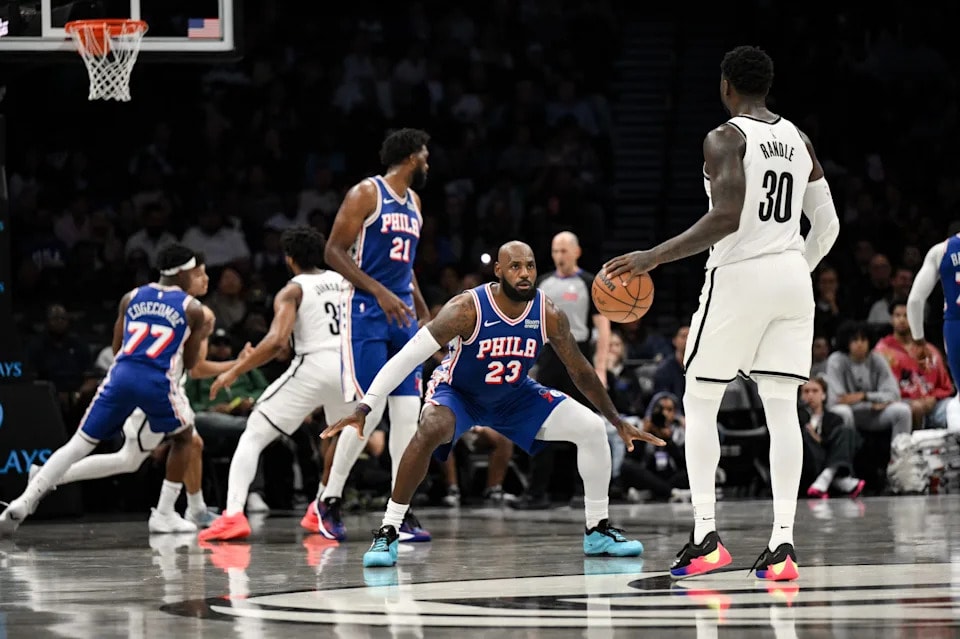
The Philadelphia 76ers’ preseason opener offered a simple headline and a harder takeaway: LeBron James and Jaylen Brown made their debut with the Sixers, and the club leaned into a loaded starting-five concept as the season gets its first real on-court measuring stick. The immediate story was visibility. James, as Yahoo Sports noted, went straight to the scorer’s table in the routine that has defined his long NBA life, while Brown’s presence indicated Philadelphia’s intent to pair star-level scoring with a length-and-physicality profile that has often set the tone in crunch-time basketball.
From there, the focus shifts to what a debut actually tells you in October. Preseason basketball can be a laboratory for combinations, not a final grade on identity. The Sixers were using the game to see how spacing works when two high-usage, decision-first players share the floor, and how defensive communication changes when new faces must quickly learn roles rather than rely on familiarity. Even when the effort and chemistry look promising, the pace of possessions and the level of opponent resistance can blur the line between report and schedule.
Yahoo Sports framed the day as a “did we learn anything?” exercise, and that is the key lens for Philadelphia fans watching this version form. If the starting five can generate offensive rhythm without forcing every possession into a single play type, that matters. If it can defend with enough structure to prevent stretches of back-to-back mistakes, that matters too. But the most honest preseason conclusion is usually this: you learn whether the team has options, not whether it has perfected its postseason habits.
The 76ers’ context makes those options especially important. Philadelphia has historically been built around a mix of shot creation and defensive organization, and the modern NBA requires both to be available early in the clock. Adding James and Brown, as the preseason debut storyline suggests, puts pressure on the roster to fit around their strengths rather than ask them to solve every problem alone. For example, the spacing created by surrounding shooters, and the ball-movement comfort of non-primary creators, will determine whether the offense can play fast when the defense collapses.
On the defensive end, debut games tend to reveal how quickly a team can rotate and talk. James’ game has always featured an ability to anticipate passing lanes and direct teammates, while Brown’s reputation is built on wing defense and competitiveness at the contact points. Whether those attributes translate seamlessly as a unit in preseason will matter less than the progression you see over the next several games: does the communication tighten, do the closeout decisions stay disciplined, and does the help defense look coordinated rather than reactive?
There is also a roster-building implication to the preseason frame. A “loaded starting 5” usually indicates that the club wants its top group to be capable of controlling the game without needing constant substitutions. That does not automatically mean a playoff-ready ceiling in one night, but it does suggest how the coaching staff is planning to distribute minutes and responsibilities. If the top unit can sustain offense and defense for multiple stretches, it reduces the pressure on the second wave and makes game management simpler later in the season.
For what to watch next, Philadelphia’s preseason learning should be measured by consistency across repetitions. The team does not have to look perfect, but it should show repeatable patterns: better shot-quality balance, fewer possessions lost to misreads or hurried decisions, and more stable defensive positioning when the ball swings. The debut of James and Brown is a dramatic first chapter, but the real story will be whether what the Sixers experimented with in October becomes dependable basketball by the time games count.
If you are looking for the single most important takeaway, it is that preseason debuts are about fit more than flash. The 76ers have now put two headline stars together in a live game environment. The question is whether Philadelphia can turn that moment into a coherent identity once the rotation tightens and opponents stop treating October like rehearsal.
Why It Matters
- Philadelphia’s ability to combine two high-impact players affects both the offense’s spacing and the defense’s communication early in games.
- A starting five that works in preseason can reduce late-game reliance on unstable substitution patterns during the regular season.
- The early October fit questions become postseason questions once rotations shorten and execution margins narrow.
- How quickly new on-court roles are learned can determine whether the 76ers’ identity is coherent by midseason.
Sources
Key Facts
- LeBron James made his debut with the Philadelphia 76ers during a preseason game, according to Yahoo Sports.
- Jaylen Brown also made his debut with the 76ers during the same preseason game, as reported by Yahoo Sports.
- Yahoo Sports described the Sixers as playing with a “loaded starting five” look in that preseason matchup.
- The preseason game in question was played at Barclays Center, per the Yahoo Sports game story context.
- The Yahoo Sports framing focused on whether the debut and revamped lineup revealed anything meaningful about the team’s direction.