
THE APEX TIMES
Lightning delay interrupts Bills-Browns early, postponing Shedeur Sanders’s chance to press his case in Cleveland
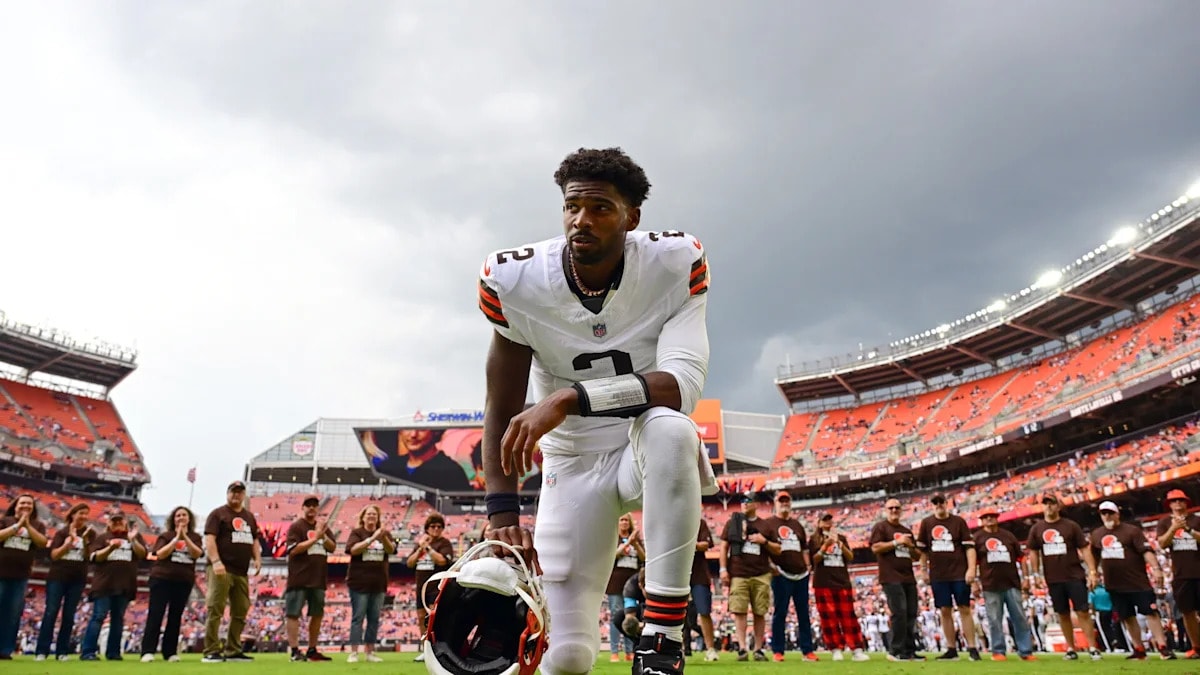
A first-quarter weather delay disrupted a Bills-Browns matchup and pushed back an opportunity Shedeur Sanders was seeking to use as a “closing argument” for the starting quarterback job in Cleveland.
Lightning in the area forced a stoppage early in Bills-Browns action, derailing the game almost immediately and extending the timeline for how quickly players can make their case on the field. According to Yahoo Sports, the delay struck during the first quarter, a period teams often treat as a formative checkpoint for evaluating execution, decision-making, and rhythm under game conditions.
For Cleveland, the timing of the interruption carried extra significance because the focus on quarterback opportunity has been part of the story. Yahoo Sports framed the delay as a setback to Shedeur Sanders’s opportunity to “make a closing argument” for the starting job in Cleveland, implying that camp and preseason evaluation continues to depend on limited, high-leverage reps. When a game pauses before it can develop naturally, it compresses the amount of live footage available to scouts, coaches, and the players themselves.
Preseason and exhibition-style work also tends to be managed around certain priorities, including establishing early-game tempo, sorting out timing on drops and quick-game throws, and testing red-zone and third-down packages. A lightning delay changes those sequencing plans, because it can alter how drives finish, how many plays get logged before personnel rotations, and how quickly units can regain synchronization after the stoppage.
Sanders’s case, as Yahoo Sports described it, is tied to the question of who can claim the clearest path to the starting role. Even without assigning conclusions, the interruption matters because the quarterback competition narrative often turns on who can demonstrate steadiness at the beginning of games. First-quarter work can show how a passer handles the stadium atmosphere, reads coverage structure before adjustments pile up, and maintains accuracy when protections and play calls get reset.
The matchup itself also comes with its own evaluation pressure. Buffalo and Cleveland have legitimate incentive to play with purpose early, especially when coaches are trying to separate fundamentals from promising but inconsistent stretches. Lightning delays effectively reset the cadence for everyone, including pass protection timing and the communication between quarterback and receivers. That can dilute the value of any early momentum and shift emphasis to how teams respond after play resumes.
What comes next is less about drawing quick conclusions from a disrupted opening period and more about whether each quarterback gets comparable opportunities to showcase command and decision-making over the remaining allotment of game action. The practical question for Cleveland is whether the delay simply postpones key reps that were coming, or whether it reshapes the distribution of those reps by forcing additional management of substitutions and drive length.
For fans and evaluators, the close watching will center on what happens once play resumes after the weather interruption: whether Sanders can pick up where he left off, whether Cleveland’s offense can restore rhythm without losing accuracy on timing-based routes, and whether the overall quarterback competition storyline continues to tighten or instead spreads out as other opportunities emerge.
Why It Matters
- Weather delays can reduce the amount and quality of live quarterback reps that coaches and evaluators rely on during early-game stretches.
- In a quarterback competition context, interruptions can shift momentum and the timing of when a player gets to demonstrate command and consistency.
- A disrupted first quarter can influence offensive timing across routes, protections, and substitutions once play resumes.
- The next phase of the game becomes more about responsiveness after the restart than about any single early sequence.
Key Facts
- A lightning delay interrupted Bills-Browns play early, derailing the game in the first quarter.
- Yahoo Sports characterized the interruption as delaying Shedeur Sanders’s chance to press his case for the Cleveland starting quarterback job.
- The report emphasized that the early stoppage affected the timing of high-leverage quarterback evaluation opportunities.
- The delay occurred during a portion of the game that often functions as a key early checkpoint for execution and rhythm.