
THE APEX TIMES
Lions training camp preview puts spotlight on offensive line depth and continuity
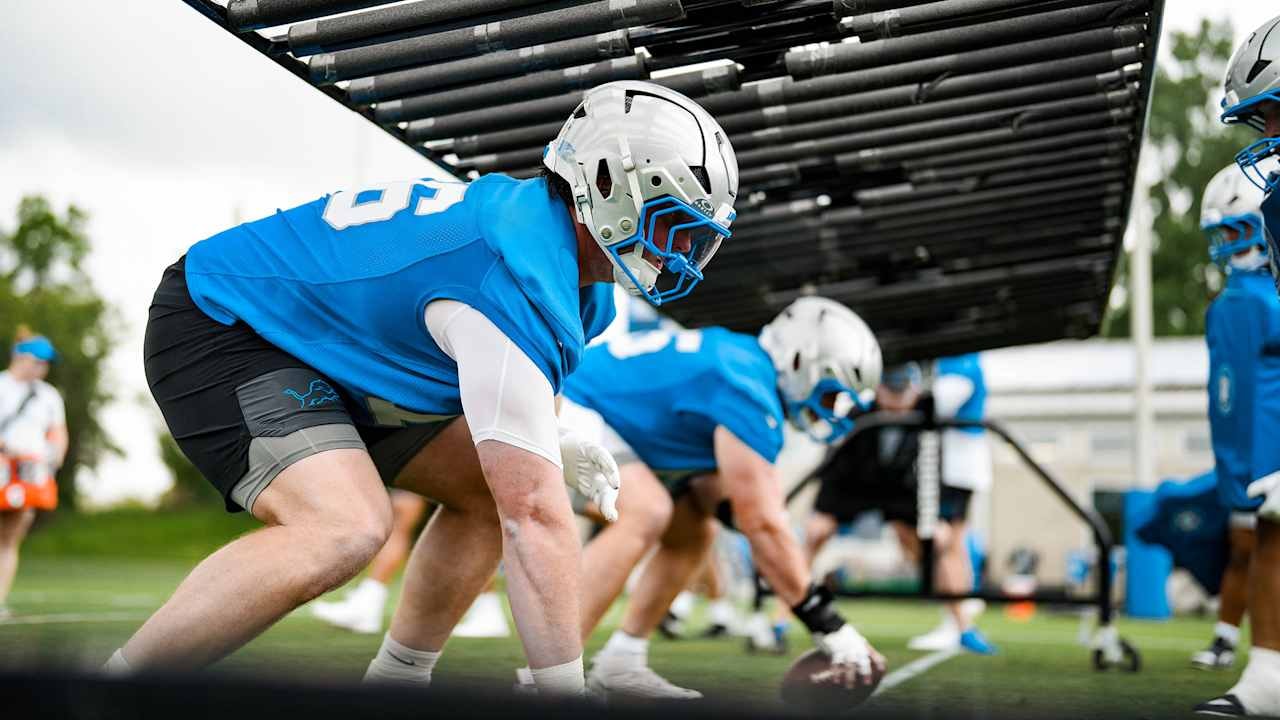
Detroit’s offensive line group, anchored by established starters and bolstered by a wide mix of second-year and developing linemen, becomes the central question as pads come on at camp.
Detroit’s 2026 training camp preview from team writer Tim Twentyman frames the offensive line as both a stabilizing strength and a key evaluation point for the upcoming practices. The Lions are entering camp with a roster that includes a blend of longtime starters and younger players, giving the staff multiple ways to test communication, pass protection, and run blocking assignments over the course of the preseason workload.
The most prominent anchor on the list is Penei Sewell, whose presence shapes how the line operates in the middle phases of the play. Alongside him, the preview groups together Christian Mahogany, Cade Mays, Tate Ratledge, and Blake Miller, names that suggest Detroit is looking for consistency across multiple interior and tackle looks rather than treating the position group as a single, static set of five.
Depth and versatility are recurring themes in this kind of camp preview because offensive line play is as much about who can stay synchronized through different fronts as it is about individual talent. Detroit’s roster list also includes Larry Borom, Ben Bartch, Miles Frazier, Juice Scruggs, Devin Cochran, Giovanni Manu, Seth McLaughlin, Mason Miller, Colby Sorsdal, Michael Niese, and Melvin Priestly. Having that many linemen in the mix points to repeated opportunities for the coaching staff to evaluate matchups and assignments against the scout-team and opponent looks.
The preview’s approach is also notable for how it organizes the group as an ecosystem. Rather than focusing solely on a projected starting unit, it treats training camp offensive line work as a process where line continuity, footwork, and technique refinements are developed through repetition. For fans, that means the battle for the first-team five may not be the only storyline, because reliable backups who can match protection schemes and keep the line’s timing intact often become just as important once game-day pressures arrive.
In a league where pass rush speed forces quick decision-making, the Lions’ camp plan for this position group will likely emphasize protecting the quarterback and sustaining lanes for the running game. With multiple linemen on the roster who can be evaluated across different spots, Detroit can test how its run and pass patterns translate when the personnel changes from one rep to the next.
Still, the preview does not present outcomes that can be measured like a final depth chart or a list of winners and losers. Training camp reports should be treated as an early roadmap, not a conclusion. What to watch next is how the Lions sort out roles as practices progress, particularly how the line handles communication across stunts and blitz looks and whether the group shows consistent discipline in hand placement, leverage, and spacing across different combinations.
By listing the offensive line group for the start of camp and tying it to practice emphasis, the Lions set up an internal measuring stick: can the unit maintain cohesion with turnover and rotation, and can the team keep the core functions of the offense running smoothly when the lineup shifts? In Detroit’s case, that question will carry weight into the preseason phase, because the offensive line is where timing is built and where early mistakes often become habits that are harder to correct later in the year.
Why It Matters
- The offensive line is a structural position group, and early clarity on roles can stabilize the quarterback’s timing and the team’s run game identity.
- A camp emphasis on multiple linemen in the same group indicates that depth and versatility may be just as crucial as starting talent.
- How well the Lions maintain technique and communication through rotation often becomes a predictor of how quickly an offense functions during the preseason.
- The Lions’ ability to evaluate combinations in training camp can influence in-season flexibility when injuries or matchup-specific needs arise.
- For fans, the story is not only who starts, but who can execute the line’s schemes reliably when the personnel changes rep to rep.
Key Facts
- Detroit’s official training camp preview for 2026 focuses on the offensive line, authored by Tim Twentyman.
- The Lions’ listed offensive line group for camp includes Penei Sewell, Christian Mahogany, Cade Mays, Tate Ratledge, Blake Miller, Larry Borom, Ben Bartch, Miles Frazier, Juice Scruggs, Devin Cochran, Giovanni Manu, Seth McLaughlin, Mason Miller, Colby Sorsdal, Michael Niese, and Melvin Priestly.
- The preview is organized as a position-group overview for training camp practices, emphasizing evaluation through reps rather than only a projected starting five.
- The breadth of names suggests Detroit plans to rotate and evaluate multiple linemen across interior and tackle roles during camp.
- The preview’s framing points to both run-blocking and pass-protection elements as part of the offensive line’s camp focus.