
THE APEX TIMES
Lonzo Ball looks back at the Lakers era and says he regrets how much say his father had early on
Ball, the second overall pick in the 2017 NBA Draft, says his early years in Los Angeles came with an unusual level of family control that did not align with the career path he imagined.
Lonzo Ball is revisiting the start of his NBA career, saying he regrets how much control his father, LaVar Ball, had during Ball’s early tenure with the Los Angeles Lakers. In an interview reported by Yahoo Sports, Ball acknowledged that his professional path has not matched the trajectory he likely envisioned when he was selected as the second overall pick in the 2017 NBA Draft.
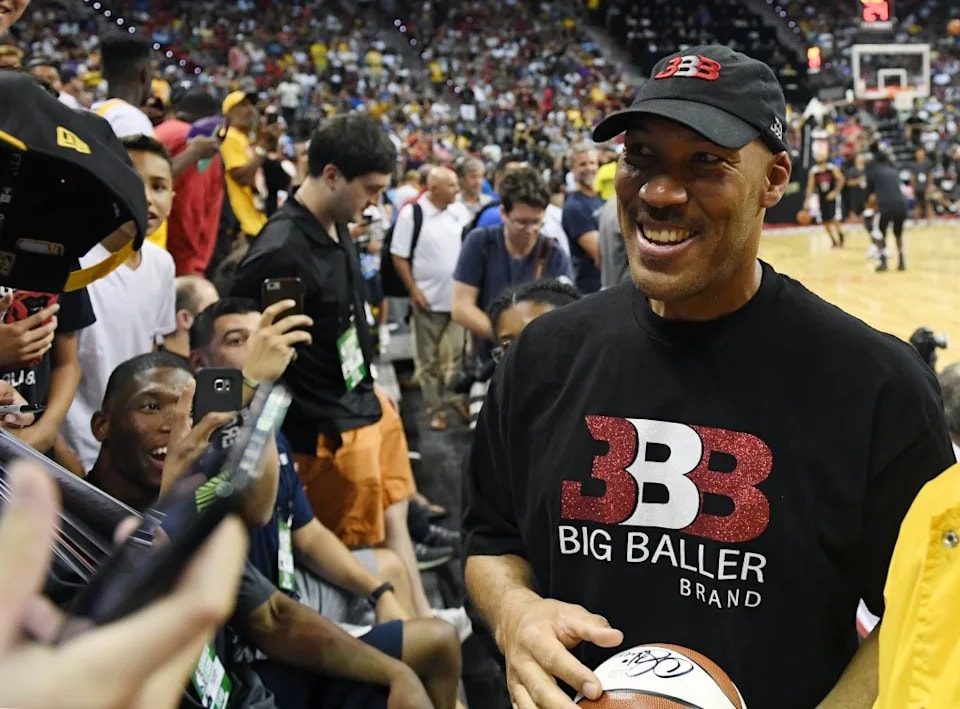
Ball’s comments land in the long arc of a Lakers tenure that has been shaped as much by off-court expectations as on-court development. Ball was drafted into a franchise with historic gravity, but he arrived as the centerpiece of a wider public story anchored by the family’s Big Baller Brand. According to the Yahoo Sports reporting, Ball’s father prioritized the broader brand over Lonzo’s success in the NBA, an approach Ball now says he would handle differently.
The key tension in Ball’s recollection is control. As Yahoo Sports frames it, Ball felt the early Lakers environment included too much influence from outside basketball, leaving him with less room to define his own pace, identity, and learning process. That kind of external pressure can be difficult for any young player, but it is particularly challenging when the spotlight does not narrow as the player’s role and performance evolve.
Ball’s perspective also reflects how his career has played out relative to the expectations attached to a high draft selection. Yahoo Sports notes that Ball has now played seven seasons in the NBA, but that results have not fully met the expectations of a second overall pick. Ball’s regret is not presented as an argument about talent or potential, but rather about the early “steering” of his professional life and how it may have affected his ability to settle into the league on his own terms.
The Lakers context matters here. Los Angeles is a market where narratives move quickly, and a young star can be pulled into management-level conversations without having finished establishing a foundation on the court. Even when the intentions are well known, the execution of a plan can drift if the people setting the agenda are not aligned with the player’s development priorities. In Ball’s telling, the early alignment did not hold.
What to watch next is less about a single decision in the past and more about how players with a public platform manage that platform in the present. Ball’s comments add to a broader, ongoing NBA conversation about autonomy, mentorship, and the difference between supportive guidance and micromanagement. For fans and evaluators, it is also a reminder that draft-day talent is only one part of the story, and that the surrounding ecosystem can shape a player’s readiness and confidence as much as the coaching staff does.
For now, the report should be treated as a personal account rather than a verified behind-the-scenes accounting. Without additional documentation or on-record statements from other parties, Ball’s regret is best read as how he interprets his early experience, not as a complete explanation of every factor in his career outcomes. Still, it is a notable admission from a player whose early NBA identity was inseparable from his family’s public presence.
Why It Matters
- Ball’s comments highlight the role of player autonomy in development, not just coaching and on-court opportunity.
- The Lakers’ high-profile environment can amplify off-court narratives, affecting how young stars are perceived and how they focus.
- For teams, the story reinforces the importance of aligning support systems around a prospect’s development timeline.
- For fans, it reframes part of Ball’s career arc through the lens of early expectations and external control rather than solely performance outcomes.
Key Facts
- Lonzo Ball says he regrets how much control his father had during his early time with the Los Angeles Lakers.
- Yahoo Sports reports that Ball’s comments are tied to his experience of family influence shaping the early Lakers era.
- Ball was selected as the second overall pick in the 2017 NBA Draft.
- Yahoo Sports notes Ball has played seven NBA seasons.
- The Yahoo Sports reporting links LaVar Ball’s priorities to the family’s Big Baller Brand, describing it as taking precedence over Lonzo’s NBA success in the early period.