
THE APEX TIMES
LSU names Trey’Dez Green and Whit Weeks to wear No. 7 in 2026
The Tigers selected two standouts, tight end Trey’Dez Green and linebacker Whit Weeks, to carry the No. 7 when LSU plays its first season under Lane Kiffin.
LSU football has picked who will wear the program’s coveted No. 7 jersey during the 2026 season, naming tight end Trey’Dez Green and linebacker Whit Weeks as the two players selected for the honor. The No. 7 is traditionally a marker of stature within the Tigers’ program, and the coaching staff’s choice indicates who it trusts to represent LSU’s identity as it enters a new era.
The decision arrives as LSU prepares for its first year under head coach Lane Kiffin, a transition that comes with attention on how the Tigers will set the tone both schematically and culturally. By tying No. 7 to Green and Weeks, LSU is attaching the jersey to two roles that can influence games in different ways, one on offense through the passing attack and the other on defense through pressure and coverage responsibilities.
Green, a tight end, was selected for No. 7, placing him in a position that often becomes a focal point in modern college passing plans. Tight ends are asked to create matchup advantages in the passing game, contribute in the middle of the field, and add blocking value that can determine whether an offense can sustain drives. LSU’s choice suggests the staff views Green as a core piece of its offensive structure for 2026.
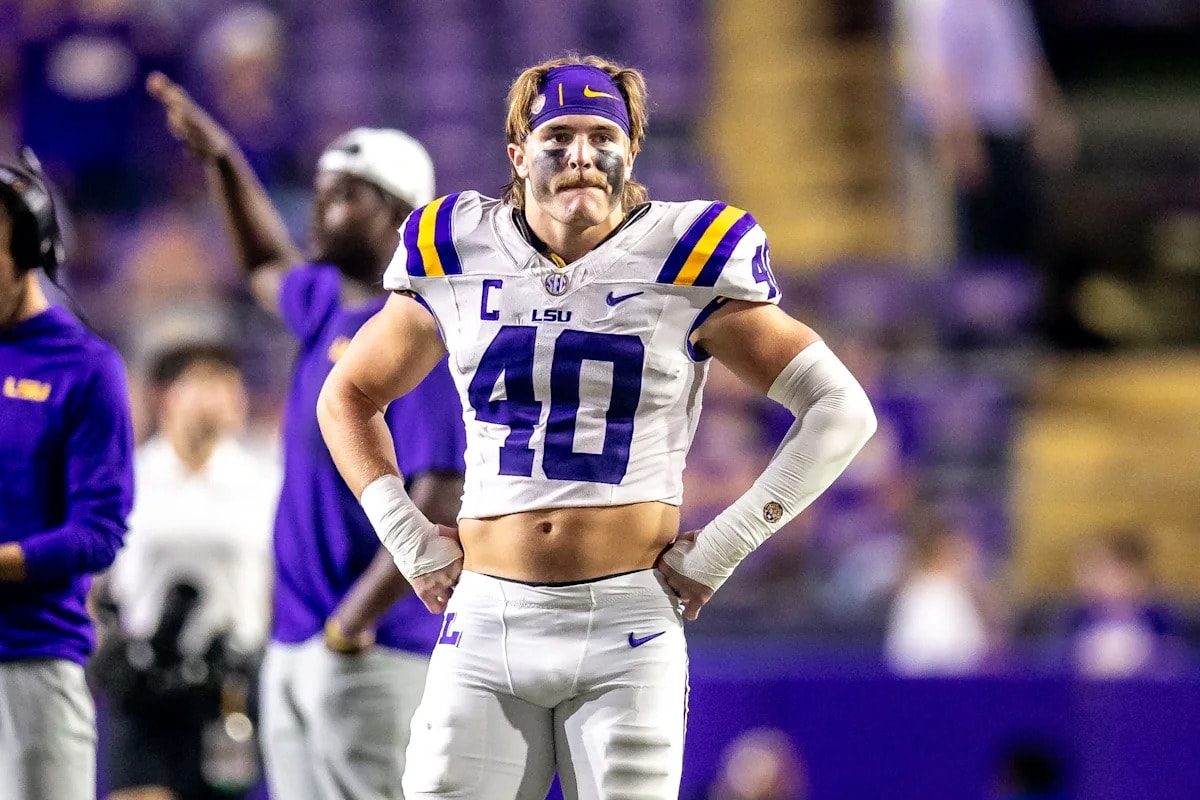
Weeks, a linebacker, was the other player chosen to wear No. 7. In a defensive system, linebackers are commonly tasked with communicating coverage, directing the front’s adjustments, and closing gaps that determine whether big plays happen quickly or get erased behind the line of scrimmage. LSU’s selection of a linebacker for the jersey underscores how much the Tigers are counting on the position to anchor the defense’s execution and tempo.
The announcement also highlights how LSU’s jersey tradition is being used as a recruiting and development message. In college football, the No. 7 conversation can add weight to a player’s internal status, and it can affect how teammates and coaches talk about leadership. For Green and Weeks, it is a clear opportunity to define what LSU’s standard looks like in Kiffin’s first season.
Still, an honor like a jersey assignment does not automatically translate into immediate production or a specific role in every game. The Tigers’ actual offensive and defensive usage will depend on fall camp evaluations, health, and how LSU’s coaches decide to distribute responsibilities among the rest of the roster. What is concrete for now is that both players will be prominently associated with a number LSU expects to mean something.
What to watch next for LSU is how these selections show up in the team’s on-field roles during the 2026 offseason and preseason preparations. If LSU’s offensive game plan and defensive calls reflect confidence in Green and Weeks, the No. 7 will feel like more than a symbolic nod. If not, it will still serve as an early indicator of the staff’s priorities as it builds identity under Kiffin.
Why It Matters
- No. 7 is an internal marker of stature, and LSU is tying it directly to two positions that can shape both the passing game and defensive identity.
- With LSU entering a new coaching era under Lane Kiffin, the selections can reveal early priorities for leadership and on-field responsibility.
- The jersey honors may influence how Green and Weeks are positioned within the offense and defense as LSU finalizes depth charts.
Key Facts
- LSU announced that the No. 7 jersey for the 2026 season will be worn by Trey’Dez Green and Whit Weeks.
- Green was selected as the No. 7 representative as a tight end.
- Weeks was selected as the No. 7 representative as a linebacker.
- The announcement frames the selection in connection with LSU’s first season under head coach Lane Kiffin.