
THE APEX TIMES
LSU’s secondary is shaping up as a 2026 headline unit, led by Corey Raymond and a veteran corner room
With continuity at corner and a transfer safety addition, LSU’s defensive back group is being positioned as one of the national benchmarks for the 2026 season.
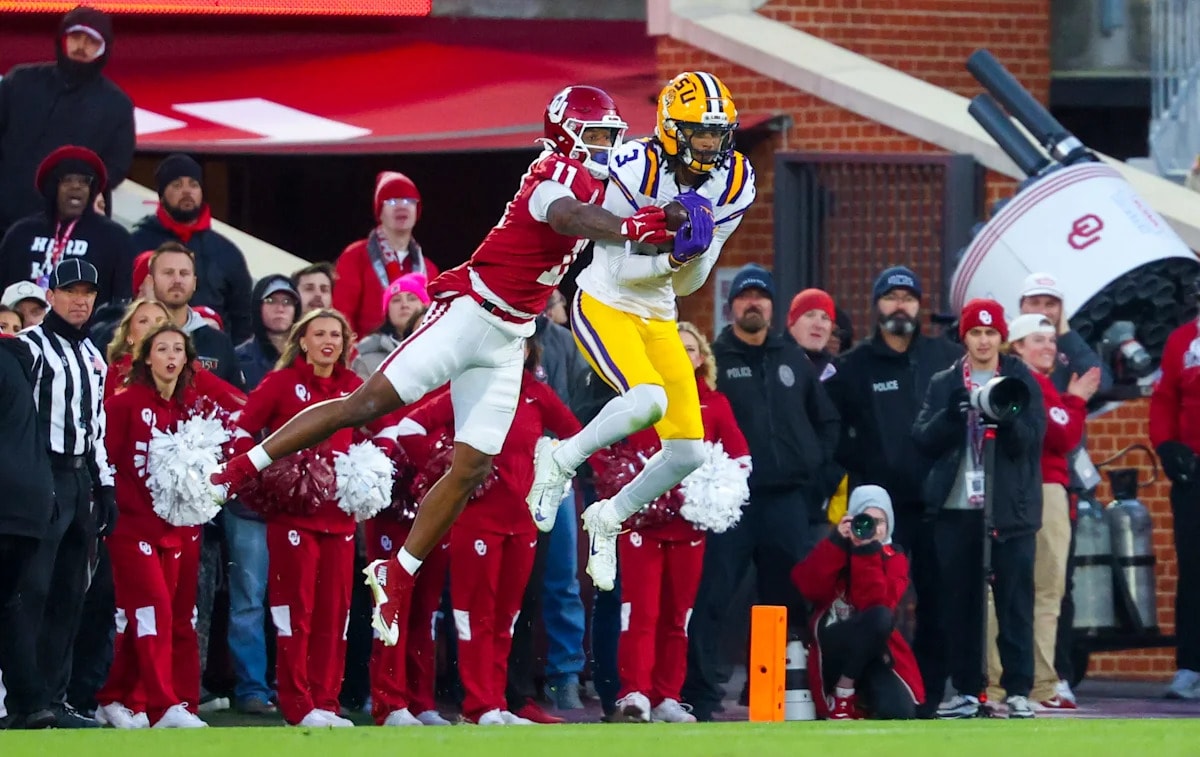
LSU’s defensive back group is drawing early national attention as a potential top unit in college football for 2026, with the core of the argument tied to the way the Tigers’ secondary is coming together under defensive backs coach Corey Raymond. The thesis, as outlined in recent national coverage, is straightforward: LSU appears to have both the personnel depth and the specialist coaching structure that can turn a strong defensive back room into a true game-changing strength by season’s end.
At cornerback, LSU returns DJ Pickett and PJ Woodland, a pairing framed as one of the clearer assets in the unit. In modern college defenses, corner play is often where coverage versatility meets physicality at the line of scrimmage, and LSU’s optimism here rests on the idea that the Tigers are not rebuilding that skill set from scratch. Instead, the expectation is that the program can maintain familiarity with its coverage calls and leverage experience on the back end to limit big plays.
The other key piece in the 2026 outlook is the safety spot, where LSU has added transfer Ty Benefield. The coverage notes that Benefield has generated positive impressions since arriving in Baton Rouge, which matters because safety play is the secondary’s connective tissue. Safeties have to fit run defense gaps, communicate coverage rotations, and be the last line of defense against both explosive throws and broken-route scenarios. If Benefield’s early integration reflects what LSU coaches expected, the unit’s ceiling rises quickly.
Raymond’s role in that equation is significant because the LSU program has long treated defensive backs as a specialty. While individual talent is the raw material, a consistent theme in defensive coaching is putting players in positions where their instincts can show up on the field. In practical terms, that usually means aligning responsibilities that match a player’s best traits, refining reads that create advantage in coverage, and tightening the communication that prevents the breakdowns that turn a good defense into a mediocre one.
There is also a broader roster-building logic behind the way the Tigers are being discussed. LSU’s 2026 secondary conversation is not just about one player or one position group, it is about stacking continuity at corner with reinforcements in the safety room. That blend can be particularly helpful in the early season stretch when defenses are still sharpening their timing. When corners can play with confidence and safeties can enforce the deep and intermediate layers, the overall defense often benefits, even before the front seven is fully in rhythm.
Still, the national hype comes with the usual college football caveats. Preseason projections are inherently about possibilities, not confirmed production. For LSU, the question that will determine whether the secondary truly becomes “best in the nation” is whether the unit can sustain its quality under pressure, especially when opponents challenge corner assignments or when offensive coordinators force safeties into run-pass conflicts.
What to watch next is how LSU’s defensive back rotation settles as the season progresses and how the coaches balance skill sets between boundary corner and interior coverage responsibilities. If Pickett and Woodland continue to function as a stable corner duo and Benefield proves capable of handling safety communication and range, LSU’s secondary could become the type of weekly advantage that shapes game plans across the SEC.
Why It Matters
- Secondary quality can define LSU’s defensive identity in 2026, particularly against offenses built to attack intermediate windows and create separation on the perimeter.
- Corner continuity gives LSU a foundation for coverage continuity, which can reduce early-season breakdowns and improve defensive communication.
- A safety transfer can raise the ceiling for pass defense by strengthening run fits and deep coverage responsibilities, impacting the defense’s ability to limit big plays.
Key Facts
- A recent national write-up argues LSU’s secondary has the talent to be among the best units in college football by the end of the 2026 season.
- The argument points to LSU returning cornerbacks DJ Pickett and PJ Woodland.
- The same coverage credits the safety room as an area of improvement through the addition of transfer Ty Benefield.
- LSU’s defensive backs are coached by Corey Raymond, who is central to how the unit is being evaluated.