
THE APEX TIMES
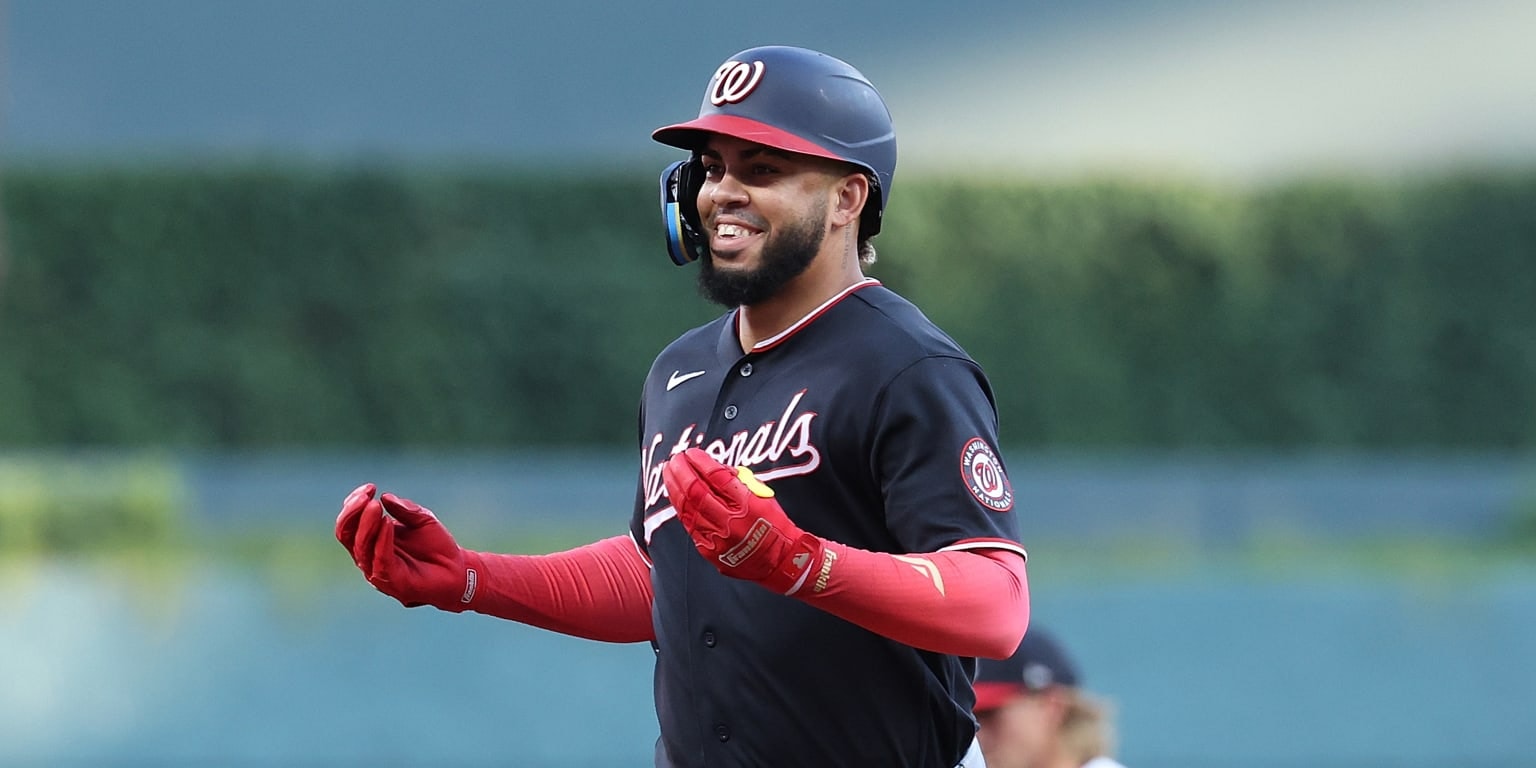
Luis García Jr. Rising as Nationals’ Latest Trade Deadline Chip, MLB Notes
What began with CJ Abrams as Washington’s most obvious deal candidate shifted as the season progressed, with Foster Griffin’s return changing the Nationals’ leverage and Luis García Jr.’s offensive breakout making him the next marquee trade asset.
The Nationals entered the 2026 season with shortstop CJ Abrams viewed internally as their most prominent trade-chip option. As the year unfolded, however, Washington’s list of players who could plausibly draw meaningful interest at the deadline did not stay static. MLB reported that the organization’s trade profile evolved again when left-hander Foster Griffin was added to the mix through a dominant return to the majors, reshaping the team’s leverage at the exact moment contenders begin scanning the market for bullpen and rotation help.
In that same competitive timeline, Luis García Jr. increasingly separated himself from the pack in a way that matters most during August. According to MLB, García’s offense surged as the season went on, and the result was a shift in perception: first baseman García emerged as a top trade candidate for Washington heading toward the 2026 deadline. In practical terms, teams in contention often prioritize controllable bats who can help immediately, and a productive season stretch can turn a fringe buyer interest into a serious trade conversation.
The “chip” label is not just about talent. It is about timing and fit, and Washington’s rebuild stage amplifies those pressures. A rebuilding club’s path to future value often depends on converting short-term on-field output into prospects or additional pieces, and players whose performance rises late in the year can become the most attractive because they reduce a contender’s uncertainty. MLB’s framing of Abrams, Griffin, and then García illustrates that the Nationals’ most tradable assets were not fixed at Opening Day.
Griffin’s move into the trade conversation also highlights another reality of deadline planning, the composition of offers. A pitcher returning with form can increase the number of teams willing to engage quickly, especially if contenders believe the right arm can stabilize late-inning matches or strengthen a rotation’s depth. When a club’s best trade assets include both impact pitching and a bat that is hitting, the Nationals can field a broader range of proposals rather than being limited to one kind of return.
For García, the key shift described by MLB is the emergence of an offensive surge that changed his market position within the Nationals’ broader trade landscape. The first baseman’s role makes that kind of run especially valuable to buyers because first-base production can be easier to slot into everyday lineups than a specialized bench profile. That is why teams often treat consistent August offense as a sign that a hitter can keep performing under playoff-type pitching rather than only thriving in favorable stretches.
What to watch next is whether García sustains the form that MLB credited with his rise as a trade chip through the late-summer grind, and how Washington balances offers if multiple players remain in demand simultaneously. Even with a clear internal hierarchy, deadline negotiations rarely unfold in a straight line; teams submit bids, ask for clarity on medical or playing-time expectations, and test how much a selling club wants to keep options open.
Finally, the Abrams-to-Griffin-to-García arc is a reminder that “top trade chips” are often moving targets. A season-long rebuilding process can create several candidate profiles, but only the players whose performance spikes at the right time tend to become the center of actual negotiations. MLB’s report suggests Washington’s deadline decision-making now runs through García’s momentum, even if other tradable pieces remain relevant in parallel as contenders finalize their rosters for September and October.
Why It Matters
- For Washington, the emergence of García as a top trade candidate affects how the organization can convert late-season performance into future assets at the 2026 trade deadline.
- For contenders, a proven hitting surge from a first baseman can be the type of upgrade that immediately strengthens lineup depth during the final stretch.
- The Nationals’ shifting trade-chip hierarchy shows how quickly August performance can reshape bidder interest and negotiation intensity across both position players and pitchers.
- If multiple Nationals are viewed as tradable at once, it can broaden the kinds of offers Washington receives rather than narrowing returns to one roster need.
Key Facts
- MLB reported that CJ Abrams was considered the Nationals’ biggest trade chip at the start of the 2026 season.
- MLB said Foster Griffin was added to the group after a dominant return to the majors.
- MLB reported that as the season progressed, Luis García Jr. emerged as a top trade chip.
- MLB attributed García’s rise to an offensive surge during the year.
- The report frames the Nationals’ trade leverage as having changed over time rather than staying constant from Opening Day.