
THE APEX TIMES
Luke Fickell points to Wisconsin’s biggest post–fall camp shift, even as injuries disrupt availability
The Badgers’ head coach says one area has progressed most since the start of fall camp, while also acknowledging the volatility of a camp in which practices were interrupted by injuries and limited participation.
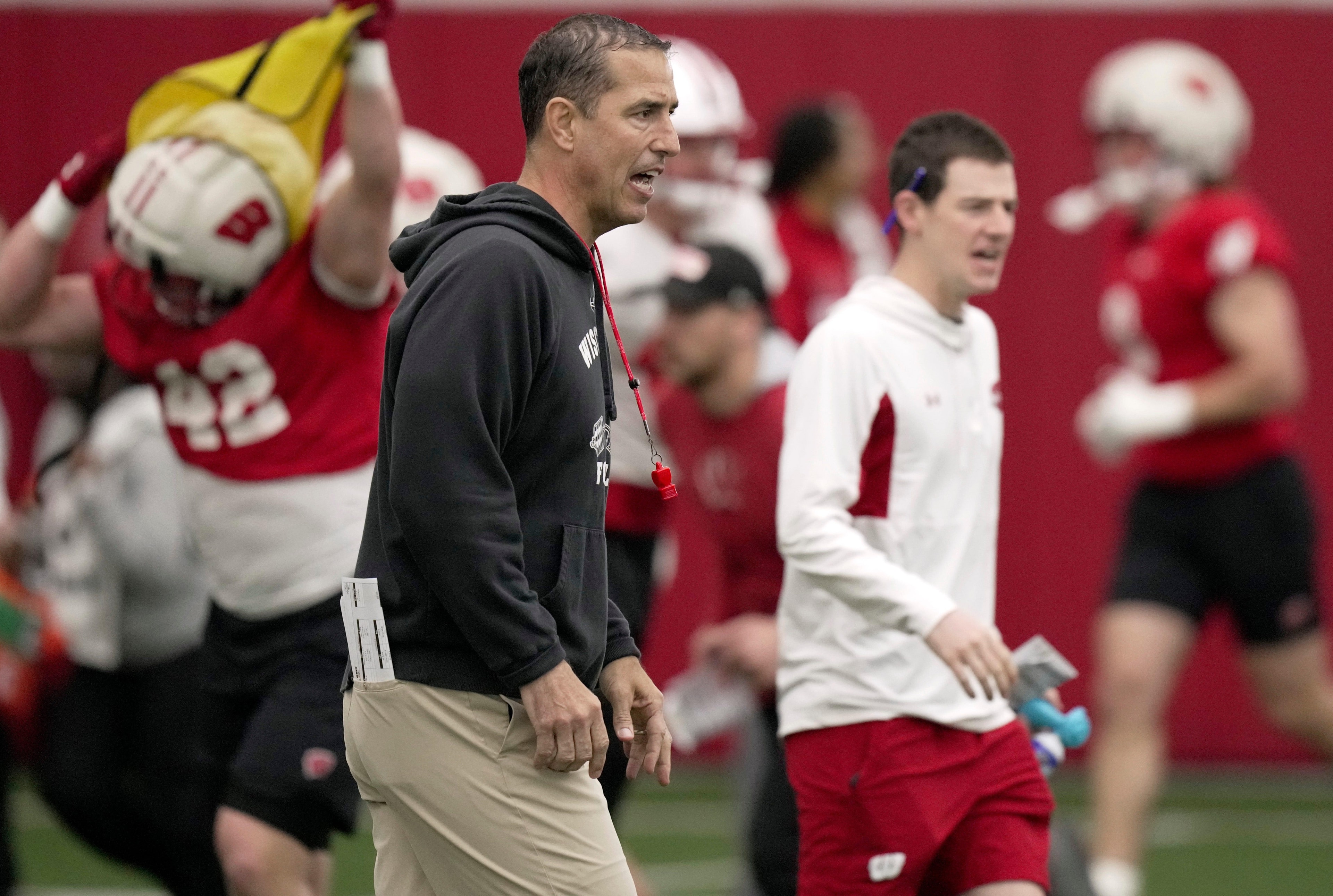
Wisconsin’s fall camp has ended with Luke Fickell highlighting a clear takeaway from the work on the field, even as the Badgers dealt with a familiar college football reality: the roster does not stay fully available for two-a-days from start to finish. In comments reported by Yahoo Sports on Aug. 30, Fickell said the program had grown in “one key category” after the camp period, suggesting that the coaching staff saw measurable improvement in how the team is handling a specific part of its overall preparation.
Fickell’s framing matters because fall camp is the stage where college teams try to compress months of installation into live, repeatable execution. Coaches build habits, install systems, and evaluate who can handle contact, speed, and error without losing the structure they are trying to install. By tying the most important difference to a single area, Fickell indicated that this unit of improvement stood out relative to other development goals during the final weeks of preparation.
At the same time, Fickell acknowledged adversity during camp. According to the report, players were “in and out of practice due to injury,” forcing practice groups to adjust and the coaching staff to shift continuity and reps. In a sport where timing and communication are trained through repetition, interruptions can change the look of a unit even when the overall process is moving forward.
The combination of growth and disruption also underscores the way teams manage the last stretch before the regular season begins. When injuries limit availability, coaches must balance development with evaluation. Players who have to step in can accelerate their learning curve through increased reps, while those who miss time may return later with a shorter runway for integrating back into the full-speed scheme.
For Wisconsin, this means that Fickell’s “biggest difference” is likely best understood as progress the staff can still identify despite the complications of practice absences. It is also a reminder that final fall camp grades are often provisional. Camp momentum can carry into the opening weeks, but the first true game-to-game tests tend to expose which improvements were most transferable under pressure.
What to watch next is how the Badgers sustain the area Fickell emphasized once the calendar moves past camp and into preparation for opponents. If Wisconsin’s claimed improvement is reflected consistently in practice patterns and the team’s early-game decision-making, it can report that the coaching staff found something repeatable rather than just a temporary spark.
Just as important will be how the team handles any lingering availability issues. Even if the roster stabilizes after camp, the adjustment period caused by injuries can linger through cohesion and depth readiness, particularly along lines and in positions where snaps, reads, and assignments depend on frequent repetition. The Badgers’ preseason training, therefore, will be judged not only by what improved in camp, but also by how quickly continuity returns after the disrupted stretches.
For fans, the key storyline is simple: Wisconsin is exiting fall camp with at least one meaningful development highlighted by its head coach, but the same camp also showed the program’s need to adapt when injuries alter who can practice. The regular season will reveal whether the “one key category” that Fickell pointed to becomes a foundation the team can build on, or whether the disruptions forced the staff to prioritize short-term coverage over long-term development.
Why It Matters
- In fall camp, single-area growth can be a meaningful predictor of how quickly a team’s identity forms before the first games.
- Injury-related practice absences can affect continuity, timing, and depth, which often shows up in early-season execution.
- If the improvement Fickell referenced is sustained under more stable participation, it can provide a clearer picture of Wisconsin’s strengths entering the season.
- How Wisconsin manages availability issues can determine whether the depth chart is game-ready across more than one unit.
Sources
Key Facts
- Luke Fickell said Wisconsin has grown in “one key category” after fall camp, according to Yahoo Sports reporting published Aug. 30.
- Fickell also said Wisconsin faced adversity during camp.
- The report states players were sometimes “in and out of practice due to injury” during fall camp.
- The comments were presented as part of Fickell’s assessment of the team’s post-camp status heading into the regular-season preparation window.