
THE APEX TIMES
Luke Kuechly’s Hall of Fame standard reshaped how coaches prepared, Panthers say
In looking back at Luke Kuechly’s impact on Carolina’s football culture, Panthers staff members describe a linebacker whose preparation set a daily bar for everyone around him, pushing coaches to be sharper and more adaptable.
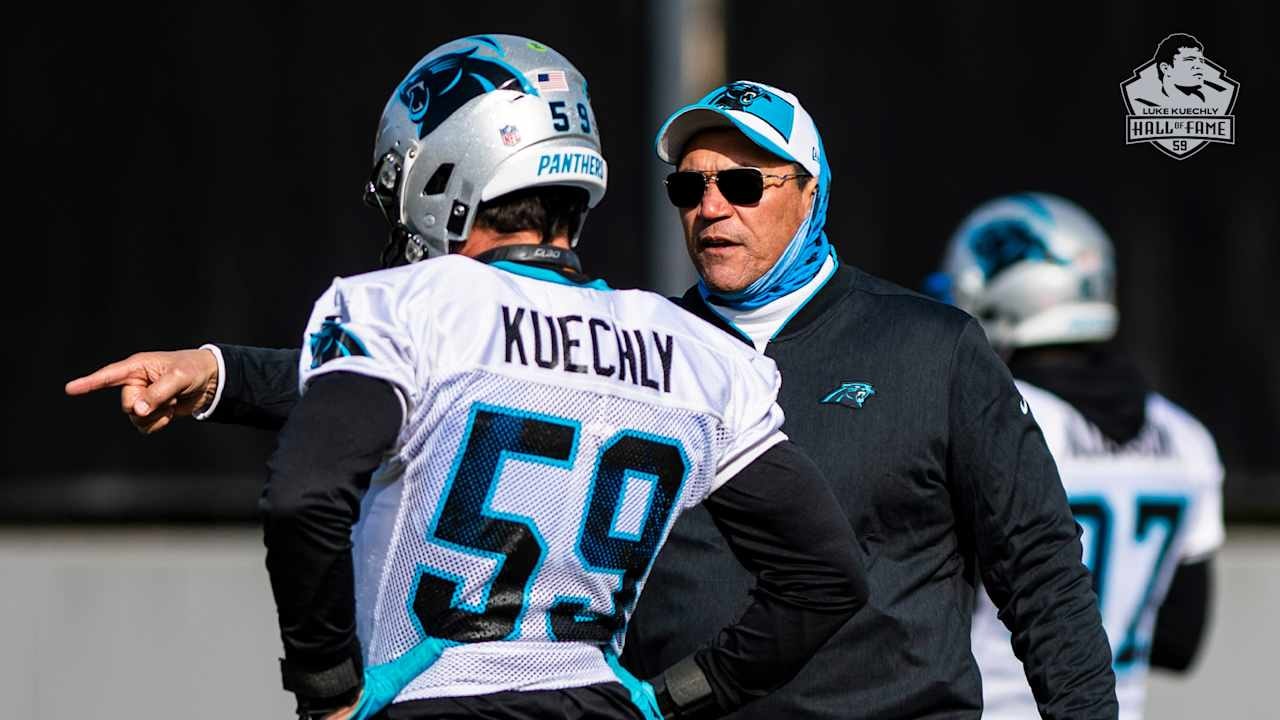
Carolina’s football building block was never only what Luke Kuechly did on Sundays. According to a Panthers organization feature marking his Pro Football Hall of Fame milestone, his effect started earlier, during the work of turning film and concepts into practice habits and game plans. The central theme was straightforward: Kuechly’s thoroughness was so demanding that it altered the pressure level on coaching staff members every day.
The Panthers’ account frames Kuechly as a player who carried an unusual depth of preparation. When he studied, the article suggests, he did not merely look for information, he looked for precision, creating a standard that coaches had to meet because his level of attention forced theirs to match. In that environment, meeting the team’s “baseline” was not enough. Coaches had to be ready to explain, adjust, and respond, because Kuechly’s readiness was a kind of feedback loop operating long before kickoff.
Carolina’s feature also describes a practical consequence for staff members, not just a motivational one. If Kuechly’s notes and preparation challenged what was happening in planning rooms, coaches were expected to adapt in real time during the week. That meant being willing to change how they coached certain details, not simply repeat the plan as written. The pressure described in the piece is portrayed as constructive, but it is still pressure, because it demands constant accuracy and clarity.
For a franchise, the difference between an outstanding player and a player who changes the way everyone around him works is subtle but real. The Panthers’ discussion implies that Kuechly helped raise expectations across the staff, turning preparation into an obligation rather than an option. When the organization describes coaches being “challenged daily,” it underlines that the work ethic was not confined to the sideline or meeting room. It carried into day-to-day coaching rhythms.
This kind of internal standard matters in the NFL because preparation is often the margin between clean execution and avoidable mistakes. The Panthers’ framing of Kuechly’s thoroughness suggests that, even with the usual weekly constraints of an NFL schedule, coaches had to stay nimble, re-checking what they were teaching against how Kuechly would apply it. In that sense, the story is as much about process as it is about personality.
The Panthers’ feature is an organizational reflection, not a statistical review. It emphasizes methods and culture, so readers should treat it as a narrative of impact rather than a ledger of measurable outcomes. What can be taken from it is the implied lesson for team-building: when a player becomes a barometer for preparation, it can change not only individual performance but also the habits of an entire coaching staff.
What to watch next is how the league remembers those behind the scenes. Kuechly’s Hall of Fame story, as presented by Carolina, highlights that the “kind of pressure” can be inherited, even after a player’s career ends, because coaches and players learn that details are never optional. The lasting question for any team is whether its process can recreate that level of preparation without needing a single, extraordinary personality to force it.
Why It Matters
- It illustrates how elite preparation from a single player can raise the demands placed on an entire coaching staff.
- It highlights preparation and adaptability as key elements of NFL execution, where small teaching and detail gaps can compound.
- It reframes Hall of Fame impact as a leadership and process story, not only a career resume.
Key Facts
- The Panthers published a feature connecting Luke Kuechly’s Hall of Fame preparation standards to how coaches planned and coached during the week.
- The organization describes Kuechly as being so thorough that coaches felt challenged daily to meet his level of readiness.
- The feature emphasizes that coaches had to be willing to adapt, not simply keep a plan static.
- The account portrays Kuechly’s impact as cultural, affecting coaching habits as much as it affected on-field performance.