
THE APEX TIMES
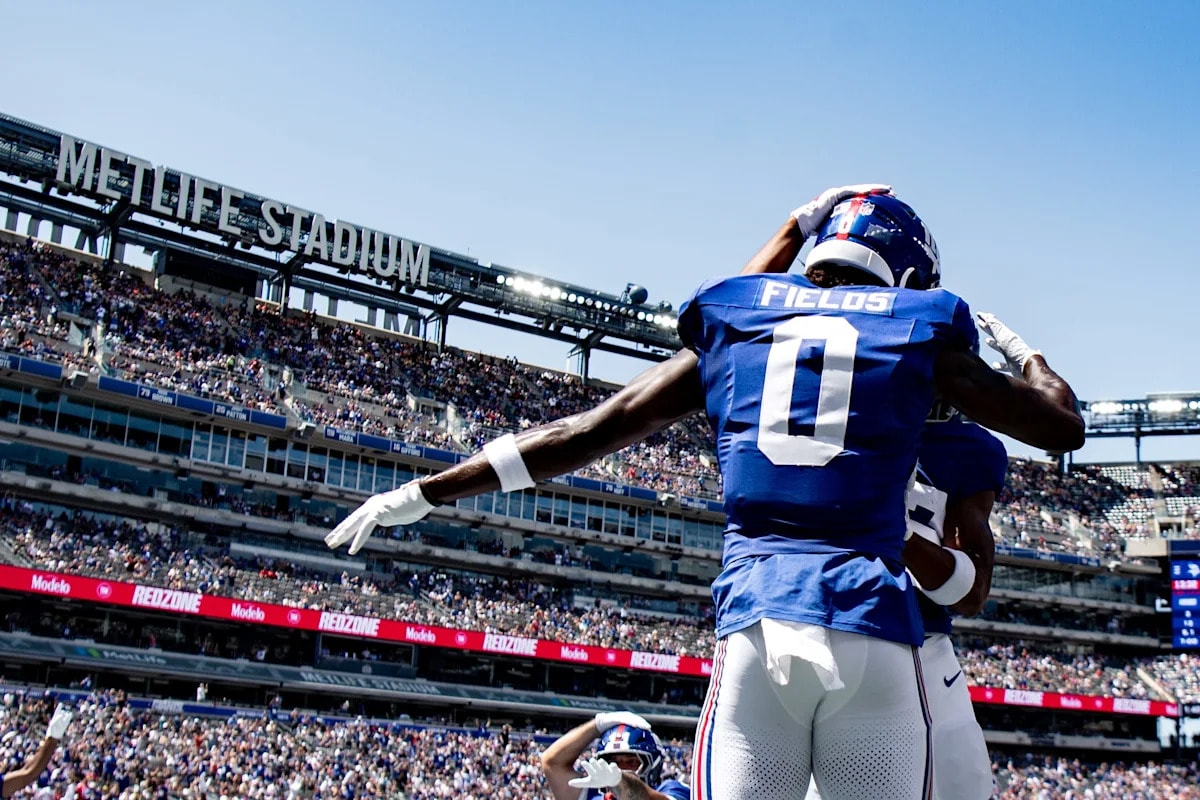
A third-round Giants rookie, Malachi Fields is drawing early attention for his ability to win contested catches, a trait New York prioritized when it traded up to draft him.
The New York Giants are entering the season with a clear internal focus for their receiver group, and rookie Malachi Fields is starting to look like a meaningful part of it. In a fantasy framing, Jordan Raanan of Yahoo Sports reports that Fields could begin the season as the team’s No. 2 receiver, following the early development and usage being observed in camp.
The reason New York’s interest in Fields is sticking is tied to the traits the Giants were reportedly looking for during the draft process. Raanan writes that the Giants traded up to select him in the third round because they were “infatuated” with his size, physicality, and ability to make contested catches. In other words, New York did not draft him merely as a depth option, but as a player who could handle traffic and win the ball when throws are contested.
Early camp observations, as Raanan describes them, reinforce that plan. Fields is said to have shown the contested-catch quality the Giants valued, and the discussion around a potential No. 2 role reflects that he is doing enough to be considered beyond a pure supporting role. For fantasy managers, that matters because receiver ranks often translate into target volume, red-zone involvement, and overall weekly viability.
Contextually, the Giants have treated roster building as a mix of present needs and developmental bets, and rookie receiver projections tend to swing quickly from training camp to the first weeks of the regular season. The No. 2 label being discussed for Fields is not an official depth chart commitment, but it does suggest the coaching staff believes he can contribute early, not just later. The contested-catch profile is particularly relevant in a passing environment where timing and precision are still forming with a new group on the field.
There is also a philosophical angle to New York’s investment. A receiver who can reliably win at the catch point can widen a quarterback’s options, especially on throws that require the receiver to finish the play rather than simply run away from coverage. If Fields’ physicality translates in live action, it could shape how the offense calls certain routes, because the Giants may view him as a safety valve in tight windows.
Still, the Giants’ season will reveal how much of this is role-based and how much is situational. Fantasy output is rarely determined by traits alone. It is driven by repeated opportunities, chemistry, and the development of the full offensive rhythm, including how often the offense reaches for a matchup that fits Fields’ strengths. Until the regular season begins, the No. 2 chatter should be read as a report of readiness, not a guarantee of target supremacy.
For what to watch next, the most practical checklist is simple: where Fields fits in the weekly rotation, how often he is deployed in key third-down and red-zone spots, and whether the contested-catch promise shows up consistently against live coverage. If he continues to earn trust with the ball in traffic, the conversation about his early role could become less hypothetical and more concrete.
Even with that uncertainty, Fields’ trajectory so far gives the Giants a reason to feel optimistic about the receiver investment they made when they traded up. If the contested-catch skill is real and not just a camp highlight, Fields could emerge as one of the more impactful rookie wideouts in the league’s early season evaluation cycle.