
THE APEX TIMES
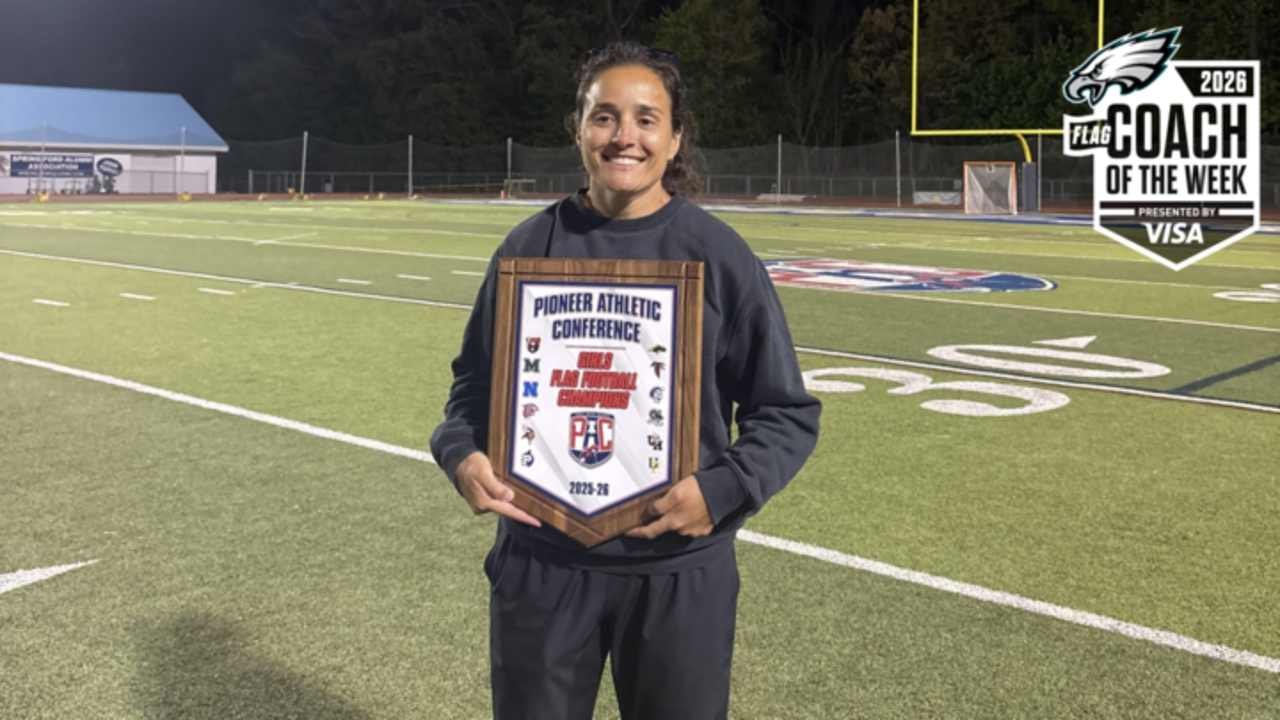
Marisa Moley named Eagles Girls Flag Football Coach of the Week at Spring-Ford
At Spring-Ford High School in Royersford, Pa., Marisa Moley is shaping a fast-growing girls flag football program with a builder’s mindset, turning the sport’s low-contact format into a steady curriculum for confidence and fundamentals.
The Philadelphia Eagles recognized Marisa Moley of Spring-Ford High School as its Girls Flag Football Coach of the Week, highlighting how one coach’s commitment can make a still-new team sport feel fully established for the athletes taking part. Flag football can look simple from the outside because it replaces tackles with flags, but the work behind it is substantial, from spacing and route timing to learning how to win leverage without shoulder-to-shoulder contact.
Moley’s story also reflects the trajectory of the sport itself. The Eagles’ release notes that while she was a student at Spring-Ford, flag football was not yet offered at the school. She later continued her athletic career at Bloomsburg University, where she played lacrosse, before coming back to help bring flag football into the program environment at her high school. In a sense, she is both a witness to the sport’s arrival and a contributor to its early identity.
At Spring-Ford, Moley is building a culture around purposeful repetition and development, the kind of coaching approach that matters in flag football because so many outcomes are decided by details. Without tackles, the margin is created by discipline in footwork, quick decision-making under pressure, and consistent technique on offense and defense. A coach’s role is to make those components feel teachable and repeatable, especially for players who may be trying the game for the first time.
The Eagles’ recognition frames Moley’s work as more than just game-day preparation. It emphasizes the broader goal of helping girls find a competitive outlet that builds transferable skills, including athleticism, leadership, and self-management. In flag football, where speed and angles are central, athletes learn to communicate quickly, process play design in real time, and take responsibility for spacing as the action flows in organized patterns rather than chaotic contact.
Spring-Ford’s program sits within a larger trend in youth sports, where schools and leagues have been expanding girls participation opportunities and using flag football as a gateway because it can be introduced with fewer equipment and fewer safety concerns than full-contact football. That expansion changes the local landscape for athletes, adding a sport that can run alongside other spring and fall activities. It also changes recruiting and athletic pathways over time, because the players who start early are the ones most likely to develop the habits that translate to higher levels of competition.
What to watch next is how programs like Spring-Ford translate early momentum into sustained engagement. With Moley now publicly recognized by the Eagles, the next step for coaches and athletic departments is to keep the pipeline strong from newcomers to experienced players, maintaining coaching consistency as teams grow and seasons take shape. If flag football continues to expand at the high school level, the athletes developing now may define the next generation of regional competition, and coaches like Moley will be central to that evolution.
Why It Matters
- Awards like this put a spotlight on girls flag football programs that are still building their footing at the high school level.
- A coach’s development framework is especially important in flag football because outcomes often hinge on spacing, decision-making, and technique rather than contact.
- Moley’s return to the sport illustrates how athlete pathways can feed back into local programs, strengthening participation and long-term continuity.
- As more schools add flag football, early coaching and consistent fundamentals can help establish a competitive identity for teams in their first years.
Sources
Key Facts
- Marisa Moley of Spring-Ford High School in Royersford, Pennsylvania was named the Philadelphia Eagles’ Girls Flag Football Coach of the Week.
- The Eagles’ release credits Moley with helping grow a girls flag football program at her school.
- Moley played lacrosse at Bloomsburg University after her time at Spring-Ford.
- According to the Eagles’ release, flag football was not offered at Spring-Ford when Moley was a student.