
THE APEX TIMES
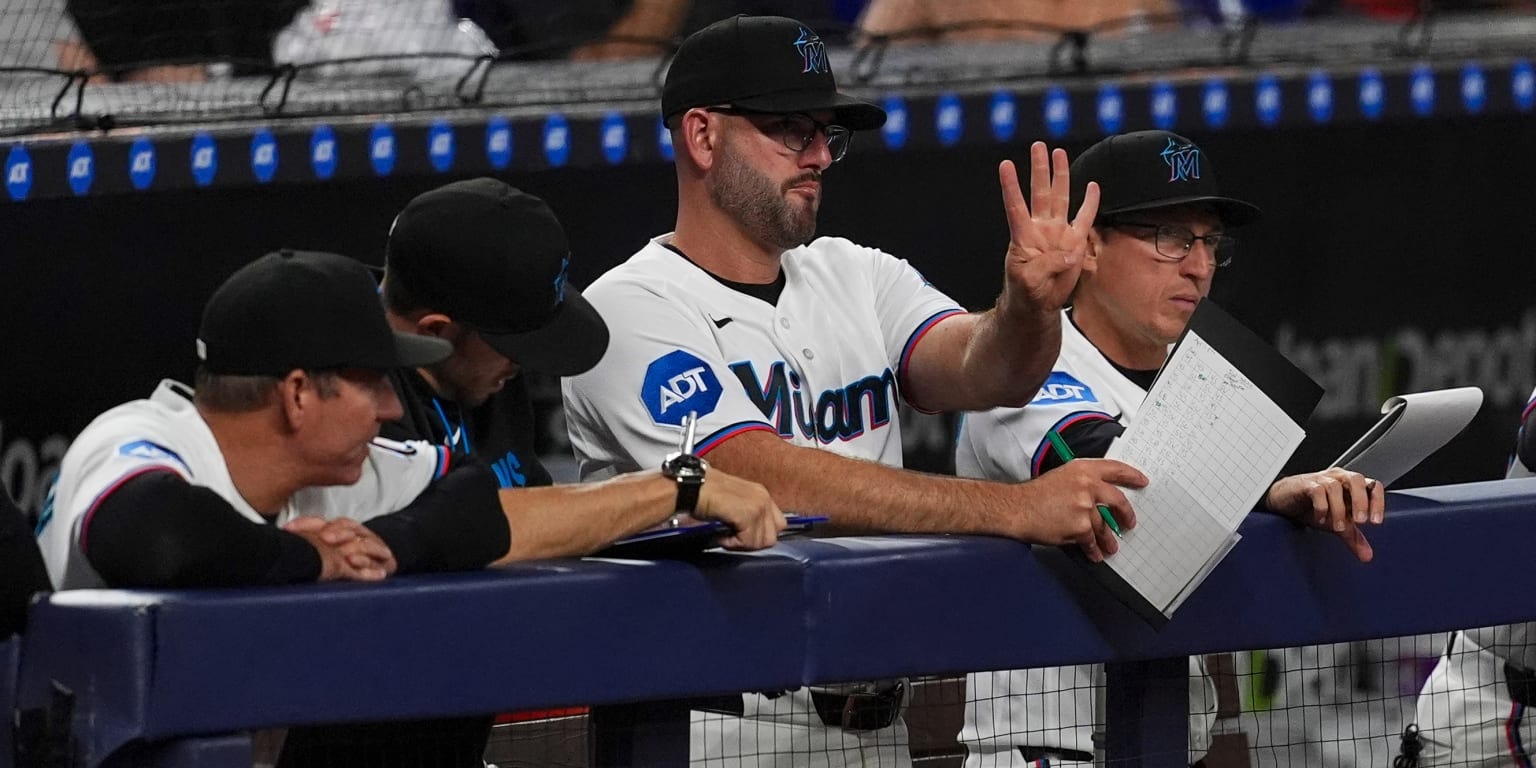
Marlins go all-in on dugout pitch calling, with assistant coach Rob Marcello at the center
Miami’s experiment in delegating pitch selection from the field to the dugout shifted from a late-season look in 2025 to a full-season operating system in 2026, and MLB’s official profile focuses on how it functioned and what the team learned.
The Miami Marlins’ pitching strategy took an unusual turn in 2026: according to an MLB feature, the team became the first and only organization to call pitches from the dugout exclusively for an entire 162-game season. The concept was not entirely new. MLB reported that the Marlins had gotten a quick taste of dugout-only pitch calling at the Major League level in 2025, then expanded the approach the following year.
At the center of that shift was Rob Marcello, a first-year assistant pitching coach for Miami. MLB’s report frames Marcello as the key voice behind the pitch-calling setup, which is built around the dugout staff making the decisions and communicating them to pitchers during each plate appearance rather than relying on on-field selection by the pitcher in real time.
The dugout-only model places a premium on process, not improvisation. The staff has to translate scouting and catcher-game inputs into a consistent plan, respond quickly to batter tendencies, and maintain timing so that signs are received and executed without disruption. For pitchers, that means adapting to a more structured feed of pitch types and locations, with fewer “in-the-moment” choices that sometimes come from reading the hitter directly from the mound.
Communication becomes the dividing line between clean execution and confusion. MLB’s feature highlights the central question behind the experiment: if the club is calling exclusively from behind the bench, the margin for error narrows. Even with advanced preparation, there are inevitable edge cases in games, such as foul balls that extend at-bats, runners forcing situational recalculation, and changes in a hitter’s approach between pitches.
What makes the Marlins’ run notable in the sport’s context is how rare it is for a team to fully commit to a single pitch-calling workflow over a long season. MLB’s report points out the historic nature of the 162-game commitment, emphasizing that the organization moved from an early look to a full-scale implementation in one offseason. The team’s willingness to standardize its method suggests an organizational belief that the benefits, such as more uniform decision-making and tighter staff-to-pitcher alignment, outweigh the risks.
Whether the experiment ultimately produced measurable competitive advantages is not defined by that MLB feature alone, because it focuses on the staffing role and the overall system rather than turning the story into a season-by-season results recap. Still, the implications for player development and game-planning are clear: if the dugout can consistently drive pitch sequencing, it can also shape how pitchers learn to repeat mechanics and trust the plan under pressure.
For fans and evaluators, the next thing to watch is how other teams respond to the Marlins’ model and whether the approach sticks or evolves. In 2026, the Marlins offered a clear proof of concept that dugout-only calling can be operationally sustained across a full slate, and Marcello’s first-year presence underscores how assistant coaching roles can be pivotal in modern pitching strategy.
Why It Matters
- A full-season dugout-only pitch-calling model is a rare procedural shift that could influence how MLB teams structure pitching staffs and game-planning.
- If successful in practice, the approach can standardize decision-making and reduce variance in pitch sequencing, which affects pitcher development and bullpen usage.
- The Marlins’ willingness to run the system for 162 games makes the outcome a more meaningful reference point for future strategy discussions across the league.
- Marcello’s role illustrates how assistant pitching coaches can become central decision-makers in a team’s day-to-day competitive process.
Key Facts
- The Miami Marlins called pitches from the dugout exclusively for an entire 162-game season in 2026, a first in MLB history.
- The experiment began with a “quick taste” of dugout pitch calling at the Major League level in 2025, before expanding in 2026.
- Rob Marcello, in his first year as an assistant pitching coach with Miami, is identified by MLB as a central figure in the pitch-calling approach.
- The club’s plan relies on dugout staff selecting pitches and communicating decisions to pitchers during live at-bats.
- MLB’s feature frames the story as both an operational challenge and a long-term strategic commitment.