
THE APEX TIMES
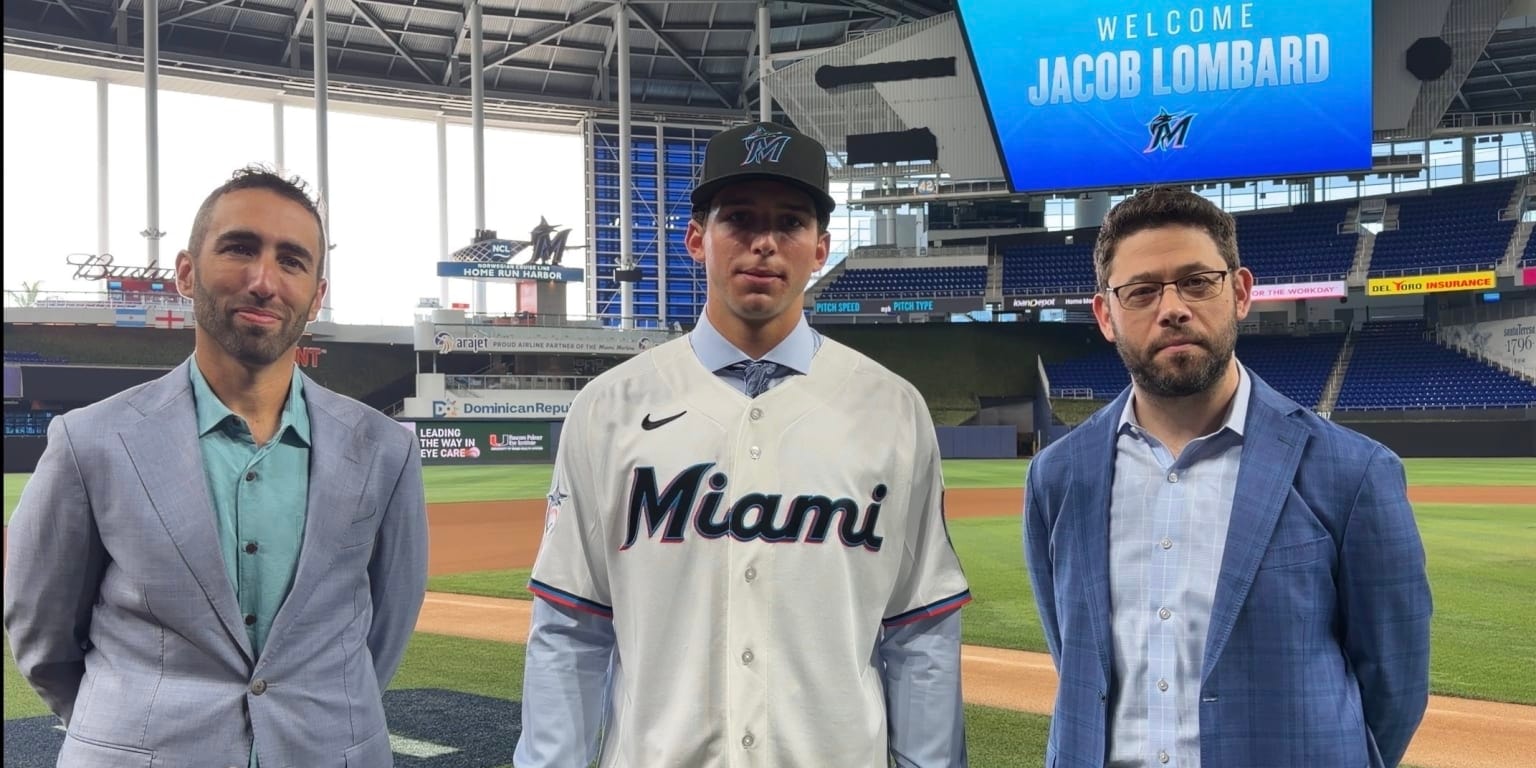
Marlins sign first-rounder Jacob Lombard, a Miami native with a “baseball family” tie to loanDepot park
The Miami Gulliver Prep standout will begin his pro career in the organization that has felt familiar to him since childhood, when his father, George Lombard, was working away from home.
The Miami Marlins officially signed first-round draft pick Jacob Lombard, bringing the Miami native into a pro system that feels personal rather than purely professional. In the organization’s announcement, Lombard’s connection to loanDepot park is rooted in family history, with his father, George Lombard, having played a long-running baseball role that often kept him away for work, even as Jacob stayed close to the sport through the family calendar.
Marlins officials framed the signing as both a baseball story and a homecoming. As described in the team’s release, Lombard grew up attending Marlins games at loanDepot park when his father’s schedule pulled him elsewhere. That background helped place the major league ballpark in the center of his childhood routines, not just his future goals.
The team also highlighted Lombard’s path through preparation and exposure before turning pro. He is described as a Miami Gulliver Prep standout, and the announcement notes that on the scouting circuit he showcased his tools on the Major League diamond, an indication that he was widely viewed as ready to translate high-end ability from amateur competition toward professional baseball.
A separate detail adds context to why the Marlins viewed the moment as more than a standard contract signing. The announcement points to March’s World Baseball Classic, where Jacob Lombard fielded grounders ahead of the final, because his father served as USA’s first-base coach. It ties the Lombard baseball background directly to one of the sport’s biggest international stages, while underscoring the family’s continuing involvement in elite-level competition.
For the Marlins, the signing matters for the organization’s immediate talent-building direction. Taking an early-round player typically indicates a club’s intent to invest in long-term development, and the team’s emphasis on Lombard’s “tools” suggests an approach built around development and refinement rather than a finished product.
Lombard’s next steps will be defined by how quickly he adapts to professional routines and coaching, particularly around fundamentals, pace, and the jump in daily competition. The Marlins’ system environment will also be shaped by how his skill set translates to a pro role, with the organization likely assessing both his defensive fit and his overall offensive profile as he starts the climb.
What to watch next is the organization’s assignment and early progression plan. After a first-round signing, the evaluation focus usually shifts from background and exposure to day-to-day execution: consistency, swing decisions, approach against advanced pitching, and whether his defensive work matches the expectations that got him to this point.
Why It Matters
- A first-round signing is a key investment toward the Marlins’ long-term roster-building plan.
- The organization’s emphasis on Lombard’s tools suggests a development-first approach that can influence how prospects are cultivated internally.
- For a Miami-based player, the home connection may also help the club in sustaining engagement and expectations as he transitions to pro routines.
- The World Baseball Classic reference underlines Lombard’s proximity to high-level baseball culture, which can matter for adaptation to professional standards.
Sources
Key Facts
- The Miami Marlins signed first-round draft pick Jacob Lombard.
- The team described Lombard as a Miami native and Miami Gulliver Prep standout.
- The announcement says Lombard attended Marlins games at loanDepot park when his father was away for work.
- The Marlins noted Lombard’s scouting-circuit experience and that he displayed his tools on the Major League diamond.
- The team said that in March, Lombard fielded grounders ahead of the World Baseball Classic final because his father served as USA’s first-base coach.