
THE APEX TIMES
Matt Campbell’s warning frames Rocco Becht’s adjustment to Penn State’s Big Ten grind
A Big 12 coach says the transition from Iowa State to Happy Valley will test Penn State’s quarterback and the roster built for conference matchups that look different on Saturdays.
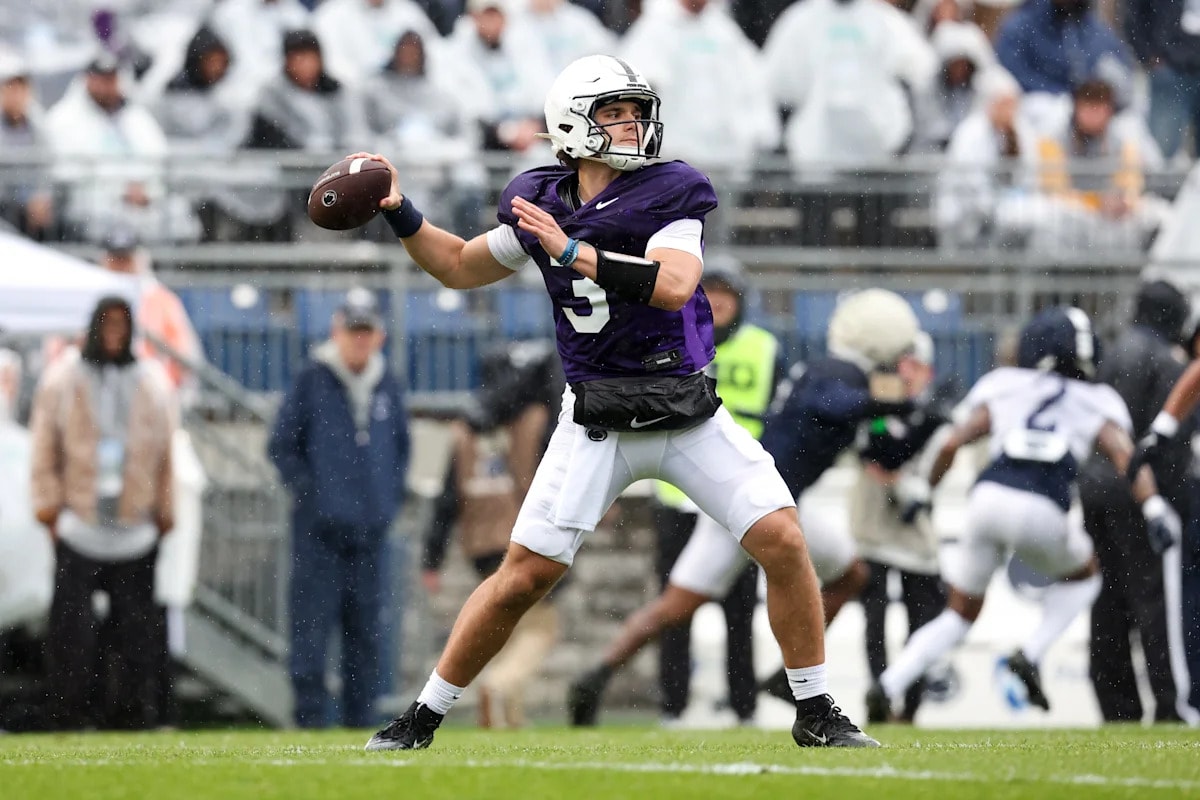
Penn State quarterback Rocco Becht is in the middle of a transition to the Big Ten, and one league rival coach believes the change in environment will be more difficult than fans might expect. In comments relayed by Yahoo Sports, Matt Campbell, now coaching in the Big 12 at Iowa State, warned that Becht could struggle with the daily reality of Big Ten football, where the margin for error can be smaller and the physical style of play is consistent from week to week.
The concern tied to Becht’s move is not only about the quarterback position, but also about roster construction. Yahoo Sports framed a common skepticism around Penn State as whether a lineup shaped heavily by Big 12-era roster building can physically and stylistically withstand opponents whose talent evaluation and game planning are rooted in Big Ten matchups. The argument is less about one player and more about whether an identity built for one league can hold up when the opposition brings a different baseline of speed, leverage, and physicality.
Campbell’s perspective also reflects his own staffing and transfer footprint. According to Yahoo Sports, Campbell brought 24 Iowa State transfers with him to Penn State as he tried to help his new team “get back on the right path.” That detail positions the discussion as a broader coaching challenge: making personnel decisions that align with the demands of a new conference while still developing chemistry and on-field communication in a compressed offseason window.
For Becht, the immediate task is adaptation, not reinvention. The quarterback adjustment described in the Yahoo Sports report is about “life in the Big Ten,” a phrase that typically covers more than play-calling. It can include reading defensive fronts that prioritize run fits, operating through tighter windows created by pressuring concepts, and handling the tempo and field position chess match that can define Big Ten games. Even when schemes look similar on paper across conferences, the execution standards often change because of who is on the other side of the line of scrimmage.
There is also a roster-development dimension to this story. If Penn State’s quarterback play is shaped by personnel that arrived with Big 12 familiarity, the coaching staff will still have to prove it can translate that talent into Big Ten outcomes against defenses and special teams units that emphasize different matchup goals. That is why Campbell’s warning matters in the way college football analysts talk about conference transitions: a quarterback can be talented, but the surrounding unit has to meet him where he operates.
The most important caveat is that this is a viewpoint from a rival coach, not a game-week injury report or a confirmed assessment of Penn State’s specific strengths and weaknesses. Yahoo Sports presented Campbell’s comments and the general roster concern, but the report does not provide statistical proof or verified evaluations in the way that film review after a played game would. Still, as a narrative, it points to a theme Penn State has to manage in the early stages of Big Ten relevance for any quarterback in a new system.
Looking ahead, the question for Penn State is whether Becht’s adjustment shows up in the types of throws the offense makes under pressure and the way the team protects leads (or battles for momentum) in the second half. Early indicators to watch will be consistency in third downs, decision-making when protections are stressed, and how the unit responds to different front structures that Big Ten defenses lean on. If those pieces fall into place quickly, Campbell’s warning becomes a cautionary story. If they do not, it becomes a benchmark for what Penn State still has to solve to win in the league it is facing.
Why It Matters
- Conference transitions in college football often turn into a mismatch between roster habits and opponent expectations, with quarterbacks at the center of that gap.
- Big Ten football tends to reward repeatable execution, so an early-season settling period can determine whether an offense looks stable or tentative.
- Recruiting and transfer decisions matter not only for talent level, but also for how quickly unit chemistry forms within a new conference’s style of play.
- Rival-coach warnings like this can shape how fans and analysts interpret offseason progress for a program entering or re-entering a new competitive baseline.
Key Facts
- Yahoo Sports reported that Matt Campbell cautioned Penn State quarterback Rocco Becht about adjusting to Big Ten football.
- The report frames a broader concern about whether Penn State’s roster, described as Big 12-heavy, can handle better talent and different styles in the Big Ten.
- Yahoo Sports stated that Campbell brought 24 Iowa State transfers with him to Happy Valley as part of his effort to help Penn State “get back on the right path.”
- The story is presented as an adjustment challenge for Becht and a matchup/roster concern for Penn State, rather than a specific, verified on-field breakdown.