
THE APEX TIMES
Mavericks-Flagg Blueprint Raises the Southwest Stakes for the Warriors
Dallas is positioning itself as the season’s Southwest Division anxiety point, and Golden State’s recent series history with the Mavericks offers a clear lens on what could change this year.
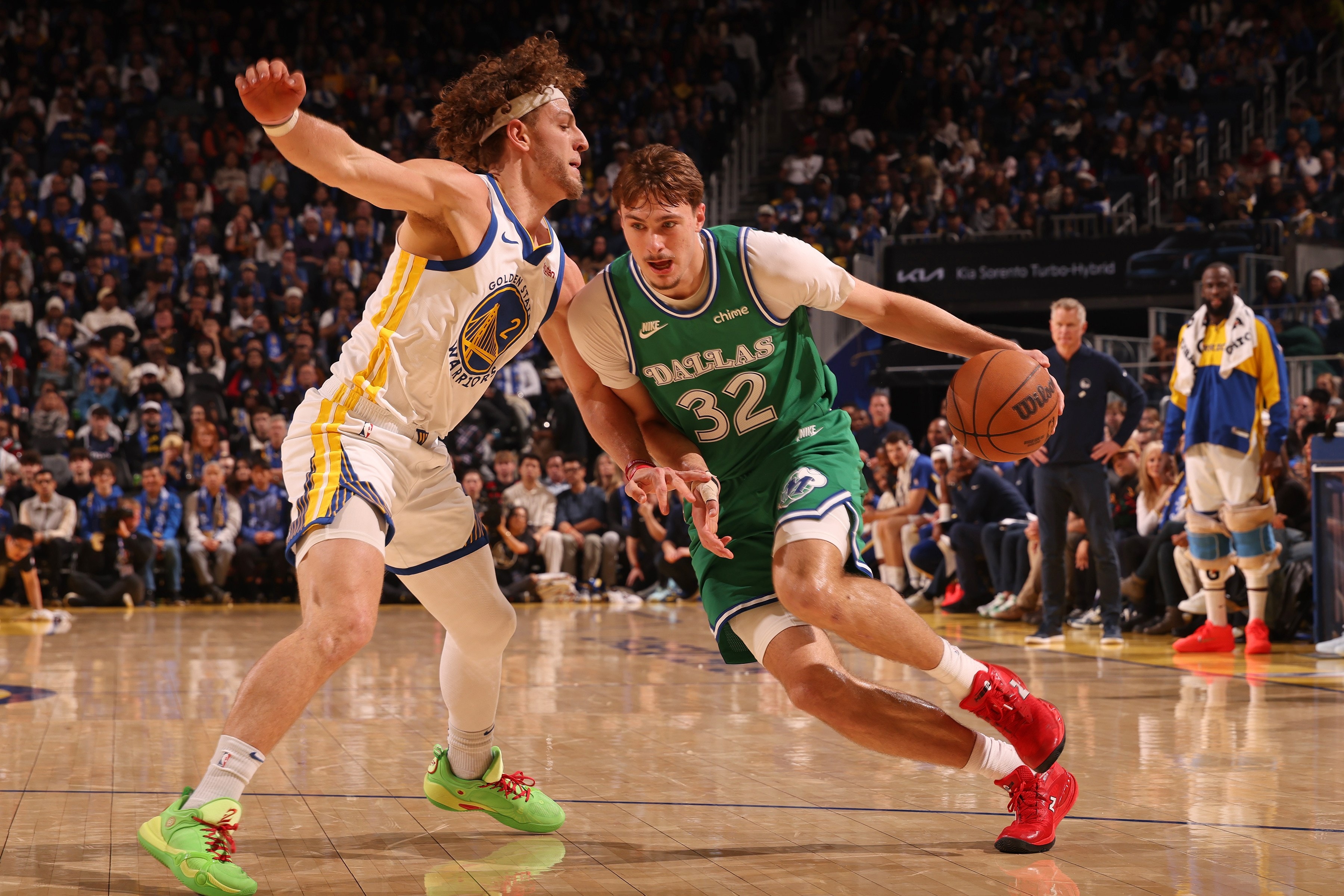
The Mavericks’ offseason message to the rest of the Southwest Division is straightforward: Cooper Flagg is already a matchup problem, and Dallas wants to build its half-court answers around him. In a division where games can swing on specific stylistic mismatches, that matters for a Warriors team still trying to define what “healthy, winning basketball” looks like after a difficult postseason-less year.
Golden State’s baseline reference point is last season’s head-to-head run with Dallas. The Warriors won two of three meetings, including a notable victory on Christmas, which suggests Golden State already has at least one viable plan for the Mavericks’ personnel. But the same history also carried a cost, according to the report, with one of those battles contributing to an eventual knee injury to Moses Moody. That kind of swing point is exactly the sort of thing teams try to avoid repeating, especially when division matchups double as playoff auditions.
Dallas’s underlying storyline going into this season is also about what it learned or compensated for when it did not have its best version of itself. The report frames the Mavericks’ turbulence as the overlap of three forces: Kyrie Irving’s absence through an injury, the “rookie lessons” associated with Flagg’s development, and inconsistent play from former Warriors wing Klay Thompson. The message there is not just that Dallas had difficulties, but that its problems were tied to timing and lineup stability rather than effort or identity.
From Golden State’s perspective, the question is whether those Mavericks variables are now stabilizing at the same time. If Irving’s availability improves and if Flagg’s game continues to translate faster than teams expect, Dallas could shift from being a team that forces adjustments to being a team that controls them. That shift is the difference between “a hard out” and “a division standard-bearer,” particularly when the Southwest is crowded with teams that can play different styles in the same week.
The report also turns the lens back on the Warriors’ own season arc, contrasting Dallas’s current building emphasis with what Golden State went through after struggling to even make the postseason. That framing matters because it makes the Warriors less of a passive observer. A roster that misses the playoffs often spends the next year trying to prove it can handle the regular-season grind, not just chase it. If Dallas and the rest of the Southwest are tightening their competitive core, Golden State cannot simply rely on past wins to carry it through.
Cooper Flagg’s presence is the centerpiece of the concern, and the report’s key point is that he is “already a problem” for opponents. While that description is qualitative, the underlying implication is measurable: a player who forces different defensive coverages and changes shot selection can dictate the tempo of possessions, even when the rest of the roster is still gelling. For a team like the Mavericks, that is useful because it creates clarity in how to space, how to attack, and how to protect leads.
What to watch next is less about a single headline matchup and more about whether Dallas can sustain its plan across a full rotation cycle. The Warriors have demonstrated they can win against this team, but the same report highlights how quickly one game’s outcome can ripple into season-long repercussions when health becomes involved. If the Mavericks’ core pieces are functioning together more often, the Warriors will need to treat the entire division schedule as a test of consistency, not just a series of solvable problems.
For now, the safest takeaway is that the Mavericks are angling to be the Southwest Division’s clearest “you have to respect us” opponent, with Flagg at the center of that argument. Golden State’s past success provides comfort, but the reported context also warns that the edge can swing quickly when a roster is learning in real time. The division title picture may come down to which team builds its best version the fastest, and whether Golden State’s past results against Dallas translate into a repeatable formula.
Why It Matters
- If Flagg’s development and Dallas’s lineup stability improve, the Mavericks could become a more consistent matchup threat inside the Southwest rather than a stop-and-start opponent.
- Golden State’s ability to repeat success against Dallas will be a major indicator of whether it can translate regular-season wins into deeper playoff readiness.
- Division schedules matter disproportionately because they shape both playoff seeding and tiebreaker paths when several teams are close.
- Injury and availability narratives from last year, referenced in the report, underscore how quickly season outcomes can swing when marquee players miss time.
Key Facts
- The report frames Cooper Flagg as an immediate matchup concern for the rest of the league while Dallas aims to build its roster plan around him.
- Golden State won two of three meetings with the Mavericks last season, including a Christmas win.
- The report attributes Dallas’s last-season turbulence to Kyrie Irving’s injury absence, Flagg’s early “rookie lessons,” and inconsistent play from Klay Thompson.
- The report says one of the Warriors’ battles with Dallas last season contributed to a knee injury for Moses Moody.
- The report contrasts the Warriors’ situation after they did not make the postseason with the possibility that division-level challengers could include multiple teams, with Dallas highlighted among them.